
Special Feature - 125 years since the first sitting of Donegal County Council

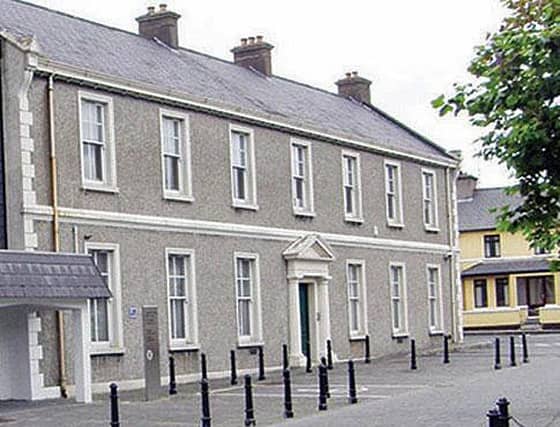

Who were those first councillors and how has the council evolved in an ever changing world?
The 37 councillors taking their seats in Lifford are walking a path that has been paved over a period of 125 years of democracy in Donegal.
From the first local government elections taking place in1899 to the expansion of the voting franchise, women in local politics, the foundation of the state, right up to the establishment of municipal districts ten years ago, there have been many changes.
But ever constant has been the responsibility and importance of local government serving and being answerable to local people.
For a country with such a long and varied history as Ireland, it is sometimes difficult to believe that many of our institutions are relatively new. The decades preceding the formation of the free state in 1922 saw a gradual loosening of the grip of crown rule. This led to the founding of much of what we take for granted today, from the GAA to the houses of the Oireachtas, and our own Donegal County Council.
The first local elections took place on April 6, 1899. It must surely have felt quite momentous for those first councillors, meeting in the Grand Jury Room of the County Courthouse, in Lifford 16 days later, on April 22, 1899.
The council would go on to sit in County House in Lifford, though not in the current building.
Donegal County Council’s Archivist Niamh Brennan explains: “The County House that’s there now was rebuilt after a fire in 1925, and refurbished and extended in the1990s including the modern day chamber.”
Early Agenda Topics
Among the agenda items of the early meetings throughout 1899 of Donegal County Council were the establishment of bodies such as the Law Committee and Finance Committee. Motions and agreements formed the foundation for the council as we know it today.
An example of this is the establishment of an accepted spelling of Inishowen, which was previously recorded as Ennishowen.
According to minutes from September 1899: “Mr Doherty moved and Mr Bradley seconded ‘that it be an instruction to our Secretariat to spell Inishowen with an ‘I’,”
Other items discussed in the first year were a tender for carrying out work on Letterkenny Courthouse; that Standing Orders would be printed in book form; the Rates Collection Scheme; issues pertaining to railways, compulsory education, agriculture, constabulary expenses, and more. And it was noted that ‘a letter from the General Post Office as to telephones in Donegal was read.’
Backdrop to the Establishment of Local Government
A document from 2019 celebrating 120 years of Local Government outlines how, from 1823 onwards, municipal government was partially democratised with the establishment of town commissions in many places.
At county level, local government developed with the expansion of the functions of the Grand Jury.
According to the document Celebrating The History of Irish Local Government: “Its members were landowners, summoned by the high sheriff twice yearly – Lent and summer. Its role was to decide which cases were referred to the assize courts. Later, it was granted authority to collect rates and approve various works, such as road and bridge repairs, and the building and maintenance of courthouses and county gaols.”
The last Grand Jury sat in Donegal in 1898, the same year in which the Local Government (Ireland) Act 1898 was passed to a mixed reaction from the Irish Parliamentary Party who believed it was an attempt to ‘kill Home Rule with kindness.’As outlined in Celebrating The History of Irish Local Government: “It created three new forms of local authority: county councils, rural district councils and urban district councils.
“The law established democratic local government at county level, with county councils taking
over the administrative functions previously exercised by the grand juries.”
Women were permitted to contest rural and urban district council seats from the outset, but were excluded from contesting county council seats until 1911.
This new system also revolutionised the voting system, though by today’s standards it was very limited.
Men over 21 years of age were allowed to vote if they were householders, or rented a portion of a house, valued at a minimum of £10 per year.
Women over 30 years of age who met the same criteria could also vote.
However, the average annual wage for agricultural labour in Ireland at the time was only £25, so most people could not vote.
As still happens today, serving as a councillor gave a great grounding, experience and network building to many who went on to become parliamentary politicians. It was particularly significant for those early politicians, given the troubled decades that were to follow, and out of which the Irish Free State would emerge. From that first vote in 1899 until the 1950s, elections were held every three years. In 1953 it changed to every five years, and this was consolidated in law following a referendum in 1999.
Proportional Representation, the election system which remains in place today, was introduced in 1920.
And in 1935, major reform of the voting franchise gave the right to vote to all men and women over the age of 21.
Nowadays, anyone over the age of 18 can vote in local elections.
This is also the minimum requirement for anyone who wishes to run for local elections. Candidates must also be ordinarily resident in Ireland but do not need to be Irish citizens.
Up until the 2003 abolition of what was known as the dual mandate, politicians could sit on Donegal County Council and in the Houses of the Oireachtas.
The 2014 reforms were the most recent major change to Donegal Council and other local authorities, leading to the abolition of town councils and the formation of municipal districts.
Roads, Housing, Motoring and Emergency Services were core issues in the early days of Donegal County Council, and remain so today though the number of services has greatly expanded.
Gathering of rates was also crucial, as this financed the work of the newly established council.
Environment and Planning were also among the early services, but not as we know them today. Indeed, one of their main functions was to tackle the spread of disease by improving living conditions, water supply, sewage and burial conditions.
The 1960s saw the addition of council departments which brought us closer to where we are today with the establishment of Community, Enterprise, Cultural Services and Recreation services.
Women in Donegal County Council
The earliest woman in local government in Ireland was the artist and suffragist, Sarah Cecelia Harrisson who was elected to Dublin City Council in 1912. The first female county councillor was Lady Albinia Broderick, elected to Kerry County Council in 1920.
Donegal was quite a long way behind, with Susan McGonagle the first woman elected to Donegal County Council in 1979. She is one of only 12 women to sit on the council in its 125 year history, three of whom are sitting on the current council.
However, being in such a minority has fazed these women over the years, nor has it in any way stopped them from each being a strong and determined voice on Donegal County Council.
Local Government in Modern TImes
The advent of technology has brought change, challenge and opportunity to Donegal, particularly in the context of it being Ireland’s most isolated county with only six miles of shared border with Leitrim connecting it to the Irish state.
From rolling out electrification in the mid 20th century to building and maintaining a road network, and endeavouring to get broadband to every home, our unique geography shapes so much of our lives.
But it is also our greatest asset, and use of technology has played a huge part in developing and supporting tourism in Donegal.
So much has changed in Donegal in 125 years of local government, and as the Covid-19 pandemic and the rise in the number of people coming to our shores seeking asylum have taught us, there are always new challenges around the corner.
The greatest thing about local democracy is that it is we, the people of Donegal, who get to choose who we entrust with making the decisions that affect so many aspects of our lives.
The votes have been cast and counted, the seats have been filled. Together, these 37 councillors will write the next chapter in the history of Donegal County Council.
First Councillors 1899
Jerome Boyce, JP
John Edward Boyle
John Bradley JP
John Byrne
Francis Callaghan
John Cavanagh
William Colhoun JP
Dr James D Condon
William Doherty JP
James Dunlevy
Daniel Joseph Flood
William Gallagher JP
William James Hanna JP
Captain John S Hamilton
Thomas Hayes
Charles Kelly
Teague Magee JP
Patrick A Mooney
Hugh McClafferty
Hugh McDevitt (Glenties) elected Vice Chair
Hugh McDevitt JP
Edward McFadden elected Chairman
Manus McFadden
Frederick W McIlwaine JP
John A Pomeroy JP
Captain Thomas B Stoney
John Sweeney
Peter Ward
Michael White JP
William A Wray
At a meeting in July 1899, further members included:
Michael Cassidy
William Griffith
James Sweeney
Thomas WD Humphreys
[ ] McCormack
Current Councillors 2024
Buncrana LEA
Jack Murray - Sinn Féin
Joy Beard - 100% Redress
Paul Canning - Fianna Fáil
Terry Crossan - Sinn Féin
Fionán Bradley - Fianna Fáil
Carndonagh LEA:
Ali Farren - 100% Redress
Martin McDermott - Fianna Fáil
Martin Farren - Labour
Albert Doherty - Sinn Féin
Donegal LEA:
Micheál Naughton - Fianna Fáil
Noel Jordan - Sinn Féin
Niamh Kennedy - Independent
Jimmy Brogan - Independent
Michael McMahon - Sinn Féin
Manus Boyle - Fine Gael
Milford LEA:
Declan Meehan - Independent
Liam Blaney - Fianna Fáil
Pauric McGarvey - Independent
Letterkenny LEA:
Donal Mandy Kelly - Fianna Fáil
Tomás Seán Devine - 100% Redress Party
Gerry McMonagle - Sinn Féin
Ciaran Brogan - Fianna Fáil
Jimmy Kavanagh - Fine Gael
Michael McBride - Independent
Donal Coyle - Fianna Fáil
Lifford - Stranorlar LEA:
Martin Scanlon - Independent
Gary Doherty - Sinn Féin
Frank McBrearty Jnr. - Independent
Martin Harley - Fine Gael
Patrick McGowan - Fianna Fáil
Dakota Nic Mheanman - Sinn Féin
Glenties LEA:
Micheal Cholm Mac Giolla Easbuig - Independent
Michael McClafferty – Independent
Anthony Molloy - Fianna Fáil
John Sheamuis Ó Fearraigh - Sinn Féin
Denis McGee - 100% Redress Party
Brian Carr - Sinn Féin
Source Material: Celebrating The History of Irish Local Government exhibition in 2019 to celebrate 120 years of local government, and special thanks to Niamh Brennan at Donegal County Archvives and Donegal County Council