
Talk about the effects of the Border on many aspects of Donegal life
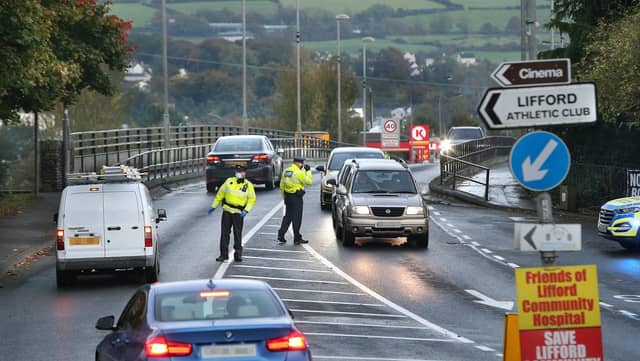

Commemorating 100 years of the Border
The Border and its ongoing relation with Donegal, its people, economy and geography is a fascinating subject and one that dominates conversations at all levels of society be it political, economic, social or cultural.
To put it into context and particularly at a time when the anniversary of the introduction of the land border between the Republic of Ireland and NBorthern Ireland is upon us - April 1, 1923, Donegal County Museum is hosting an online talk ‘Land Border in Ireland – 100 Years On’, on Tuesday next, April 4 at 7pm
It will be delivered by author and historian Dr Cormac Moore, who will explore the effects of the customs border on many aspects of life on the island of Ireland.
The Partition of Ireland was the process by which the Government of the (then) United Kingdom of Great Britain and Ireland divided the island of Ireland into separate parliaments.
The Government of Ireland Act 1920 became law on December 23, 1920, creating two home rule parliaments in Ulster and in Southern Ireland.
The Anglo-Irish Treaty in December 1921 contained a provision that would establish a Boundary Commission to decide the exact location of the border between the Irish Free State and Northern Ireland.
In March 1923, the Irish Free State introduced customs barriers with a system of duties to be paid on the movement of certain goods.
Goods could only be moved through approved border crossing points where they were inspected at a customs station. These were introduced to assert independence and to put economic pressure on Northern Ireland. The customs barriers were enacted on April 1 by the Irish Free State, leaving little time for people and businesses to prepare.
To cross the border, a carrier’s report had to be submitted to customs officials and the relevant fees had to be paid. People crossing the border were searched to prevent smuggling.
There was a dramatic decline in trade across the border. Businesses were cut off from their customers and their established markets. There was widespread opposition, particularly in border counties.
Donegal was economically cut-off from Derry. Railway services in and out of Donegal suffered considerable disruptions with some lines zig-zagging the border numerous times and customs examinations carried out at each crossing.
Eventually it was decided to have custom examinations limited to the first point of entry at the border.
Tuesday's talk is sure to take attendees on a journey that will raise many questions and create even more food for thought.