
‘We don’t want another family to suffer what we have suffered’


Inishowen family calls for maritime safety public inquiry
An Inishowen woman who lost her father and nephew in a boating accident off Malin Head has called for a public inquiry into maritime safety and for the immediate implementation of recommendations made at the inquest into the deaths.
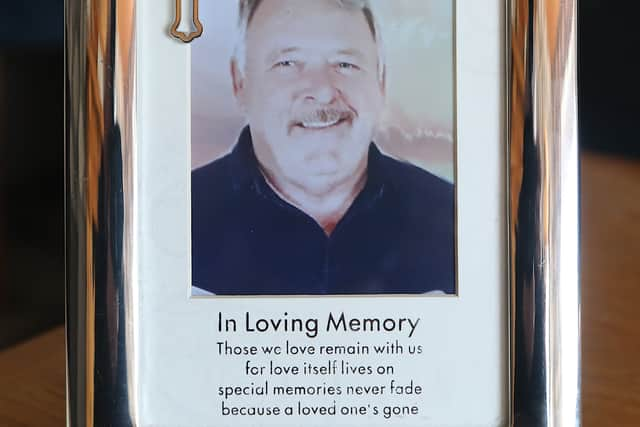
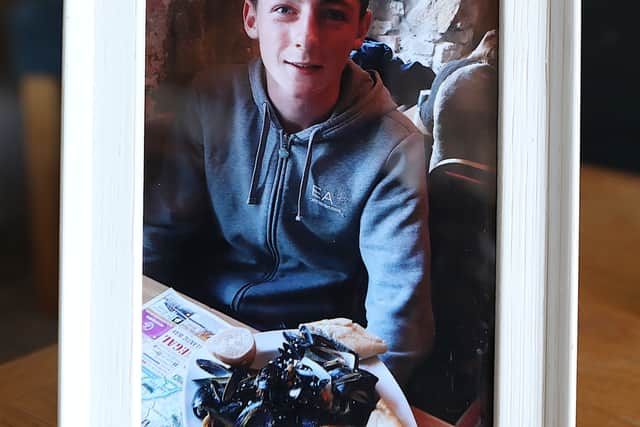
Donna Marie Keenan from Burt lost her 63-year-old father Gerry Doherty and her 16-year-old nephew Thomas Weir when their 19ft boat capsized off Malin Head on July 17, 2018 during a fishing trip.
Her husband Dessie Keenan was the only survivor of the tragedy and was rescued after spending more than five hours in the water before being rescued.
The family have felt aggrieved that their relatives were blamed for the tragedy by an investigation by the Marine Casualty
Investigation Board (MCIB) and that failings by statutory bodies over the years have not been rectified.
Mr Keenan had dialled 999 when the three men entered the water and reached an emergency call answering service centre.
His line went dead before details could be provided to the Coast Guard. A Coast Guard officer made efforts to contact Mr Kennan but failed and a search was not launched for more than five hours later.
The jury at the inquest called on the Minister for Transport to take on board previous recommendations including the mandatory training of all persons taking vessels to sea; the education of all seafarers that a mobile phone is not an adequate communication device on its own and that a VHF radio is essential, and to review the department's sea safety code of practice, a 200-page document, to remove any inconsistencies in the document and have it presented in a more user-friendly readable format.
The investigation by the MCIB found that the crew had not planned the voyage sufficiently, was not prepared for the emergency and had exacerbated the severity of the incident by anchoring the boat at the stern, which made it much more susceptible to swamping. The reliance on a mobile phone as the primary method of contacting emergency services also went against the Department of Transport’s code of practice for the safe operation of recreational craft.
The MCIB found that the Coast Guard acted in accordance with the information it had to hand, but that there was enough information in the Emergency Call Answering Services (ECAS) recording of the emergency call for a search and rescue operation to be launched.
It concluded that the severity of the incident had been increased by “restrictive procedures in ECAS”. The incident resulted in protocols being put in place for handling emergency calls and the updating of ECAS policies.
Donegal coroner Dr Denis McCauley was critical of the MCIB for not attending the inquest to give evidence and for showing “a complete lack of empathy to the family and an arrogance about their report”.
Ms Keenan is calling for elements of the code of practice to be made law to help save lives.
“It's not law to have a VHF radio, it's a good idea but it wasn’t law. We would like to see more safety measures put in place for people going to sea and more education,” she said.
“We don’t want another family to suffer what we have suffered. We lost Dad, we lost wee Thomas, and Dessie will never be the same again after what he has experienced and what he has seen.”
An Oireachtas hearing last month heard calls for the report to be published in full “in the public interest”.
“The family wants the report released and then a public inquiry,” Ms Keenan said. “I know it is not Eamomn Ryans's fault, I'm not blaming Eamonn Ryan, but he needs to stand up and say, ok what has happened in the past is wrong and I am going to take steps now and put it right.”
The minister told the Oireachtas hearing that he would not be seeking advice from the attorney general on the issue again and that “the recommendations and observations are published and that is the key thing that is in the public interest”.
“We are calling for an inquiry into the safety of Irish waters,” Ms Keenan said. “There can never be a 999 call made from the water that is not responded to. There has to be provisions made in law that this never happens again.”
She says the release of the report would help a public inquiry and is essential for the establishment of new marine accident investigation structures.
“The Irish people have a right to know what has gone on in the past, it’s not just us. There are so many other families. The big difference in our case is that a survivor came back to tell. The families of other people need to know what has happened in the past.”
Maritime lawyer Michael Kingston, who attended the inquest, said there is a lack of urgency in implementing the recommendations of the coroner.
“It’s nearly a year since this inquest and as usual they have not implemented the recommendations. It’s their specific mandate to enhance maritime safety.
This is a matter of life and death. How many people in Donegal alone and across our nation are going to be taking to sea in the coming weeks using pleasure craft and the recommendations have not been implemented? They are still not doing what they should be doing.”
Donegal TD Padraig MacLochlainn, who has raised the issues highlighted by the inquest, said there are lessons to be learned from the tragedy.
He said it was unfair that the victims of the tragedy appeared to be blamed for it.
“Whenever there is a tragedy and there is something to learn to prevent another tragedy, then go and learn it, go and do a proper review.”
He said the training and safety requirements in Ireland are very limited and “people are being failed by that”.
“I am happy to support the family because they do feel that their loved ones were being blamed for what happened.”
The Department of Transport said that ensuring safety across water-based activities is a priority.
A spokesperson for the Department said: "In line with the Irish Maritime Directorate Strategy 2021-2025, the Department promotes maritime safety through interaction with those involved in water-based activities, with the support of governing bodies and training providers, as well as through regular Marine Notices and such safety publications as the Code of Practice for the Safe Operation of Recreational Craft.
"The Code of Practice for the Safe Operation of Recreational Craft addresses the wide variety of recreational craft used in Ireland and outlines legislative requirements and operational guidance.
"It also provides information on recommended training and training providers which can be accessed as a member of the public or through membership of a sports club where training is provided through the respective National Governing Bodies. As an educational tool, the Code of Practice has achieved positive outcomes and trends in the sector, while also facilitating the wide participation of all."
The spokesperson confirmed that following a public consultation process of the current Code of Practice, "a number of issues raised by the Coroner for the District of Donegal regarding the content and presentation of the information contained in the Code of Practice will be considered".
They added: "The Department of Transport regularly highlights and promotes at every opportunity the importance of having a reliable means of communication for use in the event of an emergency while at sea or on inland waters and the legal requirements in relation to wearing and carrying of Personal Flotation Devices/Lifejackets through various communication activities and Marine Notices, for example Marine Notices Nos. 42, 37 and 32 of 2022. Information and guidance in that regard is also contained in the Code of Practice for the Safe Operation of Recreational Craft”.