
‘We haven’t got everything that was needed to make this work for everybody’


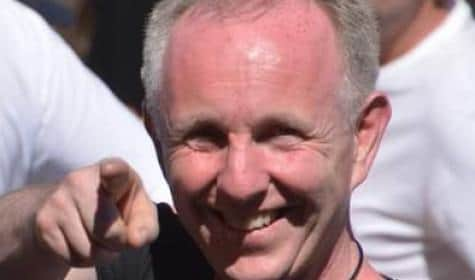
Mixed feelings: Michael Doherty says he has a sense of pride mixed with feelings of frustration and anger after his decision to step down as Mica Action Group spokesman
Michael Doherty has stepped down as the press relations officer of the Mica Action Group after more than six years on the group’s management committee.
The Culdaff man has been one of the most prominent faces and voices of the group since he took up the position in early 2020 and has helped guide it through two years which have seen large-scale street protests in Donegal and Dublin and a series of negotiations with department officials and the Government which resulted in an improved redress scheme.
With a full-time job, the demands of the father of four’s role in the group have inevitably impacted on his family life and he said he reached the decision to step back during the summer when the activity of the group slowed down.
While the decision to not continue in his role, which he said had become like a 24-seven job, has brought a feeling of relief, it has been accompanied by a sense of guilt.
“There is a sense of feeling guilty. You make a call like this but I have to then look at the family, and I can no longer afford to be away from them as much as I was.”
He became involved in the group, which has over 3,000 members, before he knew he had mica in his own home, out of a sense of duty that if he could help in any way, he would.
His urge to help came from a background of 20 years of voluntary work in his community - as a founding member of Bocan community creche, the chair of the board of management of his local national school and secretary of the Bunagee harbour committee.
He stepped into the role of PRO after Ann Owens and Eileen Doherty, leading members of the group from its inception, stepped down following the delivery of the first redress scheme, which turned out to fall well short of what homeowners had expected.
“It was an absolutely daunting prospect and not one that I had wanted,” he says.
“Eileen Doherty was a very, very capable PRO and hers were going to be big shoes to fill. We had to then put our own stamp on it, push it forward and make things happen.”
His role as a senior manager at Derry hard drive manufacturer Seagate meant he “had a fair bit of experience of meetings and dealing with people”.
His farming background meant “you are still practical”.
He also knew his heart was in the right place in terms of having a background in community work.
“This was very close to my heart. The experiences of work and community stuff and having been around the block and worked in different companies, lived in different places, left me feeling, 'I am going to have to find a way forward'. I don’t usually run away from things.”
He had watched how Eileen Doherty and Ann Owens had conducted themselves at mica meetings and at meetings with department officials that he had attended. And he had experience of representing the group.

2021 saw the anger at the redress scheme spill over into protests led by mica campaigner Paddy Diver, some of them focused on Cassidy Brothers, the main suppliers of concrete blocks in Inishowen.
Those protests came to the streets of Buncrana and Letterkenny and then in June and October, thousands of people would march through Dublin calling for an improved redress scheme.
“I was extremely proud of Donegal standing up for itself,” Michael says, while acknowledging the key role Paddy Diver had in turning the frustration into large-scale street demonstrations.
Michael became one of the public faces of the campaign and also was involved in negotiations over months with the department as the homeowners pushed for an improved scheme.
Through all this, he was constantly reminded of why he was doing it, despite the strains it was putting on him personally.
“Things I should have been doing during the day for work were being done at one or two in the morning because I had [mica] calls or meetings.
“There were times I thought ‘I could do without this’. But you always felt a duty to the cause. Personal phone calls would come in, people looking for help.
“Grown men crying on the phone, at breaking point. I probably, by nature, find it hard to walk away from people like that.”
It is his compunction to help people that has made the decision to step down so difficult, he says. Those conversations with homeowners describing their plights will stay with him.
The lowest point was watching the faces of homeowners in the public gallery of the Dáil in July when amendments to the latest scheme, which the campaigners said would save affected families tens of thousands of euro, were voted down.
He is still angered by what he witnessed.
“We were casually sold out when the amendments were being tabled by people who did not even sit in to listen to the reasons the amendments were needed. They were outside of the Dáil [chamber], there weren't half a dozen sitting in there.
“And yet when the bell would ring, the place would fill up and they would come to cast their vote and joke and laugh among each other while scrolling on their phones. We were sentenced to tens of thousands of euro for the rest of our lives and nobody would tell us what we had done wrong.”
The feeling of unfairness has stayed with him and he doesn’t know “if that ever probably left me right”.
Michael says he is standing down after realising over the summer what he “was missing out on a family level and how unfair it was on them”.
He has a mixture of feelings at stepping down, including anger and “real frustration that we didn't deliver what was there to be delivered”.
But there is also pride at what the group has achieved in recent years, despite his natural tendency to focus on what hasn’t been achieved.
“The cap has been raised by €172,500 - that is not insignificant and affects the larger homes, but it needs to be bigger.
“We have €15,000 for alternative accommodation - that wasn’t there before.
“We have got €5,000 for storage - that wasn’t there before.
“We have a 40-year State-backed guarantee that we never had before. We have made ground. But we haven't got everything that was needed to make this work for everybody - and that’s where I suppose the personal disappointment comes in - that I wasn’t able to make that happen.”