
‘€20 a keg won't do feck all’: Leitrim publicans questions Budget lifeline


Under a proposed subsidy, pubs would need to sell 1,000 kegs a year to receive the maximum €20,000 payment, raising fears that smaller rural pubs struggling to survive could lose out.
A Carrigallen publican has questioned whether the Government's €15 million support package for rural pubs will do enough to keep struggling businesses open, warning that a proposed €20 subsidy per keg would offer little relief to smaller establishments. Cathal Farrelly says many traditional pubs across rural Leitrim are already struggling to survive, with some opening just three days a week while continuing to face the costs of maintaining their premises throughout the year.
His comments follow the announcement by Minister for Finance Simon Harris in Budget 2027, aimed at giving a dig out to rural pubs. However, the details of how the funding will be distributed have yet to be announced, leaving publicans uncertain about how much assistance they may receive.
Mr Farrelly expressed particular concern about a proposal put forward by the Vintners' Federation of Ireland (VFI), which had sought a €20 tax credit for every 50-litre keg sold, capped at €20,000 annually per pub. "The other part of it was, it'd be a €20 subsidy per keg. But if you give €20,000 per pub, and it's only covered at €20 a keg, that means you'd have to sell 1,000 kegs per year to get the €20,000," he said.
"I don't know any pub in rural Ireland that's selling 1,000 kegs a year, or selling 500 for that matter." He stressed that the final details of the Government scheme had not been published and that he could not make a definitive judgement until they were available.
"I don't know how this is going to be allocated. That was the proposal, but I haven't got any details." Mr Farrelly fears that if financial assistance is linked directly to the volume of alcohol sold, larger and busier establishments could benefit considerably more than the small rural pubs the Government says it wants to protect.
"They get the headlines, but the money goes to the top pubs in Ireland," he claimed. "It's the tops that are represented by these organisations, in the name of the small rural farmer, or publican, or whatever business. That's my view on it." He said the definition of a rural pub would be crucial in determining whether the new support scheme reaches businesses most in need.
"Rural, to me, would be small pubs with low turnover and small catchment areas," he said. He argued that traditional pubs, regardless of their location, should be considered differently from larger establishments generating substantial turnover. Mr Farrelly also recalled how breweries previously provided complimentary kegs to compensate publicans for beer lost through cleaning draught lines.
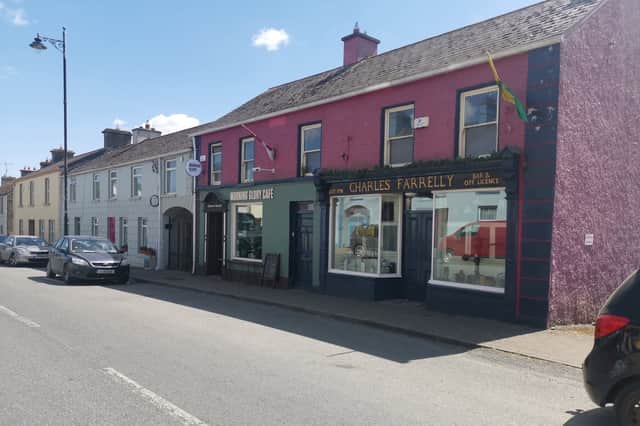
"I used to get three kegs a year complimentary from the company, to suffice for the wastage, for instance, in cleaning pipelines," he explained. "You could lose four or five pints a line every time you cleaned the pipe." He believes that practical assistance of this kind could be more valuable to a small publican than a modest payment linked to keg sales.
"Two or three kegs would be far more beneficial to a publican than €20 a barrel for a keg." If the Government ultimately adopts the proposed subsidy model, he doubts it would provide sufficient support for pubs facing serious financial difficulties.
"If that's the way it's going to be drip-fed, that you get €20 on a keg of Guinness or whatever it is, God bless it. That'll be nothing.
"That wouldn't keep a pub alive." Beyond the proposed funding, Mr Farrelly painted a difficult picture of the financial pressures facing traditional rural pubs. He said some establishments can no longer justify opening throughout the week because of reduced trade, yet their fixed operating costs remain.
"Most pubs now in rural Ireland, they're hardly able to keep open three days a week," he said. "You have still the running costs for energy, for cold rooms and everything else. They have to be maintained seven days a week. "You have to pay your insurance for a pub seven days a week."
He said additional compliance requirements associated with obtaining insurance could also create significant expenses. "There's so many hidden costs in business now anymore, it's nearly impossible to run them."
According to Mr Farrelly, the financial realities of running a traditional rural pub have changed considerably, with many establishments no longer capable of providing a full family income. "No rural pub could support a family," he said, adding that some older publicans continue operating their businesses while relying on pension income.
He believes the difficulties extend beyond the licensed trade and reflect wider economic pressures on small rural communities.
In Carrigallen, he said, the survival of local businesses is closely connected to the economic wellbeing of residents, farmers and families. "We are dependent on one another. It's the small people working together," he said.
He pointed to the variety of pubs in the town, each offering something different to customers. "In Carrigallen, I would see pubs, there's a variety of pubs. Not many, but there's a variety. "If you went to a music pub, or pubs with no televisions, or pubs with television, you have your choice."
However, he said the cost of living was also affecting the customers on whom these businesses depend. "The community are suffering as well. Young people are suffering, in the sense of those that are working on the main street to pay their taxes, and then raising families, the cost of living for families."
He said farmers and other small businesses were also under considerable financial pressure, with consequences for spending in rural towns. The Vintners' Federation of Ireland has welcomed the Budget announcement, describing it as recognition of the difficulties facing the pub trade.
VFI chief executive Pat Crotty said: "Today's announcement is a vote of confidence in our rural pubs at a time when the sector has faced enormous cost pressures." He added: "They are at the heart of communities across Ireland, supporting local employment, tourism and acting as a social anchor in our towns and villages."
According to the federation, more than 2,500 pubs have closed in Ireland since 2005. Minister Harris said rural pubs were at the heart of local communities and played an important role in supporting employment and social life. "Supporting our local pub helps keep an important part of rural life alive, while also supporting local jobs and the wider community," he told the Dáil.
The Minister said he would work with Minister for Enterprise Peter Burke to develop the support scheme in the coming weeks. For Mr Farrelly, the central question is whether the funding will reach the small, traditional pubs operating on limited turnover rather than primarily rewarding those selling the greatest volume of alcohol.
Until the details are published, he remains cautious about how much difference the €15 million announcement will make to rural publicans already struggling to keep their doors open. Meanwhile the Tánaiste said he will also increase the excise duty on a pack of 20 cigarettes by €1 - there will be a pro-rata increase on other tobacco products. "I am also increasing the duty on e-liquid products by 20 cents per millilitre," the told the Dáil.