
Future of farming in Leitrim faces a generational challenge

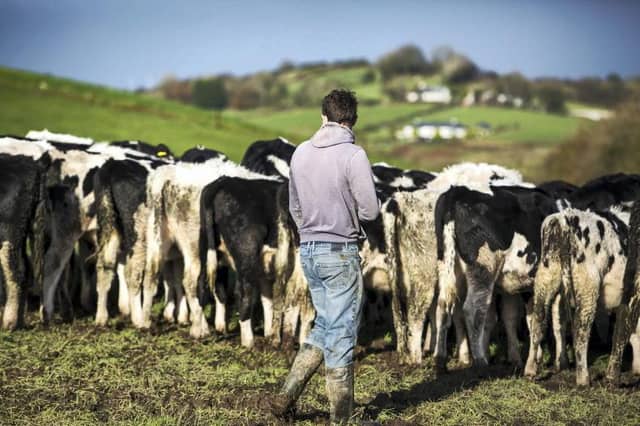

With farm succession becoming increasingly challenging, calls are growing for greater financial support and improved access to agricultural land.
Ireland could be required to introduce dedicated installation aid for young farmers under the next Common Agricultural Policy (CAP), following an agreement reached by EU agriculture ministers last week.
The prospect has been welcomed by Macra na Feirme, with its president, Josephine O’Neill, describing the proposal as “a small step for Irish farming but a huge leap for Ireland’s young farmers”.
Installation aid is a form of financial support designed to help young farmers establish their own agricultural businesses. It provides assistance with the significant upfront costs associated with entering the sector, including purchasing livestock, investing in machinery and infrastructure, and securing access to land. The aim is to make it easier for a new generation to enter farming and establish financially viable farm businesses.
The proposal comes amid ongoing discussions surrounding the next CAP, which will govern EU agricultural support from 2028 to 2034. EU agriculture ministers have agreed a negotiating position that includes a requirement for member states to provide support for young farmers establishing agricultural businesses.
The development could represent a significant change for Ireland, which currently has no dedicated installation aid scheme comparable to those available elsewhere in Europe. However, the precise form of any future support, including how it would operate and who would qualify, has yet to be determined as negotiations continue.
Ireland is currently the only EU member state without a dedicated installation aid provision for young farmers, which Ms O’Neill has described as putting young farmers at “a severe competitive disadvantage”.
There is growing concern within Ireland’s farming community surrounding farm succession and the ability of young people to take over family farms. Issues range from access to land and the affordability crisis to insufficient financial support. These challenges raise wider questions about the future viability of farming in Ireland.
For many families, farming is an integral part of life, but rising costs and low profit margins are making it increasingly difficult to sustain a living from agriculture alone. Cllr James Gilmartin, a farmer himself, has raised concerns about the financial sustainability of farming and the way the current system is structured.
Currently, farmers receive subsidies based on the amount of eligible land they farm through the Basic Income Support for Sustainability Scheme (BISS). Payments are made based on Payment Entitlements held by applicants for eligible hectares.
However, BISS can also present a barrier to farm succession. Farm profitability is often low, particularly in Leitrim, meaning agricultural production alone may not generate sufficient income. As a result, farmers rely heavily on subsidies linked to the amount of land they hold.
This can create a financial disincentive for older farmers to transfer or divide their land, as doing so could reduce the payments supporting their existing farm.
Consequently, young farmers may struggle to access sufficient land to establish viable independent businesses, even when their parents wish to facilitate succession.
“The average farm income in this part of the world is €26,000 so you need a part time job with that. And if you have parents who are farming on average around 30 hectares or even less, they can’t just divide their farm in two and let the next generation take over,” said Cllr Gilmartin.
“What we need to see is more support for young farmers in the sense of subsidies,” he added.
One proposal raised by Cllr Gilmartin is to introduce a system of front-loaded payments, which would provide higher subsidies for the first 20 hectares, for example, before gradually decreasing for additional land.
“You could have a situation where you front-load your payments, meaning you would get more payments on the first 20 hectares and then it would decrease as you went on. That would give people the opportunity to farm because farmers might be able to sign over some of their land as well.”
He also identifies agricultural land-leasing rules as another barrier to succession, arguing that the current tax system under Section 664 of the Taxes Consolidation Act 1997 does not incentivise intra-family leasing.
Section 664 provides income tax relief on qualifying leases of agricultural land, subject to certain conditions. However, the relief is not available for leases to close relatives, including children.
“I think that this should be changed to allow farmers to lease part of their farm tax-free to their child, but the child would need to have an agricultural qualification like a green cert or something similar,” said Cllr Gilmartin, adding that such arrangements should be regularly audited.
He believes this could allow farmers to lease more than half of their holding to their children, who would pay the lease value and begin operating independently while their parents retain ownership of the family farm.
“I do believe in the next CAP that’s coming down the line, we need to see more support for young farmers. Things like installation aid which was removed years ago,” said Cllr Gilmartin.
Beyond the need for greater subsidies and improved access to land, Cllr Gilmartin highlights a wider structural contradiction within Ireland’s current agricultural support system.
While subsidies are necessary because profits from agricultural production are often insufficient to provide a sustainable livelihood, linking payments to the amount of land held can create a financial incentive for established farmers to retain their holdings.
This reinforces dependence on BISS and can make it more difficult to divide farms, leaving younger generations struggling to access the land they need to establish themselves.
Cllr Gilmartin argues that agricultural support needs to recognise the differing circumstances of established farmers and new entrants, with greater encouragement for older farmers to make land available to younger generations.
“We need to create systems where farmers with larger farm bases are encouraged to actively rent out part of that land to younger farmers,” he said, explaining that this would allow the landowner to benefit from tax relief while the land returns to productive use.
“It’ll go back into the economy and the young farmer then gets to work the land and also spend it locally and live locally.”
However, Cllr Gilmartin acknowledges that there is no single solution to the challenges facing young farmers, pointing instead to the importance of diversification and innovation.
“There’s no perfect solution,” he said. “Another big thing is diversification of farms. Young people are innovative, they need to come up with ideas.
“You farm with your head, your heart and your pocket. They need to be in balance. If any of them are stronger than the others then the model won’t work.”
He also highlights the shift away from traditional, small-scale farming towards a globalised, market-led system, arguing that this creates further challenges for young farmers, who must compete with larger agricultural operators in an increasingly commercial environment.
“It’s important that young people are supported, but equally you know remember that farming is producing nutrient dense foods. That’s how it started, to feed your family and then you feed your neighbours and whatever else.
“Now the model that has developed is a global model that’s market led. Because you’re subsidised, you’re always going to be fighting against the larger operator so you have to think on your feet, you have to be smart, you have to be business minded,” he said.
The Department of Agriculture, Food and the Marine has been contacted for comment on the proposed installation aid measures and the wider challenges surrounding farm succession.
As negotiations surrounding the next CAP continue, it remains to be seen what measures will be introduced to support young farmers and facilitate farm succession.
However, with growing concerns surrounding access to land, financial viability and generational renewal, the need for change is becoming increasingly clear.