
Halloween in Leitrim: Five chilling tales of ghosts, curses and dark histories

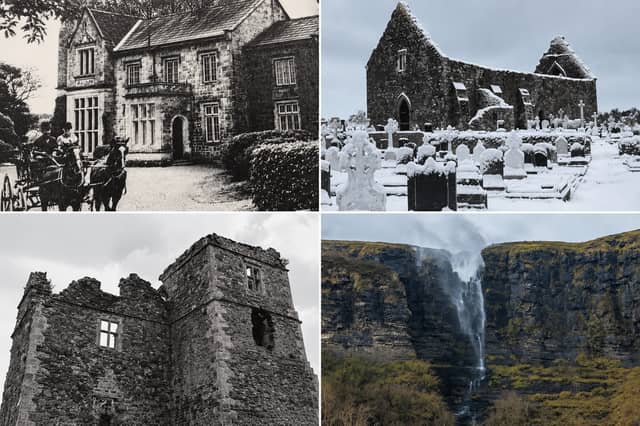

From the haunted ruins of Manorhamilton Castle to the White Lady of Lough Rynn and the phantom coach of Fenagh Abbey, Leitrim has no shortage of chilling tales
Here are five chilling tales from Leitrim and its surrounding landscape that continue to capture the imagination.
1. Manorhamilton Castle: The fortress where 58 were hanged
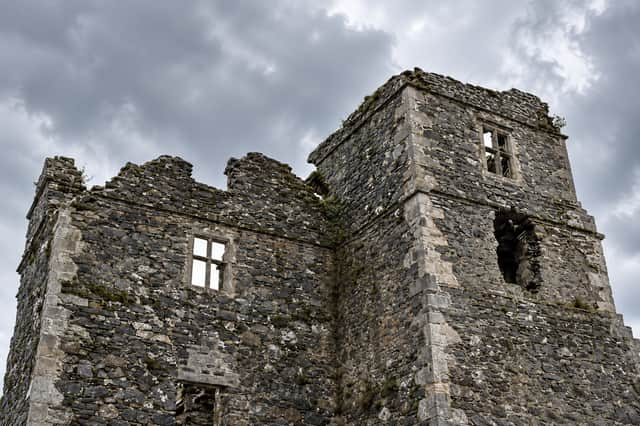
Built in 1634 by Sir Frederick Hamilton, Manorhamilton Castle stands as a stark reminder of the violent conflicts during Ireland’s 17th-century Cromwellian conquest. Hamilton, who was granted 5,000 acres of confiscated land from the O'Rourke clan, was a deeply unpopular figure. His most infamous act came in 1642 when he retaliated against a raid by burning much of the nearby town of Sligo.
His brutality didn't end there. In 1643, he ordered the hanging of 58 opponents within the castle grounds. Though the castle withstood multiple assaults, it was ultimately destroyed by fire in 1652 during Ulick Burke’s attack. tes.
2. The White Lady of Lough Rynn: A ghost mourning lost love
Lough Rynn Castle, now a luxury hotel, has a chilling legend attached to it: the White Lady, said to be the ghost of a woman from the Clements family, former owners of the estate. Local lore tells of her tragic death, perhaps linked to a love lost, leaving her spirit to endlessly wander the grounds in grief. Though historical records don’t confirm her story, sightings of the White Lady have been persistent. Visitors have reported seeing the ghostly figure, often described as dressed in white, mourning her lost love as she roams the estate.
3. Fenagh Abbey: The phantom coach and nineteen ancient kings
Few places in Leitrim carry as much ancient mystery as Fenagh Abbey. With origins tracing back to the sixth century, the historic monastic settlement was founded by St Caillín and became an important centre of religious learning.
But beyond its sacred history lies a collection of extraordinary legends. One of the most mysterious concerns a phantom horse-drawn coach, said to travel through the area after nightfall.According to local tales, the sound of horses and carriage wheels can sometimes be heard in the darkness, although no coach is ever seen.
The ghostly vehicle is believed in folklore to carry the souls of monks who once inhabited the abbey. The surrounding graveyard is also traditionally associated with the burial of nineteen Gaelic kings, adding another layer of intrigue to the ancient site.
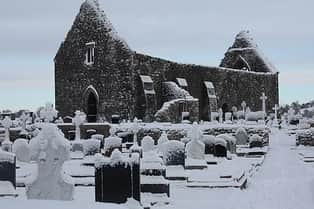
Nearby standing stones have their own supernatural story. Legend claims they represent druids who were turned to stone after attempting to drive St Caillín from the area. The abbey was dissolved in the sixteenth century and suffered further destruction during the conflicts of the seventeenth century. Today, its weathered ruins and ancient burial grounds remain a powerful reminder of the county's early Christian history and the legends that grew around it.
4. The Devil's Chimney: The waterfall that flows backwards
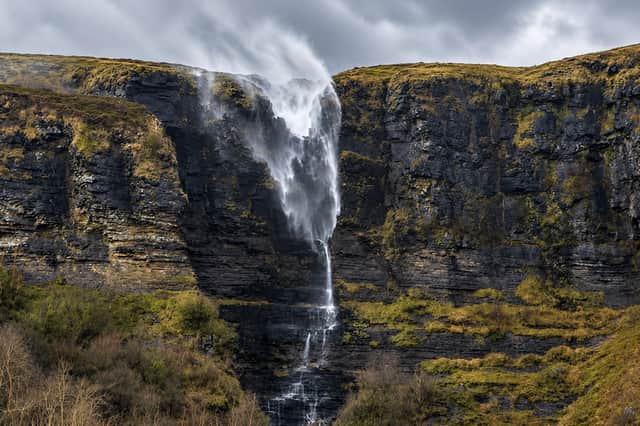
High above the Glencar Valley, close to the Leitrim-Sligo border, lies a natural wonder with a name straight out of a ghost story. The Devil's Chimney, known in Irish as Sruth in Aghaidh an Aird, is famous for an extraordinary phenomenon: under certain conditions, its water appears to flow upwards.
The waterfall, which drops approximately 150 metres, is especially dramatic after heavy rainfall. When powerful winds sweep across the valley, the falling water can be blown backwards and upwards over the cliff, creating the remarkable illusion of a waterfall defying gravity.
Its unusual behaviour has inspired stories of supernatural forces and mysterious happenings. One tale associates the waterfall with a witch's curse, suggesting that its strange movement was caused by an angry spell.
The reality is a spectacular interaction between wind and water, but the eerie name and dramatic setting have ensured the Devil's Chimney remains a source of fascination. For those drawn to Leitrim's darker legends, it is another reminder of how the natural landscape can inspire stories that endure for generations.
5. Lord Leitrim: The ruthless landlord who met a violent end
Lord Leitrim, or William Sydney Clements, the 3rd Earl of Leitrim, was a notorious figure in 19th-century Ireland. His brutal treatment of tenants across his vast estates, combined with his alleged inappropriate advances toward women, made him one of the most despised landlords in the country. His cruelty culminated in his assassination on April 2, 1878, when he was ambushed and shot dead near Milford, County Donegal.
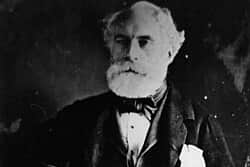
Though it was widely believed that his murder was an act of revenge by his oppressed tenants, the exact culprits were never officially identified. Lord Leitrim's ruthless legacy remains a dark chapter in Irish history, marked by violent reprisals and tenant suffering across his estates in County Leitrim and beyond.
Unlike the ghostly women and phantom coaches of Leitrim folklore, Lord Leitrim's story needs no supernatural embellishment. The brutality and violence of the period are chilling enough.