
Leitrim TD raises 'serious problems' at Sligo University Hospital in Dáil

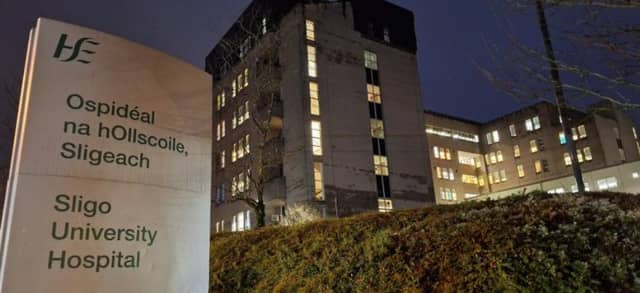

Serious overcrowding, repeated theatre closures and inadequate dialysis facilities at Sligo University Hospital were raised in the Dáil during debate on the Critical Infrastructure Bill.
The Dáil heard of serious problems in Sligo University Hospital from a Leitrim TD as a Government bill seeking infrastructure reforms was discussed.
The Critical Infrastructure Bill 2026 was brought forward for consideration by the Dáil and aims to address delays in delivering state infrastructure.
Local Sinn Féin TD Martin Kenny spoke about the impacts of “extremely poor” infrastructure in rural areas and the north west, citing water infrastructure and rail, but also noted that health is “another major issue.”
“In Sligo University Hospital we have serious problems with overcrowding, insufficient bed numbers and the age of the infrastructure,” said Deputy Kenny.
He spoke of the problems that persist in the orthopaedic theatre at the hospital. The unit has experienced persistent leaks for several years. Last May, surgeons from the unit appeared on RTÉ News highlighting the conditions they are forced to operate under for almost a year.
Repairs were ongoing in the latter part of 2025, and the theatre was then forced to close again at the start of October 2025 when water came through the roof during a storm. The roof has since been completed, but problems are still persisting with radiator pipework, leading to the cancellation of surgeries.
“The roof of the theatre for orthopaedics leaked last summer. When the roof was fixed it was then discovered there was another problem with the heating,” Deputy Kenny told the Dáil.
“For the past year, the theatre has been closed more often than it has been open. That is because that particular piece of infrastructure has aged out,” he added.
He said the theatre is not fit for purpose and needs to be “built out anew.”
He added that there are also issues with the renal unit at the hospital. “We have a similar problem with regard to renal services. People attend the hospital for dialysis but again, the services in place are totally inadequate. Promises have been made but nothing has been delivered.”
Further infrastructure problems that Deputy Kenny cited in the Dáil in the north west include roads, calling the situation a “serious problem,” and adding that the north west area has the greatest potential and the least investment.
“The problem seems to be that Governments continually look at where the crisis is rather than planning long term for the future, which is what needs to happen. We need a Government that will plan for the future and provide services and critical infrastructure for people in order that we have an economy that functions,” he said.
“Most of the west, including my part of the country, has the greatest potential because it has the least investment. The eastern seaboard is bursting at the seams. Nobody can get a house to rent in Dublin, yet in other parts of the country where there is ample space and opportunity, there is no investment,” he added.
Another issue he referenced was people who leave the north west region after they receive third level education due to the lack of opportunities arising from insufficient infrastructure.
“People always say to me that when they educate their children, most of them will be getting jobs for graduates and a lot of those graduate jobs are elsewhere, not back in their own region. The main reason is that they do not have the infrastructure to get those jobs to move into the region.”