
Proposed budget allocations ‘would have required mass teacher redundancies’
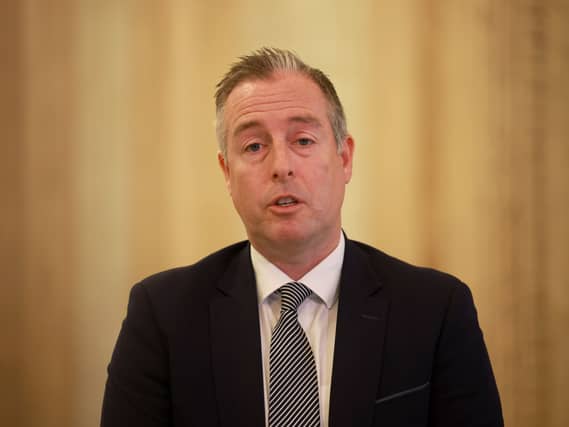

A Stormont budget has not yet been agreed this financial year.
Proposed funding allocations for Northern Ireland’s education department would have required mass compulsory teacher redundancies, MLAs have heard.
Education Minister Paul Givan said the savings his department would have had to find would have been “unachievable”.
A Stormont budget has not yet been agreed this financial year with ministers saying they have not been adequately resourced by the UK Government for their departments.
Mr Givan said education “remains significantly and persistently underfunded” and faces unavoidable cost pressures and rising service demands driven by statutory obligations and policy commitments.
“Yet the funding provided has consistently failed to keep pace,” he told MLAs in the Assembly on Tuesday.
“If we look at the proposed allocations that the Finance Minister’s draft budget had been showing, the department would have been required to make savings of £0.6 billion, that’s £600 million in this financial year, that would have increased to £900 million by 2028/29.
“The savings that would be required to address reductions of this scale are simply not achievable, it would harm the delivery of education and it would harm children’s outcomes.
“Given that approximately 82% of the education budget is spent on staffing costs, there is no reasonable prospect of living within the proposed allocations without mass compulsory teacher redundancies… that devastate educational outcomes… something that I would not support.”
Mr Givan was responding to a request in the Assembly for an assessment of the consequences of education staff salary increases not being paid due to budget constraints.
He responded saying he “fully recognises the concern and uncertainty caused when agreed salary increases are not paid promptly”.
But he said in the absence of an agreed budget the previously agreed 3.3% increase for support staff “remains part of wider Executive discussions on public sector pay”, adding his department is “currently not in a position to approve implementation”.
“I have asked my permanent secretary to meet with the support staff trade unions in the first instance to discuss the implications,” he told MLAs.
“I’ve also ensured that the estimated cost of this pay award was identified as an inescapable pressure in the department’s budget submissions.
“Once the public sector pay issues are resolved, we will seek to implement the pay award as quickly as possible and the award will be backdated to April 2026 in accordance with the pay settlement.”
He warned that should the matter continue to be unresolved it could create difficulties.
“I want this to be resolved. These members of staff have rightly received this pay award as part of the national joint committee in terms of that process, it is outstanding in terms of the payment being given effect because of the inadequate budget available to this Executive, that is something we are seeking collectively to engage on, and working with the UK Government to resolve for all public sector workers who rightly should have their pay awards made.”