
Use of veto to block age of criminal responsibility change in NI ‘disappointing’
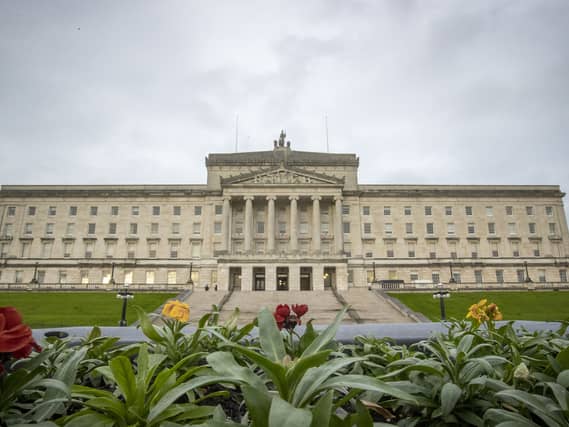

MLAs debated an amendment to raise the age of criminal responsibility from 10 to 14 as part of the Assembly passage of the Justice Bill in Stormont.
The use of an Assembly veto mechanism to block a move to raise the age of criminal responsibility in Northern Ireland has been branded “deeply disappointing” by campaigners pressing for the change.
MLAs debated an amendment to raise the age of criminal responsibility from 10 to 14 as part of the Assembly passage of the Justice Bill.
Alliance MLA Sian Mulholland proposed the amendment to the Bill, which would have raised the age to 14 for most offences, with the age set at 12 for the most serious offences of murder, manslaughter and rape.
But it emerged on Monday night that enough unionist MLAs had signed what is known as a petition of concern.
A valid petition of concern means that the vote on the proposal will have to be backed by a majority of unionists and a majority of nationalists in order for it to pass, rather than a straight majority.
This means the change is set to be rejected when the vote takes place, as a majority of unionists have already signed the petition of concern in opposition to the proposal.
The petition, which requires the backing of 30 members, was signed by DUP and TUV MLAs and four Ulster Unionists.
Until last night, it had been unclear whether enough UUP MLAs would sign it, as the party had been divided on whether it was appropriate to use a petition of concern in such circumstances.
The petition is a peace process construct designed to protect minority rights in Northern Ireland’s divided community.
Other politicians have criticised those who signed the petition on the vote on the age of criminal responsibility, saying it was a misuse of the mechanism as it was nothing to do with minority rights.
On Tuesday, UUP leader Jon Burrows said the legislation was “dangerous and ill-conceived”.
“That legislation would go contrary to everything I believe in about putting victims and public protection first at a time when women and girls in our society are facing grave threats, harassment, sexual abuse, this would have legalised almost all of that behaviour for anyone under the age of 14,” he told reporters at Parliament Buildings.
“It’s the wrong signal to send to our society and it was profoundly dangerous.
“We used the petition of concern to stop that. That is a legitimate democratic lever which should only be used in extremis and that is why we used it last night.”
Mr Burrows denied there had been any “inducements or threats” to convince enough UUP MLAs to back the petition of concern.
“I do my politics with honour, I made the case very strongly as to why this was dangerous law, we got the four signatures we needed and the petition of concern went through,” he said.
“There were no deals, no threats and no inducements.”
Earlier, John O’Doherty from the Children’s Law Centre, speaking on behalf of the Ten Is Too Young Coalition, voiced concern at the use of the petition.
“It was designed to protect minority rights, not block children’s rights reform,” he told BBC Radio Ulster.
“Its use here is deeply disappointing, and we believe a misuse of the mechanism and the result of that is going to be that vulnerable children will continue to be criminalised and those who suffer most are disadvantaged young children.”
He said: “I think there’s a lot of people will lose confidence in the Assembly when they see mechanisms like this being used, and I don’t think that’s helpful for anyone, not least of all our MLAs.”
While UUP leader Jon Burrows and deputy leader Diana Armstrong had agreed to sign the petition of concern, it had been unclear until last night whether any of their party colleagues would join them to take the number of signatures to the required threshold of 30.
It emerged during the debate in the Assembly that UUP MLAs Alan Chambers and Robbie Butler had also signed the petition to reach the required 30 signatures.
Alliance deputy leader Eóin Tennyson said the use of the petition was an “abuse of the rules”.
“This is a hammer blow to public confidence in the ability of the institutions to deliver any kind of progressive change that 30 MLAs can block the democratic will of a 90-member assembly – that is not democracy, it is an abuse of democratic process,” Mr Tennyson told Radio Ulster.
“It is further evidence in terms of why the Assembly needs fundamental root-and-branch reform because otherwise we are condemning the institutions either to death by a thousand collapses or more likely death through a slow bleed of public confidence in the ability of the institutions to deliver anything.”
DUP Education Minister Paul Givan said the use of the petition was appropriate.
He said the Good Friday/Belfast Agreement that established the mechanism stated that key decisions should be taken on a cross-community basis.
“On the cross-community aspect, if this is wrong (the use of the petition), why is the budget, for example, automatically a cross-community vote that affects all of our society equally, whenever it comes to budget,” he told the BBC.
Mr Givan said: “People now want to engage in revisionism about what the intention is. The intention is to have a cross-community, powersharing executive and assembly that operates on consensus. That was good enough whenever unionists were in the majority but now, whenever we have a Sinn Féin/SDLP/Alliance coalition, they’re the majority of parties, they would be able to vote through everything on simple majority votes.”
The minister said his party had been consistent on the issue and was motivated by a desire to protect victims of crime.
“I think some parties have had convulsions about the fact that the Belfast Agreement has been operated in the way in which it has been intended, but the DUP will always operate on the basis of what is best for the victim,” he said.