
Children in residential care twice as likely to have a disability, figures show
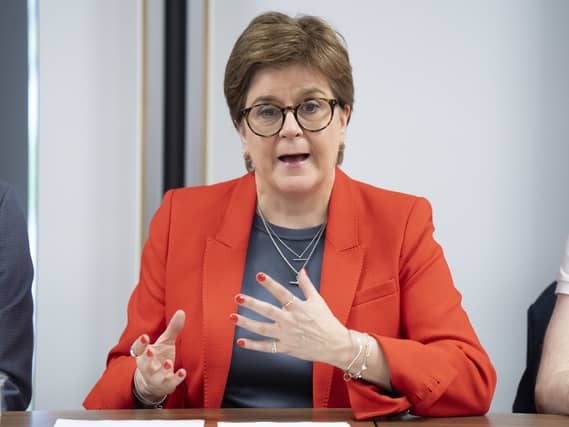

The Government has been told the care system is in ‘desperate need of an overhaul’ amid ‘tragic’ consequences for young people.
Children in residential care are more than twice as likely to have a disability as those in households, figures have shown.
The Scottish Government’s Children in Residential Care statistics showed 18% of children in residential care had an activity-limiting health problem or disability which has lasted, or is expected to last, at least 12 months, compared with 9% for children in households.
A third of children in residential care had a learning disability, learning difficulty or developmental disorder, compared to 9% for children in households.
Duncan Dunlop, a Lib Dem MSP and former chief executive of Who Cares? Scotland, warned children are facing the “tragic and life-limiting consequences” of inaction.

He said Nicola Sturgeon’s pledges on The Promise had failed to materialise.
The former youth worker said Scotland’s care system is in “desperate need of an overhaul”.
The figures, based on the 2022 Census, showed that 16% of children in care had a mental health condition, compared to just 3% of those in households.
The Scottish Government said children in residential care tend to be older on average than children in households, which is likely to account for some differences in health outcomes.
There were an estimated 975 children in care in Scotland in 2022 with 60% aged between 15 and 17 and 56% being male.
Most children’s health was reported as good or very good, although this was lower for residential care (92%) than households (97%).
Mr Dunlop said urgent change is needed to improve the lives of young people in care.
He said: “Nicola Sturgeon’s 10-year-old Promise said that families would be supported to look after disabled children and those with additional learning needs.
“That engagement, however, has failed to happen. If it had, it would have unleashed the love that so many people and communities across the country are ready to provide for these children.
“Yet again, it leaves us questioning the very point of The Promise when so many of its commitments have been broken or left to fall by the wayside.
“The care system is in desperate need of an overhaul, but it has failed to materialise, and the consequences of this inaction are tragic and life-limiting for young people.
“The Scottish Government urgently need to do better and I will be using my voice in Parliament to make sure that they finally step up to the mark.”
The Promise was one of Ms Sturgeon’s flagship goals as first minister, which pledged to improve the lives of young people in care.
In March, she said the Parliament would need to undertake a “monumental effort” to deliver The Promise.
In her last speech in Holyrood before she stepped down ahead of the Scottish Parliament election in May, Ms Sturgeon said that while she was the first minister who made The Promise, the “real place in history belongs” to the first minister who keeps it.
She said: “It does feel fitting, fated even, that I am making this final speech on an issue as close to my heart as The Promise is and always will be.”
The Promise minister Siobhian Brown said: “Through The promise we are determined to ensure every care-experienced young person has the best possible support they need to achieve their full potential.
“We are also taking action to support disabled children and their families, with £2.9 million this year to provide grants through the Family Fund, alongside support for organisations such as The Yard that work with families who care for disabled children and young people.
“When children are placed in residential care they tend to be older, which is when some health conditions and disabilities are more likely to be identified, as reflected in these statistics.
“All children living in residential care should receive the highest standard of healthcare services. These are delivered through individual health boards, which are required to conduct initial health assessments for looked after children and support delivery of any identified care plans.”