
Half of Scottish teenagers say AI has made them rethink career goals – survey

The research also discovered that more than half want to learn skills artificial intelligence ‘can’t replace’.
Half of Scottish teenagers have said artificial intelligence (AI) has already made them rethink their career goals, a survey has found.
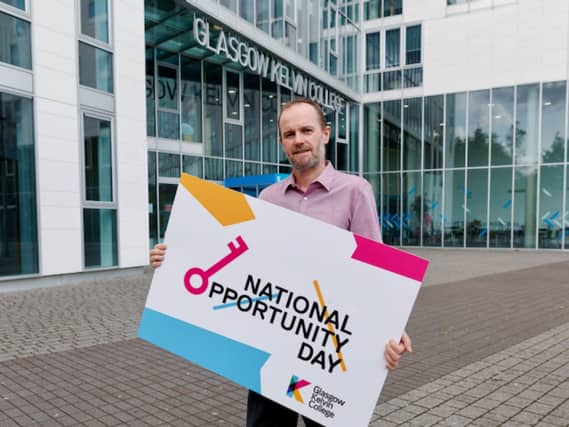
The research, commissioned by Glasgow Kelvin College to mark National Opportunity Day 2026, also discovered that more than half want to learn skills AI “can’t replace”.
“What stands out from these findings is just how switched on young people are to AI and the impact it is likely to have on their future,” Robin Ashton, vice principal of curriculum and quality enhancement at Glasgow Kelvin College, said.
“They aren’t simply using the technology, many are already thinking about where it can help them, where they need to rely on their own abilities and, importantly, which human skills are likely to become more valuable as AI develops.”
The survey, conducted by independent insights agency Opinion Matters, surveyed a sample of 517 teenagers at Scottish schools aged 13–18.
It found that 55% of Scottish teenagers are actively looking to learn skills they believe cannot be done by AI.
Half said AI has already made them rethink their career goals, and while 60% are excited to learn skills that work alongside the technology, almost half said they pay for a premium AI service.
The survey found that 54% of surveyed teenagers believed AI represents an opportunity for their career prospects and 55% said they know it will affect their future but are not worried about it.
At the same time, 56% said they are worried about its impact on their career prospects and the same proportion believes it could make finding a job harder.
The findings come as artificial intelligence increasingly affects not only education but the world of employment young people will enter after leaving it.
Mr Ashton said the findings show young people are already thinking seriously about what AI means for their education, skills and careers.
“There is sometimes a tendency to talk about young people as though AI is something happening to them, but these findings paint a more nuanced picture,” he said.
“This is a generation growing up with technology and learning how to navigate it.
“That doesn’t mean there aren’t challenges – young people themselves recognise the risks of becoming over-reliant on AI and are concerned about what it could mean for employment – but they are also questioning what they see online, thinking about when AI is useful and considering how their own skills will need to evolve.”
He said this is where colleges have an “increasingly important” role to play.
“Glasgow Kelvin College gives people the opportunity to develop the practical, technical and interpersonal skills employers need, while also learning how emerging technologies can complement those skills,” Mr Ashton added.
National Opportunity Day was created by Glasgow Kelvin College to shine a light on the education, training and career opportunities available and encourage people to look at the opportunities available to them and consider routes they may not previously have thought possible.
In addition to career goals and skills, the survey also found that 50% of the 13 to 18-year-old respondents pay for a premium AI service – a sign of the value teenagers place on the technology.
Almost two-thirds (63%) said the rise of AI had made them question things they see online more often, while 56% believe they are good at spotting AI use in pictures, social media or writing.
The survey also found AI tools such as ChatGPT, Gemini, Snapchat AI and Copilot are now a routine part of teenage life with half using AI at least once a day, including 9% who use it three or more times daily.
Respondents said they use the technology for a wide range of purposes, with almost a third (32%) using AI to find information or answer everyday questions, while 29% use it for homework or schoolwork, and 26% use it to revise for exams (26%).
Others said they use AI to generate creative ideas such as art, music or stories (24%), for help writing emails or messages (21%), and coding or computer programming (20%).