
I’d expect to know about major issues, Swinney says amid NHS Grampian fallout
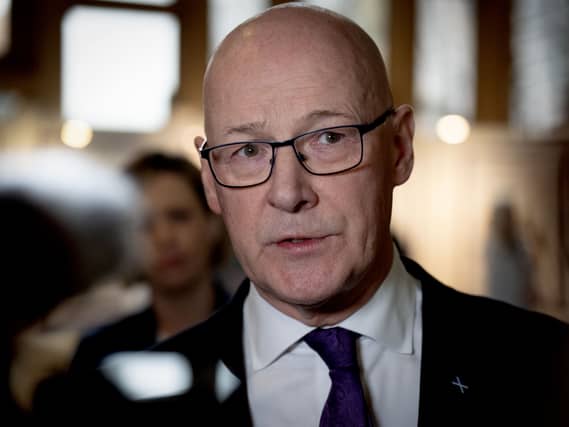

It comes after a former NHS chief said the Scottish Government knew of plans to hide a report into 19 unnecessary deaths.
John Swinney has said he expects to be made aware of “significant issues” in public services, after a former NHS chief said the Scottish Government knew that a report exposing 19 avoidable deaths would be hidden from the public.
Asked about the NHS Grampian report, the First Minister said “something of this significance is something that requires the attention of ministers”.
Professor Caroline Hiscox, who led the health board between 2020 and 2023, told Holyrood’s Health Committee that Government officials were informed of the NHS board’s “communications approach” that meant the deaths report would be kept private.
An October 2022 report highlighted 19 deaths at Aberdeen Royal Infirmary’s hepatobiliary (HPB) department, with the document exposed in revelations from surgeon Dr Mohammed Habib last week.
Chief medical officer Professor Sir Gregor Smith – who announced his resignation on “health grounds” on Thursday – told a Holyrood committee he briefed then health secretary Humza Yousaf on the report at the time, but it was not clear if it was escalated to then first minister Nicola Sturgeon.
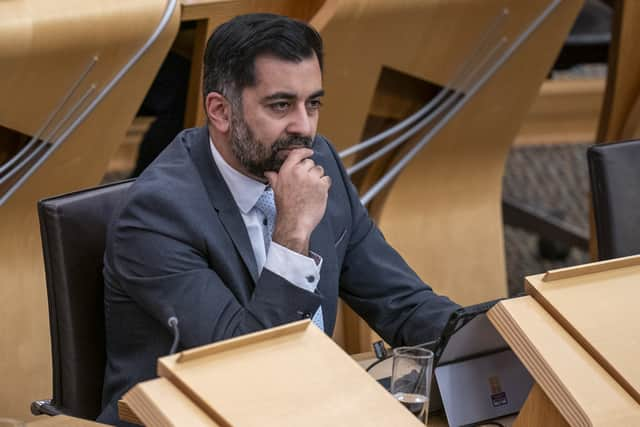
Following the revelations, Mr Swinney said neither he nor current Health Secretary Angela Constance had been made aware of the report until press reports last week, despite numerous attempts from Dr Habib to make contact.
Speaking in Glasgow ahead of an anti-racism march, Mr Swinney was asked if his officials were made aware of a similar case at an NHS board during his premiership, and whether he would expect to be made aware.
He told the Press Association: “I would expect to know as First Minister of significant issues that are happening in all aspects of public services and in issues in the country.
“I look at hundreds of pieces of documentation on a daily basis, looking at issues that have been handled, that have been addressed, judgments that have been made, and something of this significance is something that requires the attention of ministers.”
Mr Swinney said he does not have the “answers to all the questions as to why this information was not shared more widely”.
He said it was “important that all of these questions are fully considered” by an independent review.
Asked if the then Government leadership failed to make the report public, Mr Swinney said: “I’ve committed myself and the Government to participating in an open inquiry which is what Parliament has asked us to do and that’s exactly what we are going to do.
“We’ll look at all these questions and we’ll respond to them at the right time. We’re not going to get the cart before the horse. We’re going to do it properly, looking at all the material, looking at it openly then coming to a judgement.”
Pressed on whether the first minster at the time would have been told about the NHS report, the SNP leader suggested questions were better left with the inquiry.
He said: “There’s lots and lots of detailed questions here and we’ve got a choice of all of this. We either have a proper, open, fully transparent inquiry that looks at all the detail and all the information available, or we do it on a piecemeal basis.
“I don’t think we’ll serve the public well if we do it on a piecemeal basis.
“I don’t think I could have committed myself to a more open approach with the public about the issues in connection with the independent review.
“I want that to take its course. I want to have all the information it needs access to so that it can be shared with members of the public.”
In a written submission to the Health Committee, Professor Hiscox signalled that the review was kept hidden to “avoid causing undue public alarm” that could deter people from accessing the NHS.
She wrote: “The chief executive and the chair of NHS Grampian considered it appropriate to provide a full briefing to the whole NHS Grampian Board in an extraordinary minuted meeting of the Clinical Governance Committee on October 27 2022.
“This would protect patient and staff confidentiality and provide time for individual patients and families to be contacted; enable full and frank discussion of the issues and avoid causing undue public alarm that could potentially increase the likelihood of late presentation and possibly lead to poorer health outcomes.
“The primary consideration was to prioritise a trauma-informed, family-centred approach and protect the integrity of further reviews recommended by the Wigmore/Toogood Report.
“Prior to the October 27 2022 Clinical Governance Committee meeting, non-executive members of the NHS Grampian Board were briefed by the Medical Director at the monthly non-executive informal session on October 20 2022 on the conclusions of the Wigmore Report and the immediate actions being taken in response.
“This was an informal briefing and non-executives were encouraged to attend the Clinical Governance Committee meeting the following week, for which detailed briefing papers were provided in advance.
“This communications approach was shared with relevant officials at Scottish Government.”