
‘More hope now than ever’ for MND treatments amid £5m research investment


The investment will help accelerate research into motor neuron disease (MND) treatments.
Campaigners have said there is “more hope now than ever before” following a new £5 million investment in motor neurone disease (MND) research.
The My Name’5 Doddie Foundation (MNDF), the MND Association and medical research organisation LifeArc have jointly announced that they will commit £1 million a year over the next five years to expand the UK MND Research Institute and help accelerate research into treatments.
MND is a fatal and typically rapidly progressing disease which affects the motor neurons of the nervous system (the cells that carry messages from the brain to your muscles).
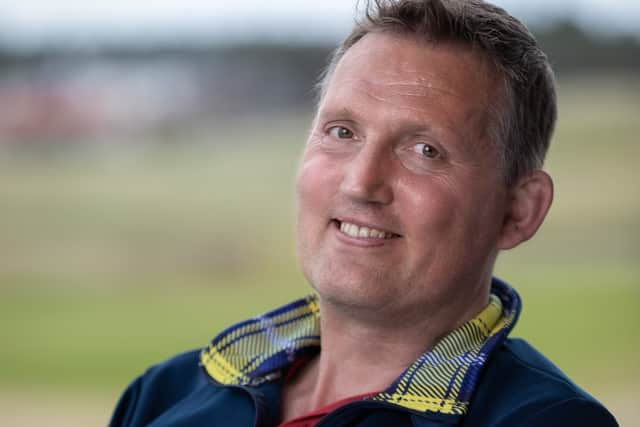
According to MNDF, which was set up by late rugby star Doddie Weir following his diagnosis in 2016, people diagnosed with the condition lose their ability to walk, talk, eat and breathe as the disease progresses and muscles weaken.
More than 10,000 people in the UK will be diagnosed with the condition over those five years.
The latest investment will go towards expanding the national research network to include additional universities, strengthen shared resources, and help more people living with MND take part in research.
David Setters, a member of the UK MND Research Institute’s executive group who was diagnosed with MND in 2012, said the £5 million will gives scientists “the bedrock funding they need” to keep moving forward in search of effective treatment and an eventual cure for MND.
“There is more hope now than there has ever been,” Mr Setters said.
“I was diagnosed in 2012 and feel very fortunate to have lived for 14 years with MND – most people do not have that time.
“It is incredibly difficult to see people you have got to know die from the disease, and that is what drives us to keep pushing for more.”
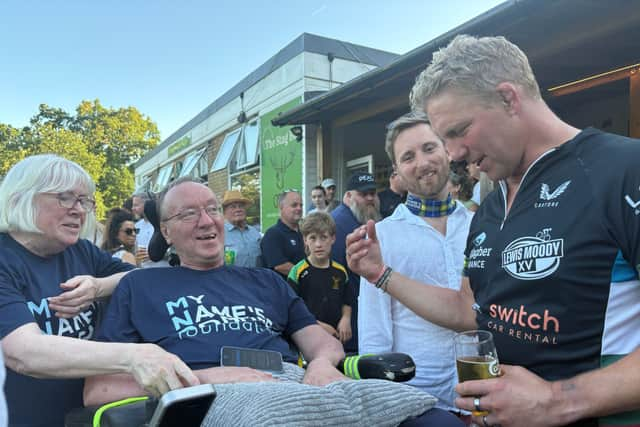
Dr Mike Rogers, director of research and innovation at the MND Association, said we need “strong collaboration and the most innovative thinking” to drive progress for every family that is affected by the disease.
“That’s why it’s so vital that the institute is joining the dots between the brightest minds at leading centres of MND research, increasing the pace of discovery towards treatments and a cure,” he said.
The institute brings together leading research centres to understand how and why MND develops, identify promising therapies and support clinical trials.
The first phase brought together researchers from across the UK and established a co-ordinated system for collecting patient samples and began to bring health and research data together.
The next phase will strengthen the support needed to raise awareness of clinical trials, increase participation and help researchers deliver them.
It will also combine digital datasets to give researchers a fuller picture of the disease and make the laboratory models more widely available.
Professor Christopher McDermott, co-director of the UK MND Research Institute, said the funding hopes to build on the infrastructure and achievements that have already been made.
“This means more people living with MND, wherever they live, can take part in research, and the most promising ideas can move towards testing in people as quickly and safely as possible,” he said.
He added that the institute is “hugely grateful” to MNDF, the MND Association and LifeArc for their continued support.
Jessica Lee, director of Research at MNDF, said the charity is “proud to continue supporting efforts that bring together researchers, clinicians and people affected by MND with the shared goal of finding effective treatments and, ultimately, a cure”.