
Scottish Government ‘considering the feasibility’ of NHS corridor care data
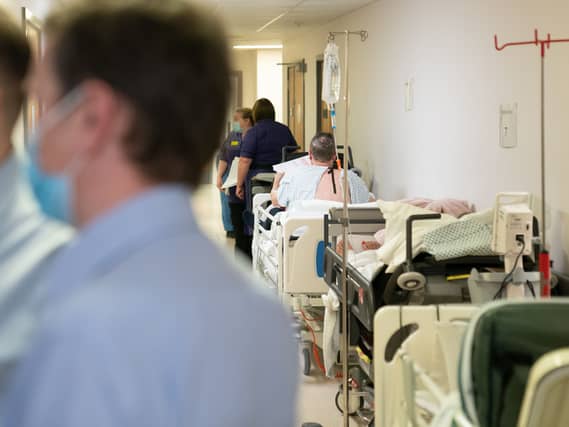

Health Secretary Angela Constance said the Government was ‘actively considering’ whether data could be collected and published.
The Scottish Government is “actively considering the feasibility” of collecting data on the number of NHS patients treated in hospital corridors, Health Secretary Angela Constance said.
She added that “accurately capturing this information consistently at a national level” would present “complex technical and operational challenges”.
Ms Constance admitted that the number of hospital patients receiving care in “non-standard areas” was “too high”.
This was “clearly not acceptable” she said, and it was a “key priority” for the Scottish Government to tackle the high hospital occupancy levels, which result in bed-blocking and patients having to be cared for in areas such as corridors.

Her comments came in answer to a call from the Scottish Liberal Democrats for Scotland to follow England and publish figures on the number of patients being cared for in corridors.
Speaking on behalf of the Scottish Government Ms Constance said that ministers were “focusing on improving patient flow so people are admitted, treated, and discharged safely and on time”.
She continued: “As part of our first 100 days commitments, we will deliver a plan on improving flow in hospitals, which will set out improvement in end-to-end patient flow, ensuring people receive the right care, in the right place, at the right time.”
Figures published by NHS England showed that in July there were more than 3,000 patients a day being cared for in hospital corridors or other makeshift areas.
An average of 2,300 patients received corridor care in A&E departments in England each day in the last month, with 728 patients elsewhere in hospital wards, totalling 3,028.
Liberal Democrat health spokesperson Adam Harley said “the figures from England paint a grim picture” and claimed corridor care had “become normalised in Scotland too”.
The MSP said: “When patients are being treated in corridors, it is a clear sign that the system is under intolerable pressure.
“No patient should be treated in a corridor, and no doctor or nurse should have to provide care in those conditions.”
Saying that treating patients in corridors must never be regarded as “normal” Mr Harley added: “Ministers need to explain to patients, families and NHS staff how they will finally end this unacceptable situation.
“That starts with proper collection and publication of data on the scale of the problem.”
He said the situation had arisen because “the failure to fix social care means our hospitals are full of people who are ready to leave, while A&E waiting rooms are full of people waiting to be seen”.
Mr Harley added: “Far too many people are stuck in hospital, despite being medically ready to leave, because the care package they need isn’t available.
“Scottish Liberal Democrats want to encourage more people into caring professions and boost pay and conditions for care workers so that everyone is seen in good time and we get our NHS back on track.”