
Scottish Water would not allow ‘horror stories’ from data centres over water use
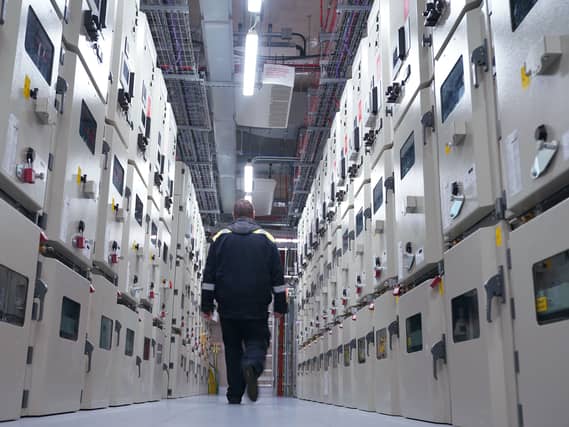

Campaigners have raised concerns about the impact new data centres could have on water supplies, but Scottish Water sought to reassure MSPs.
Scottish Water bosses would prevent “horror stories” with water “disappearing” because of data centre developments, MSPs have been told.
Holyrood’s Climate Action Committee heard evidence that the publicly owned utility would ensure new data centre developments do not impact water supplies for customers.
Colin Lindsay from Scottish Water Horizons – the commercial subsidiary of Scottish Water – sought to reassure MSPs when he appeared before them on Thursday.
While he said “there are horror stories out there about water disappearing out of towns’ systems because of data centres” he was clear “that is something that Scottish Water wouldn’t allow to happen”.

Mr Lindsay told the committee Scottish Water has controls in place to assess the impact on demand to make sure “it doesn’t have an impact on the customers”.
And he said that if it was assessed that existing water networks “couldn’t cope” with demand from a proposed data centre “the developer would have to pay to upgrade that, to ensure that that service was still maintained”.
The committee is currently looking at the potential impact of planned new data centres in Scotland, while at the same time the Scottish Government works on new planning guidance, which is due to be published before Christmas. Councils will then be able to use this when deciding if new data centres can go ahead.
With 23 applications currently under way at the moment, Mr Lindsay told MSPs that Scottish Water is involved in “about 15 or 16” discussions with developers about issues surrounding water use, adding that the “sector has really come alive for us in the last 12 months”.
Concerns about high levels of water use by data centres have been raised by campaigners opposed to such new centres being built.
But Mr Lindsay said Scottish Water had made “quite clear to the data centre community” that if their developments need to use tap water they must then operate a “closed loop” system for this which “minimises the impact from a water consumption point of view”.
His comments came as Professor Mark Parsons, from the University of Edinburgh, told the MSPs: “There is very little sense in building more and more data centres down in the south of England.”
Prof Parsons, director of the university’s EPCC, the UK’s first national supercomputing centre, added: “Scotland’s got power, it’s got space, it needs to create a vibrant growing economy.
“And I think we shouldn’t let ourselves think that data centres are bad. If we want to have AI, if we want to have places to store our music and our photographs, if we want to have email, if we want to have Microsoft documents, then there needs to be these things called data centres.”
Meanwhile, Simon Kerr said that data centres could be a “gift from heaven” for the heat network sector.
Schemes such as district heating projects work by taking waste heat from developments such as data centres, and then using this to heat homes and businesses.
But Mr Kerr, from heat network experts SAV Systems, said that the sector had been “flatlining” for the last two decades.
He told the committee this could change if planning conditions insisted upon data centres being required to capture and use their waste heat in such schemes.
Mr Kerr said: “Heat networks are struggling at the minute to get off the ground in Scotland for various reasons, we have been flatlining for 20-odd years.”
But adding that the sector was “at a crossroads”, he told MSPs: “The data centres have been handed to us like a gift from heaven, if we do it right.”