
Swinney calls for Dundee University and union to find peace deal to end strike
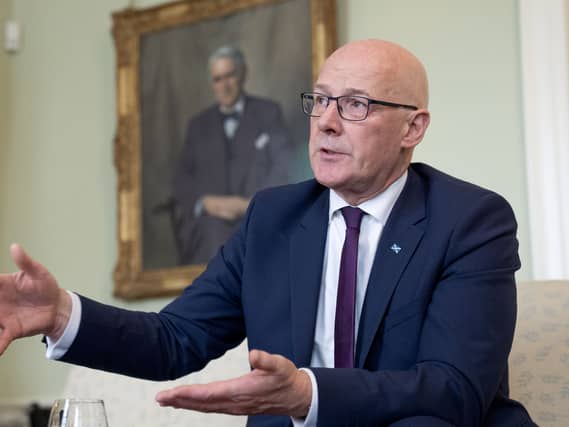

A five-week long strike has been called by the University and Colleges Union.
Scotland’s First Minister has urged Dundee University and the University and Colleges Union (UCU) to find a resolution as a planned five-week strike got underway.
Members of the UCU voted to strike as a result of the university’s massive drive to cut costs, which has seen almost one third of its workforce leave already.
The institution has faced financial crisis in recent years, which was blamed on governance issues of previous leaders and has resulted in more than 800 jobs already being cut, with further plans for 154 more to go.
But speaking to the Press Association on Monday, the First Minister pushed for a resolution.
“I regret very much the fact that there’s to be industrial action at the University of Dundee,” he said.
“The Government has stepped in already to financially support the university, given the financial difficulties it’s faced because of financial mismanagement.
“The university is a very highly regarded university, we saw that in the university rankings at the weekend.
“It’s highly regarded educationally and in research terms as well, so I want to make sure there’s no disruption to students.
“I want the university leadership and the trade unions to come together to find a way through this.
“The Government has expressed and offered and given support to the university to help it through its difficult times and, if the university and its unions can come together, it can help the university to thrive, which is what all of us want to see.”
A spokesman for the institution said a meeting is in the process of being set, with hopes talks could take place this week.
He said: “We are discussing a dispute resolution meeting with the UCU which we hope will take place this week.
“We have always been, and remain, open to dialogue with UCU, in the same way as we have engaged with our two other campus trade unions throughout this period of change.”
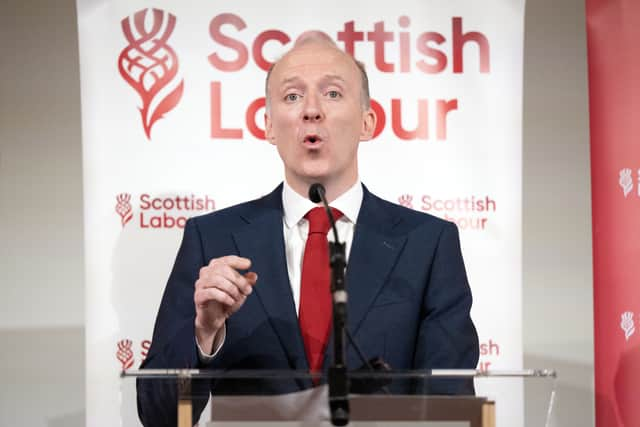
While Michael Marra, the newly-elected leader of Scottish Labour who worked at the university for more than a decade, said: “The first thing I did this morning before coming to the college was go to the picket line at the University of Dundee and stand with my old colleagues.
“I worked in that university for 14 years, and the extraordinary number of jobs that we lost is one of the – probably the biggest – industrial impacts that this this city has had in more than a generation.
“It’s been a grotesque betrayal of the workers, but also of the city.
“So, it’s a huge challenge, and you know the more that can be done to protect jobs, given the scale of those losses that are already taking place, is absolutely vital.
“My heart goes out to all those people that have been affected, many of whom are friends and former colleagues of mine.”
Speaking on BBC Radio Scotland on Monday, the university’s principal, Professor Nigel Seaton, said he believed most classes would go ahead over the five-week period.
“We hope that, whilst I would defend and support the right of the trade union to strike, we would hope that, given the disruptive effect on the studies and the lives of our students, that as few of our colleagues will take strike action as possible,” he said.
“I’m pretty confident that most classes will go ahead and we’ll just have to see what the impact is.
“We’ve had a number of strikes by this union in the past, we’ve had a number, indeed, in the past academic year, and we have very good procedures, very good processes for coping with it, and we will do our best.”
Earlier on the same programme, Dr Melissa D’Ascenzio, the co-chairwoman of the local UCU branch, said: “The university has no way of knowing, in fact, how many lectures and tutorials and seminars will be impacted,” she said.
“I feel this statement is more wishful thinking than an actual reflection of reality.
“Our members are more determined than ever to fight against compulsory redundancies.
“While disrupting semester one is extremely regretful, you have to understand that some of our members are still in redundancy pools and they are really worried about their future, their career, their livelihoods.
“Some members that are not in a redundancy pool at this moment are really worried about increasing workload and about the future academic provision of the university, so there is a very strong resolution in our branch to take action.”