
Universities face ‘acute and growing financial crisis’, ministers warned


A new report identified a funding shortfall across Scotland’s universities of about £200 million in 2023-24.
Scotland’s universities “face an acute and growing financial crisis”, ministers have been warned, with institutions left with a funding gap that has “grown markedly in cash terms since the Covid pandemic”.
New research found that for 2023-24, expenditure by universities exceeded their income by about £200 million.
The report went on to warn that as it stands, “current funding arrangements are insufficient to support universities on a sustainable basis”.
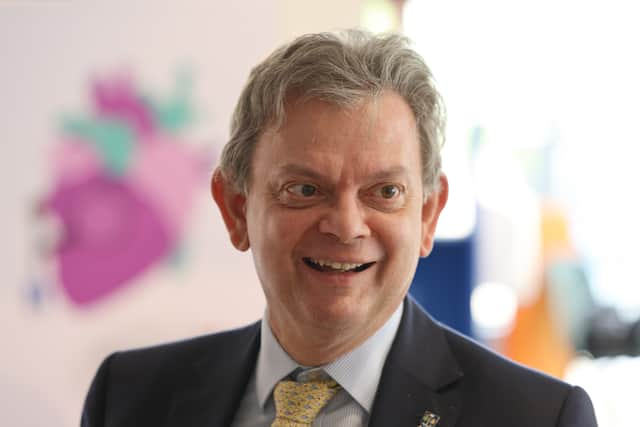
The work, part of the Future Framework initiative from the Scottish Government and Universities Scotland to look at the future of higher education, outlines a “bleak” situation, former Glasgow University principal Professor Sir Anton Muscatelli said.
Sir Anton, now the president of the Royal Society of Edinburgh, led the work which was the “first systematic attempt for many years” to examine the gap between income and expenditure across Scotland’s universities.
He said: “The picture it paints is bleak. Collectively, Scotland’s universities face an acute and growing financial crisis.
“The funding they receive – from both public and private sources – is not sufficient to sustain their core activities.”
Sir Anton added universities had endured a “persistent real-terms decline in public funding since 2016-17”, leaving the sector with an “ever-increasing reliance on other sources of income, particularly international student fees”.
This cash is needed to help with the costs of teaching Scottish students, carry out research and also maintain university buildings – with the report identifying a maintenance backlog which “exceeded £1.1 billion in 2023-24”.
But with international student numbers having “started to decline”, he said the “financial consequences for the sector as a whole have been immediate and severe”.
He warned: “Unless the sector can secure additional, reliable income streams – be that from public or private sources – it is not sustainable in its current shape and size.”
The report told how the university sector “faces a persistent structural funding challenge, with income not fully meeting the estimated costs of several university activities, particularly publicly funded teaching and research”.
It added that while institutions have historically managed these pressures through “cross-subsidy” with cash from other areas – particularly from the fees of foreign students – this model is now “becoming increasingly fragile”.
Describing the problems as “systemic” rather than limited to certain institutions, the report went on to warn: “Rising costs, declining real-terms public funding, and growing uncertainty in international student recruitment are placing significant strain on institutional sustainability.”
Insisting the current funding arrangements are “insufficient to support universities on a sustainable basis”, the report told how publicly funded teaching had a funding gap of about £288 million in 2023-24.
It continued: “The evidence presented throughout this report points to substantial funding challenges across several university activities.
“Publicly funded teaching and research consistently recover less than their full economic cost, while institutions report a range of infrastructure, workforce, student support, and other operational pressures.
“The scale and nature of these pressures vary across institutions and institutional groupings. Nevertheless, the findings suggest that the challenges identified are widespread across universities and their activities.”

Speaking as the report was published, Education Secretary, Màiri McAllan said: “Scotland’s world-class universities make an outstanding contribution to our economy and wider society.”
She said the Scottish Government’s policy of maintaining free tuition for Scots studying at the country’s universities means “Scottish students are not hampered by the levels of debt we see elsewhere in the UK, and they are able to go to university based on their ability to learn and not their ability to pay”.
But she acknowledged “the need to ensure a sustainable model of funding which recognises wider financial pressures facing universities in Scotland and indeed across the UK”.
Ms McAllan said: “This is not a challenge unique to Scotland. The UK Government’s crackdown on international student visa routes, coupled with Brexit, inflation, energy prices and increases to employer national insurance contributions have all added to the sector’s financial pressures.”
The report is “an essential first step in addressing these pressures”, Ms McAllan said, adding it will “help shape a constructive and forward-looking conversation about how we move forward in reforming the sector to be sustainable for the decades ahead”.
Universities Scotland convener Professor James Miller said: “Scotland’s universities have faced significant financial pressures for some time, and this report provides an important, evidence-based assessment of their scale.
“Importantly, it establishes a shared understanding between the sector and Government of the challenges that must now be addressed.
“The analysis is clear that the current position is not sustainable and provides a foundation for the work ahead.”
Mary Senior, Scotland official at the University and College Union, said: “This report comes as no surprise to workers in universities, as they along with students have been at the sharp end of this chronic under-funding.
“The reality of the unsustainable system is cuts to jobs and courses, unsafe workloads, stagnating pay, and all too many workers on precarious contracts.
“It’s vital that the next stage of this review leads to sustainable solutions.”