
Column: More focused discussions needed to advance cause of Irish unity
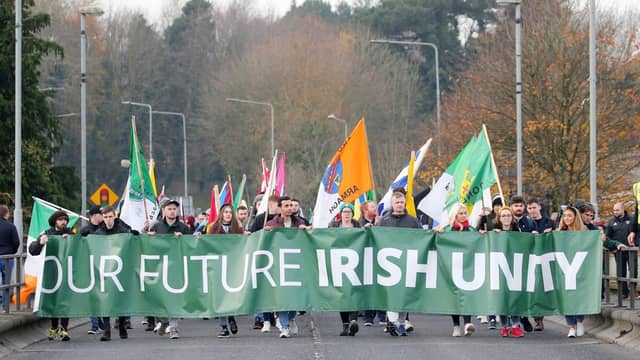

Debates on a United Ireland have yet to sufficiently address the practicalities of how reunification would look
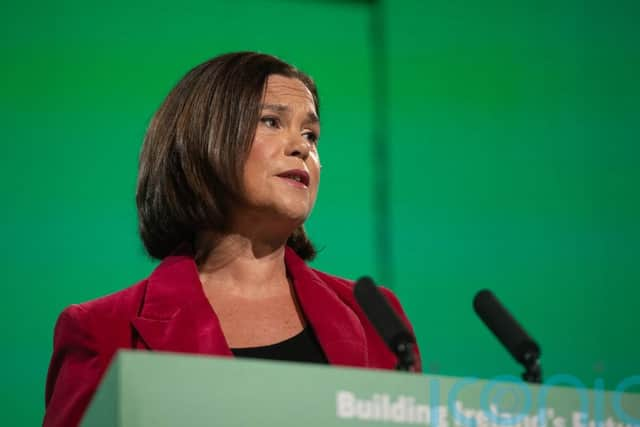
“This is the decade Irish unity can be won,” said Mary Lou McDonald at an Easter Rising commemoration speech in Dublin last month.
The leader of Sinn Féín banging the unity drum at an event in honour of the act of rebellion marking the beginning of the Irish revolutionary period is hardly an earth-shattering revelation, but it brings back into focus the conversation that may well be a defining decision in the years to come.
The only problem is that nearly 30 years on from the Good Friday Agreement, no one really knows what this decision will look like, and the powers that be seem more than content to kick the can down the road for 30 more years if they can get away with it.
The Taoiseach has said publicly that there will be no border poll by 2030, as is being pushed by unity advocates, and although this is a realistic position in the current climate, the work required to advance the process is not being done.
What needs to happen for an informed, in-depth conversation on the question of Irish unity?
It’s about as multi-faceted a question as one could pose, but in the main, it’s time to focus on practical questions like healthcare, public services, pensions and government, rather than the vague calls to action for republicans, without clear strategies on how their goals would be achieved.
READ NEXT: PICTURES: Glitz and Glamour of Hollywood comes to Kilkenny GAA Club - Page 1 of 18 - Kilkenny Live
The majority of conversations I end up in about the questions of unity focus on issues like ‘will we have a new flag’ or ‘would we have to have a new anthem?’
Not insignificant thoughts by any stretch, but there’s a sense of putting the cart before the horse whenever they’re asked. I can safely say, many people in Northern Ireland are sick of talking about flags.
In discussions about reunification, often ignored are the more glaring problems like the integration of the NHS; will a universal healthcare system need to be fasttracked in the Republic in the case of a referendum passing?
In the area of pensions and benefits; these would need to be harmonised across the public sector with the current level of average pay in Northern Ireland well below the Republic and the percentage of people employed in public jobs much higher.
Would Stormont continue to exist as a devolved parliament in Belfast with certain functions carried out by the Dáil assuming the role of Westminster, or would NI politicians be expected to take up seats in Leinster House?
These, and many others, are the questions that must be answered for the process of unity to be significantly advanced, rather than yet more timelines for a border poll without the necessary foundations being laid.
A 2024 Irish Times poll found that 48% of respondents in Northern Ireland supported the continuation of their position in the UK, 34% favoured a United Ireland while 14% remained undecided.
Changing demographics are inching the needle closer towards broader support for unity. The 2021 Northern Irish census was the first ever instance of the country having more people identifying as Catholic than Protestant and the performance of Sinn Féin in the 2022 Assembly election was the maiden victory for a republican party in Stormont.
In a country that was designed with the intent of perpetuating unionist domination these are seismic changes, but they still won’t be enough to bridge the current gap between those wishing to remain in the UK and those wanting Irish unity.
Although very far from being monolithic, the republican and unionist communities are largely entrenched on either side of the divide, and many others who may identify as catholic would rather maintain the status quo while a growing number choose not to align with either community.
For this section of the population to be swayed and brought on board with unity, there has to be a clear showing that the status quo can be improved and that a United Ireland would materially benefit their lives.
This is where the familiar identity politics will simply no longer cut it.
The Programme for Government makes reference to reunification with a rather vague platitude noting that it’s ‘committed to the unity of the Irish people and believes that this can only be achieved through a sustained focus on investment in reconciliation and we remain steadfast in implementing the Good Friday Agreement in full’.
More points about working to foster further collaboration between business and improving road connectivity between north and south are listed, but the major nuts and bolts of moving towards a United Ireland are glossed over and though organisations like Ireland’s Future are doing good work in pushing discussion, this is yet to be reflected in government approach.
Support for unity is much stronger in the Republic with around 67% in favour in a 2021 Irish Independent poll.
However, this number shrinks drastically when the topic of paying for a United Ireland comes up, with 54% responding that they would not be willing to pay higher taxes to achieve it.
Referenda would need to be held on both sides of the border for reunification, and just as much more effort has to go into informing people in Northern Ireland about what that would look like for them, the same must be done for those in the Republic, who would certainly have to shoulder some of the cost.
Although forecasts on the economic impact wildly differ with estimates of between €3b and €20b per year, some reports predict that the burden will vanish within a few years to be replaced by long-term benefits.
If voters south of the border are to be expected to foot some of the bill in a time of spiralling cost of living, a much more specific picture of what this would mean must be painted for them.
Lastly, the viewing of those living in Northern Ireland as the ‘other’ has to be tackled if an integrated society can ever be fully achieved.
The lack of knowledge or interest in anything to do with the north is often striking, with a huge amount of people never having even crossed the border.
This deficit in engagement leads to an outdated image of Northern Ireland being maintained, and although there are certainly distinct differences when one enters, the divide is nowhere near as stark as many in the south seem to believe.
Some personal highlights of these notions include my mother being asked by the mother of a friend whether it was safe to bring her children to Magherafelt for an athletics meet (c.2010, not 1970) or a housemate posing the question of whether she would be accosted for wearing green trousers in Belfast City centre.
The only real way misconceptions like this will ever be dispelled is if people pack the car for a weekend and actually see for themselves the brilliance that Northern Ireland can add to the Republic and vice versa, if the right work is done.
Despite Mary Lou McDonald’s goals, this is not the decade that Irish unity can be achieved, but if the ambition of the Irish government in driving the conversation is not drastically increased, no decade will ever be.
Article funded by the Local Democracy Reporting Scheme