
New report finds huge potential for biomethane industry in Kilkenny
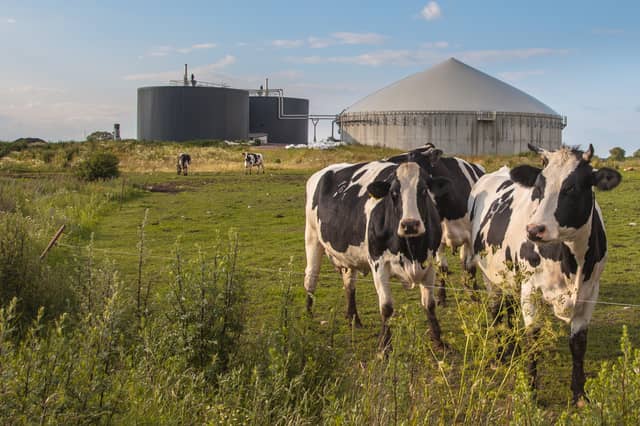

According to a new report from Gas Networks Ireland, Kilkenny has the potential for a biomethane industry which would produce enough renewable gas to produce 70 Gigawatt hours (GWh) of renewable gas for the 7,700 homes and businesses connected to the 299km gas network in the county and reduce carbon emissions by almost 19,000 tonnes annually.
Structurally identical to natural gas, biomethane is a carbon neutral renewable gas derived from organic sources such as landfill, food waste and agricultural waste.
Biomethane is fully compatible with the existing national gas network and existing appliances, technologies and vehicles. It seamlessly replaces natural gas to reduce emissions in heating, industry, transport and power generation.
The report is based on findings from responses to a market testing Request for Information (RFI) issued by Gas Networks Ireland to current and future biomethane producers in October 2022.
The report identifies 176 projects throughout Ireland that have the overall potential to produce 14.8 terawatt-hours (TWh) of biomethane per annum, amounting to 26% of Ireland’s current gas demand.
The RFI identified two potential biomethane production projects in Kilkenny.
Ireland’s biomethane potential as outlined in this report, both in terms of potential project numbers (176) and in terms of volume of biomethane production (14.8 TWh), demonstrate how achievable the Government’s target to produce up to 5.7 TWh of biomethane by 2030 is.
Gas Networks Ireland is confident that, with the right structures and policies put in place, the Government’s target can be achieved and possibly exceeded.
Gas Networks Ireland’s Chief Executive Officer Cathal Marley said the findings published in the report send out a strong signal that there is both interest in and demand for, biomethane production in Ireland.
"The appetite is there to produce enough biomethane to replace 26% of the natural gas currently consumed in Ireland," he said.
"This is more than two and a half times greater than the State’s current biomethane 2030 CAP Target (5.7 TWh), and it is also more energy than will be procured from Ireland’s first offshore wind auction, ORESS-1, which took place earlier this year."
Biomethane is a very flexible gas that contributes to circular economies, as it can be made from farm and food waste.
Its by-products include a digestate that can be used as environmentally friendly and highly effective fertiliser; and carbon dioxide, which can be used by other industries in for example the production of carbonated drinks.
In Denmark – which has a population and agricultural industry similar in size to Ireland – biomethane now makes up 34% of gas on the national grid, just 10 years after the first large plant was built there.
However, a new biomethane industry in Ireland, as with any emerging sector, will face challenges that must be overcome.
While the first Irish policy support for biomethane is in development, it is essential that it provides a framework that delivers long-term price certainty for biomethane producers and ensures that the planning and permitting process is aligned to the specific needs of the sector.
The next significant step of Gas Network Ireland’s biomethane journey will be the development of a contract and tender process for the procurement of biomethane for its own use.
This is aimed at replacing up to 50% of the gas we currently use in Ireland to operate the system.
In 2022, Ireland’s gas network transported 57.1 TWh of energy to Irish industries and households annually.
This is almost twice the energy transported by the electricity grid at 32 TWh last year. If Ireland is to reach its climate action goals, the gas network needs to be decarbonised, and biomethane will play a significant role in this process.
Gas Networks Ireland is working to replace natural gas with renewable gases, such as biomethane today, and hydrogen in the future, on Ireland’s existing gas infrastructure, which will help to substantially reduce Ireland’s carbon emissions while ensuring a secure energy supply, in the least disruptive most cost-effective manner.