
Palestinian children relocated to Kilkenny have been 'badly let down'

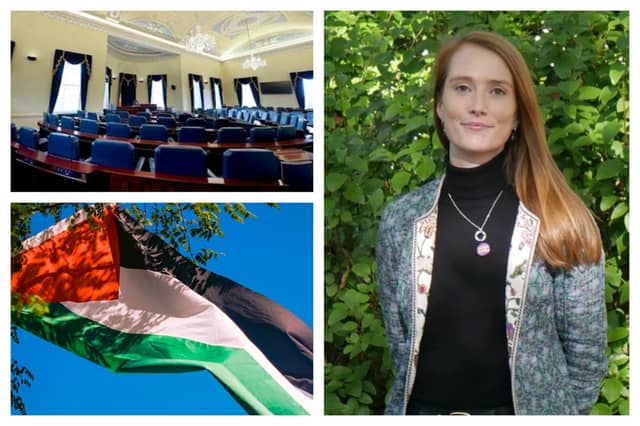

Senator Patricia Stephenson raises concerns in the Seanad over school transport delays affecting 16 Palestinian children relocated to Kilkenny under Ireland’s medical evacuation programme, calling for urgent action from the Irish Red Cross and Government
Senator Patricia Stephenson has raised serious concerns about seven Palestinian families who were relocated to Kilkenny under Ireland's medical evacuation (Medevac) programme, saying the children had been "badly let down" by the lack of access to education.
Speaking earlier today (Tuesday) in the Seanad, Senator Stephenson said the families had been explicitly reassured by the Irish Red Cross that school places and transport arrangements would be in place before the start of the school year.
“Before agreeing to relocate from Dublin in late June, these families were explicitly reassured by the Irish Red Cross that school places would be secured for all school-aged children and that transport arrangements would be made ahead of the new year. I contacted them on July 3 and I was given assurances of this," she said.
Senator Stephenson explained that the families had already experienced significant delays in accessing education while living in Dublin, with some children waiting up to eight months for school places.
"These families did not want this situation to reoccur once they moved to Kilkenny, and the Red Cross assured them that it would not. Yet here we are, ten weeks since the school term started, and the majority of children still are not in school," she said.
According to Stephenson, the children were initially allocated school places in September, but some were assigned to incorrect year groups for their ages, and resolving the issue took approximately six weeks.
She also highlighted difficulties facing families whose children have been allocated places in different schools.
"One mother was offered places in four different schools so she has four kids going to four different schools. Two months in, she has no school transport options for her children and no way to get them to school," she told the Seanad.
"We have children with school places living in an isolated location with no public transport connections and no transport provision by the Red Cross, so they are effectively unable to access those school places."
Stephenson said that the continued absence from school was having a serious impact on children who had already experienced displacement and medical trauma.
"Education is a human right and I am appalled that these children have been so badly let down in this regard," she said.
"Under the Medevac programme, these families were promised education and they were promised integration, but they have not been provided with either."
She also praised the efforts of Kilkenny LEADER Partnership, the local integration team in Kilkenny County Council and volunteers in Kilkenny and Dublin, who she said had taken on responsibilities including arranging transport and advocating for medical care.
"Effectively, they have become caseworkers. Of their own volition they have been organising transport and advocating for medical transport for these incredibly sick children," she said.
"The generosity of volunteers should complement a properly functioning support system and not replace it."
Responding on behalf of Minister for Health Jennifer Carroll MacNeill, Minister of State Jennifer Murnane O'Connor confirmed that 16 children in Kilkenny were experiencing delays in attending school because of outstanding transport arrangements.
“With regard to education, I am pleased to inform the House that all 68 school-age children who have arrived under the programme have been successfully enrolled in schools. However, there remains a significant challenge that is affecting 16 children living in Kilkenny,” she said.
“While all of these children have secured school places, their attendance has been delayed due to outstanding school transport arrangements.”
The Minister of State said the Regional Education and Language Teams (REALTs) were responsible for the relevant school transport services and that the Irish Red Cross and partner organisations had repeatedly engaged with the authorities to resolve the situation.
She added that another meeting involving the relevant stakeholders was due to take place shortly.
“Importantly, no similar barriers to school attendance have arisen for children living in other parts of the country. This has happened only in Kilkenny,” she said.
The Minister of State also provided an update on the wider medical evacuation programme, confirming that 27 Palestinian families had arrived in Ireland.
Of those, three families were living in short-term accommodation provided through the Irish Red Cross, 15 were in transitional accommodation and nine had moved into long-term housing with leases in their own names.
She said families were living in communities across the country, including Kilkenny, Donegal, Dublin, Louth, Meath, Roscommon, Sligo and Galway.
The Minister of State said each family had a dedicated caseworker and was linked with local integration teams and community organisations.
“Integration remains a central objective of the programme. Supports are tailored to each family's individual circumstances and needs,” she said.
However, Senator Stephenson challenged the suggestion that adequate supports were being provided, stressing that securing school places was meaningless if children could not physically attend.
“As the Minister of State pointed out, enrolment does not mean anything if a child has no transport to school,” she said.
“I do not know where the blame lies, nor do I care. The fact is that these children remain out of education.”
She also raised concerns about medical transport arrangements, claiming that some seriously ill children were being expected to use public transport to attend hospital appointments.
“Medical transport was provided for the first four weeks of the placement, but I do not believe it is there any more,” she said.
“There has been an expectation that seriously ill children would be taking public transport to hospital and their medical appointments.”
Senator Stephenson said she had personally visited the families and witnessed the isolation they were experiencing.
“Some of these children have been in Ireland for a year and a half and cannot speak a word of English because they are not going to school,” she said.
“We are failing these children by not enabling them to integrate, meet Irish kids, go to school and feel they belong and are at home here.”
She called for urgent intervention to provide appropriate school places, reliable transport, medical support and written assurances that the families could remain in their current accommodation in Kilkenny.
Responding, Minister of State Murnane O'Connor acknowledged the concerns and committed to examining the medical transport issues.
“I will look into the issue of the children going to hospital for treatment. I will come back to the Senator on that,” she said.
The Minister of State said cooperation between Government departments and relevant agencies would be essential to addressing the difficulties.
“We cannot have families in a situation where they are unable to access bus transport to school,” she said.
She concluded by assuring Senator Stephenson that she would report back on the issues raised, including the outstanding difficulties accessing education and medical treatment.