
'Bat-Mobile' drivers needed for bat monitoring survey in Waterford


EVER wanted to drive a Bat-Mobile?
Bat Conservation Ireland (BCIreland) is seeking two people to volunteer to become surveyors in Waterford county for the All-Ireland Car-Based Bat Monitoring Scheme.
A team of two people are being sought to drive a route from north of Portlaw to the south east of Waterford City. The team will slowly drive after sunset while recording the echolocation sounds bats make using a special bat detector.
BCIreland collects the information and uses this to see how the populations of three protected species of bat are doing year on year. The two surveys will take place in the second half of July and the first three weeks of August.
No ‘bat experience’ is necessary, just an enthusiasm for wildlife and map navigation skills. BCIreland will provide the bat detector equipment and training, but are seeking a team with their own Bat-Mobile’.
Bat Conservation Ireland is a national environmental non-governmental organisation (ENGO), dedicated to the protection and conservation of bat species in Ireland.
They run a number of monitoring schemes, with the help of large numbers of volunteers every year. The driven survey that BCIreland are seeking drivers for is one where people drive along a known route with a bat detector clamped to their passenger door window. They have the detector switched on along certain parts of the route and the detector records a suite of different species as they fly past.
“Depending on which of Ireland’s nine species are being targeted use different methods to count them,” Niamh Roche of BCIreland explained.
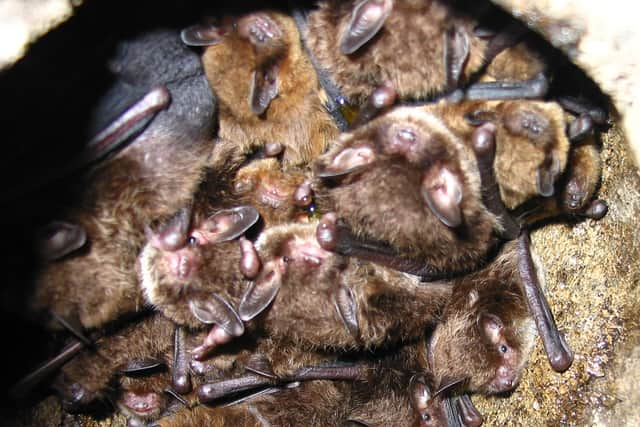
The three target species for the Waterford are common pipistrelles, soprano pipistrelles and Leisler’s bat. Both common and soprano pipistrelles are tiny – with their wings folded up they fit into a small matchbox, and only weigh about 5g. They eat insects like midges and crane flies as well as some other mid-sized insects like caddisflies.
Leisler’s bats are Ireland’s largest bats – with a wingspan of about 30 cm they look quite big but are in actual fact pretty small and weigh roughly 12g.
“These bats are common in Ireland but are rare in the rest of Europe and for that reason the Irish population is considered of international importance,” Niamh said.
To learn more about BCIreland, you can visit batconservationireland.org or learnaboutbats.com, their website aimed at primary school aged children and educators.
Anyone interested in volunteering for the role can contact Niamh at [email protected].