
Concerns raised in Waterford over ‘Anglicisation’ of place names during ‘foreign occupation’
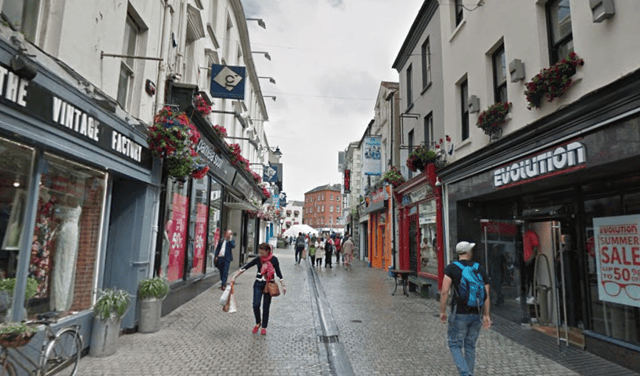

Waterford City and County Council’s Place Names Policy was brought forward for adoption at the council’s May plenary meeting
A number of Waterford councillors have raised concerns over the “Anglicisation” of local place names during the time of British rule in Ireland.
Waterford City and County Council’s Place Names Policy was brought forward for adoption at the council’s May plenary meeting.
Director of Services Ivan Grimes explained to the elected members that this was to formalise the policy that is already in place.
He also highlighted the work of the Place Names Committee, which is responsible for the enforcement of the policy.
Mr Grimes said: “The overall name of the Place Names Committee really is to ensure as far as possible that names reflect the rich culture and linguistic heritage of Waterford.
READ NEXT: ‘I'm nearly over it!’ - Waterford councillor bemoans Norman ‘colonisation’ after 850 years
“The use of the Irish language is encouraged. The committee will take account of relevant historical and geographical context, including the original Irish place name.
“The committee meets regularly to discuss names and usually turns around its decisions within a month.”
Fine Gael councillor Seanie Power formally proposed that the policy be adopted, arguing that it “will strengthen the process within the council” when it comes to place naming.
However, a number of councillors raised concerns over the extent to which the policy is currently being implemented.
Sinn Féin councillor John Hearne said there are a number of streets in his local area of Larchville that have no names.
Meanwhile, Fine Gael councillor Damien Geoghegan questioned the names given to a number of new housing estates.
Cllr Geoghegan said: “I have seen housing estates given planning permission in the last couple of months or so with names that I certainly can’t see the relevance or connection to the local area.
“Historically, we’ve housing estates, we have streets named after cities in the UK. I think there’s a place in Dungarvan called Bradford Close for example.
“That’s the type of stuff that’s been happening over the years so I do think it is important we have a place names committee. I’m just wondering who's on it and how effective it has been up until now.”
In response, Mr Grimes said that he is not a member of the committee so he can’t comment on individual decisions.
He told the meeting that the committee is made up of council officials and “local historical and geographical experts”.
Fianna Fáil councillor Eamon Quinlan suggested that the policy should also allow for streets to be named after people.
Cllr Quinlan said: “I think last summer I made the suggestion when this process was kicking off that we would include the fact that one of the things we could reference in terms of the names instead of just landscape, streetscape and geography, could also be individual people.
“We’ve got a great tradition here in Waterford [....] but a lot of streets in recent decades aren’t being named after people who made huge contributions to Waterford civic society through education, through revolutionary periods whatever it might be.
“The only ones that really have names are from us if we have been changing the names in the last couple of years to a person’s name.
“It’s not mentioned here in the document but I would like to see a small amendment that would specifically say that names of people of historical importance, specifically people with Waterford connections, that that would also be referenced as one of things that is acceptable.”
However, this suggestion was rebuked by Mr Grimes, who raised concerns over the potential for politically motivated choices.
He stated: “The practice has been to avoid using personal names, names of individuals, unless they are deceased for over 100 years.
“There’s reasons for that. I would be sceptical on that because consideration goes into for example, former Taoisigh and that’s fine if it’s over 100 years ago.”
Social Democrats councillor Mary Roche responded to this by saying that Mr Grimes had “very little faith in the members” and by asking him to withdraw the comment.
She also raised concerns over the current implementation of the policy, given some of the names of places in Waterford city.
Cllr Roche said: “I have no issue with the policy. The issue I have, I guess, is with the implementation of the policy. We should be leading the field in terms of implementing it.
“There are names that are more suited to Chelsea or Kensington. I don’t want to name any of them because they are all lovely areas to live in but they are not in keeping with this policy.
“So we have a policy but it hasn’t been implemented. So what’s going wrong and how do we ensure that the Anglification of those names is either remediated or prevented because there’s a gap between the implementation and the policy.”
These sentiments were echoed by independent councillor Joe O’Riordan, who said there are many place names in Waterford that go back to the “foreign occupation” of Ireland.
Cllr O’Riordan said: “Is there any consideration given to existing names of streets? Could we do a forensic examination of all the street names stretching back hundreds of years to the foreign occupation of the country?
“It’s an honour that needs to be deserved and the person should be deserving of the honour. We certainly wouldn’t like a street called Cromwell Street in the middle of Waterford.”
At the end of the discussion, it was agreed that Mr Grimes would revert the concerns of councillors back to the Place Names Committee.