
Wills and Enduring Power of Attorney by Lynch Solicitors
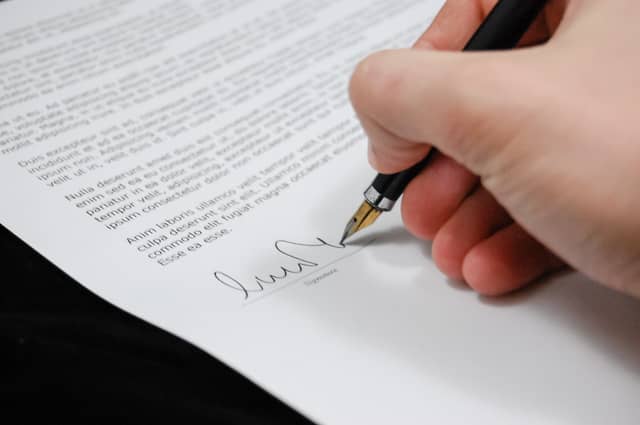

It's that time of year again. We start our spring cleaning. We make our New Year's resolutions. Why not have made or reviewed your Will as a number priority this year.
What is a will, and how do you make one?
- A will is a legal document detailing how someone's possessions should be divided after death.
- The person making a will is called a Testator.
- A Testator may change or revoke a will at any time.
- I would recommend that a person regularly review their Will.
- Two people must sign and witness a will; otherwise, it is not valid.
- Once it is appropriately signed and witnessed, it becomes a legal document.
- It should be kept safely - In most cases, people will leave the original Will with their solicitor for safekeeping. It is advisable to tell the executor where the original Will is kept if you do this. If you wish, you can take the will away once it is signed and if you do, it should be held in a safe place, maybe a safe at home or in a safety deposit box.
- A will only take effect after the death of the author.
The fact that a person has made a will does not prevent them from dealing with their property after the Will is made.
Why should you make a will?
The author of the Will decides what will happen to their property after their death. If you do not make a Will, the law dictates that your property is distributed amongst your closest relatives.
In making a Will, you control how your estate is distributed. You can structure your Will to avail of the most tax-efficient way of dividing your estate. You can choose who is to carry out your wishes by appointing Executors.
Most importantly, parents of young children should make a Will to ensure that they have made provisions to appoint Guardians of their choice, ensuring that each child is adequately provided for and has the right people in place to manage their assets.
Why should you use a solicitor for Wills?
There is nothing to say that you have to use a Solicitor to make a Will, but it is advisable. A poorly drafted Will can be worse than having no Will at all. Wills are subject to stringent interpretation, which is an excellent reason – to prevent fraud.
Therefore, any error in wording could result in the Will taking on an entirely different meaning. The law is stringent – no beneficiary is permitted to witness a Will. The witnesses must be two people who do not stand to benefit.

Top tips?
- First and foremost, make a Will – for the sake of an hour or so with your solicitor – give yourself the peace of mind of knowing you have left instructions for your loved ones.
- If you know what you want to do, why delay – why not consider doing it now.
- Once you have your Will made, make sure to review it on any significant life events or, in any case, every five years.
- Don't rush into a decision – in probate, if you are going to take on the task of administering the estate yourself, make sure you are confident that you can complete the task.
- If in doubt, seek legal advice.
The other companion document that we recommend with a Will is an Enduring Power of Attorney.
What is an Enduring Power of Attorney?
If you become incapacitated through disability, illness or progressive degenerative disease, your assets become frozen.
While in good health, you should create an Enduring Power of Attorney (EPA) to avoid this situation.
An Enduring Power of Attorney is a legal document that only takes effect if you become incapable of managing your affairs.
The person creating the EPA (you) is called 'the Donor'.
The document sets out the extent of the decision-making you are prepared to give to a chosen person – your Attorney.
In the event of your incapacity, you can give full or limited power to manage all or some of your property and affairs (including personal welfare).
You are not prevented, in the meantime, from continuing to manage your money and assets.
The EPA only comes into effect if you cannot make decisions.
What is the procedure for creating an EPA?
The procedure for the creation of an EPA can be complex.
You will have to consult us and satisfy your Doctor and a healthcare professional to create the EPA. We will prepare the documents for you.
We will need you to tell us whether you want a specific or general Power of Attorney.
The paperwork that needs to be completed to make a valid Power of Attorney:
- A statement from your solicitor that you understood the effect of creating the Power of Attorney.
- A statement from your doctor and health care professional confirming that you had the mental capacity to understand the
effect of creating the Power of Attorney.
- A statement from you that you understood the effect of creating power.
- A statement from the Attorney that they understand the implications of the responsibility that they will be taking on.
The process also requires us to notify two people that you have made the EPA.
What happens if I change my mind?
You can revoke, cancel or amend the EPA at any time before it is registered.
If you change your mind about having an EPA or about your choice of Attorney, you should consult
us immediately.
We will advise on the process of revocation of the EPA.
It is always a good time to make a Will or an Enduring Power of Attorney.
However, the start of a new year is always an effective time actually to do it.
*Sponsored Content