
Budget Live: Chancellor John Healey promises support for ‘working people’
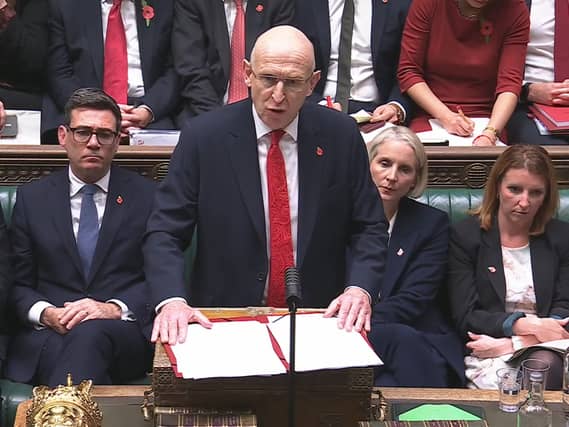

The Chancellor has promised ‘breathing space’ for households and businesses.
John Healey has promised his first Budget would “steer us through the economic storms”.
The Chancellor said his financial package was aimed at supporting the “working people of Britain” as well as “business big and small”.
1.31pm
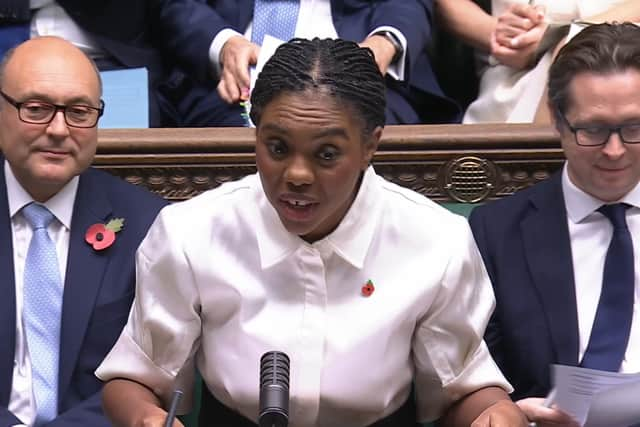
After Mr Healey sat down, Leader of the Opposition Kemi Badenoch began her response speech.
1.30pm
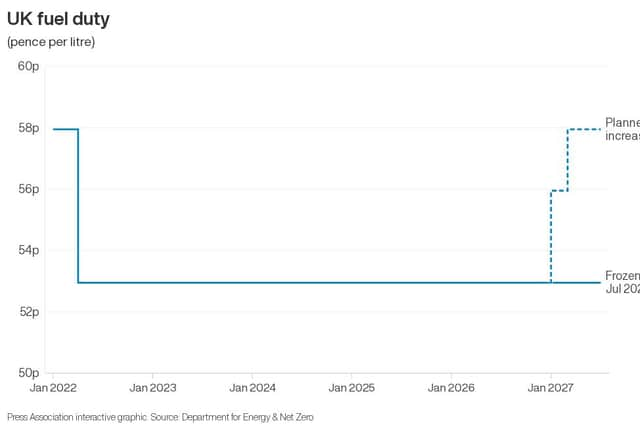
Here’s an illustration of the impact the continuation of the fuel duty freeze will have:
1.29pm
John Healey has concluded his Budget speech after saying he will set out the Government’s plan to spend 3.5% of GDP on defence by 2035 at the spending review next year.
1.28pm
Chancellor John Healey said he is “getting work under way” to reach spending of 3% of GDP on defence by 2030 and will set out how he will hit that target at next year’s spending review.
1.23pm
Britain will commit £10 billion of additional economic and military support to Ukraine, and half a billion in urgent military funding this winter, John Healey said.
1.21pm
Deputy Speaker Nus Ghani told Conservative MP Charlie Dewhurst he had “let himself and his daughter down” by speaking through the Chancellor’s Budget speech.
Ms Ghani – who is chairing the Commons Budget debate – said: “I’m sorry to interrupt the Chancellor again – (Hamble Valley MP Paul) Holmes, just like last year, your voice is carrying far too heavily across the chamber.
“And the member for Bridlington and The Wolds (Charlie Dewhurst) promised me and his young daughter this morning on the way to work that he would behave. He has let himself down and his daughter down.”
Mr Healey responded: “Madam Deputy Speaker, all power to your elbow.”
1.22pm
Britain will commit £10 billion of additional economic and military support to Ukraine, and half a billion in urgent military funding this winter, John Healey – who was previous the defence secretary under Sir Keir Starmer – said.
1.20pm
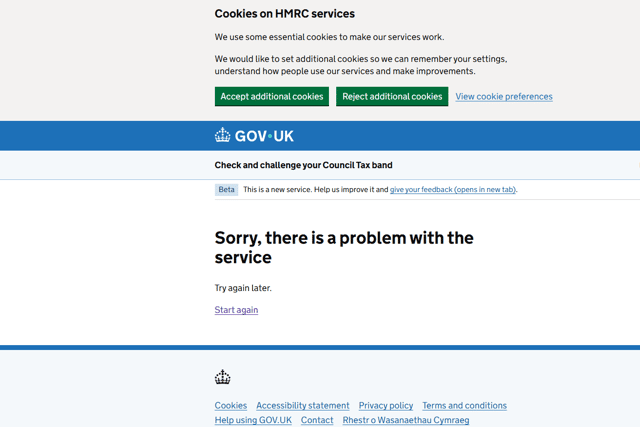
The news of a £100 household energy payment to people in council tax bands A to D seems to have put pressure on the official Government page where people can check which band they are in.
1.18pm
All business rates will be retained locally by the end of the decade with 20% of revenue going to mayors from next year, John Healey said.
1.15pm
1.13pm
Chancellor John Healey told the Commons the tax-free cash ISA limit would remain at £20,000.
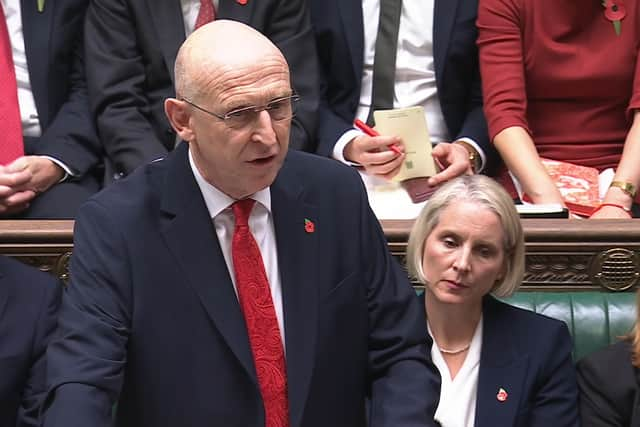
He said 88% of people “will pay no more tax on their savings, and I am taking a new approach today to encourage people on ordinary incomes to save and to invest”.
“I will not go ahead with the cut to the tax-free amount that people can put into a cash ISA. The limit will stay at £20,000 per year, tax-free, for people of all ages and to make investment accessible.
“I will work with the sector to create a new Starter ISA to reward first-time investors.”
1.08pm
Chancellor John Healey announced an increase in the threshold for small business rates relief for retail hospitality and leisure businesses from £12,000 to £18,000.
He said: “That means, for 70,000 more businesses I’m not just cutting their rates, I’m taking them out of paying business rates altogether – meaning half of our shops, restaurants and gyms will now pay no business rates at all.
“For all other businesses in these sectors, I will freeze their rates in real terms so that none face an above-inflation rise for two years.”
1.06pm
Chancellor John Healey confirmed he will work with the finance sector to create a new “starter Isa” to reward first-time investors.
He also said HM Revenue and Customs will get more money to help collect more tax with plans to reform how self-assessed income tax is collected, so those affected would make “smaller, more regular payments, instead of facing large bills that are often harder to pay”.
1.01pm
Chancellor John Healey said he will hike gambling taxes to pay for a high street support package, including by increasing machine games duty from 20% to 25% for higher stakes machines.
Meanwhile, sellers on online marketplaces will be charged VAT, and he announced a £10 million alcohol duty relief for about 2,000 smaller British brewers and cider makers.
He said: “Breathing space now, fresh hope for the future, delivered to the British people by this Labour Government.”
1.59pm
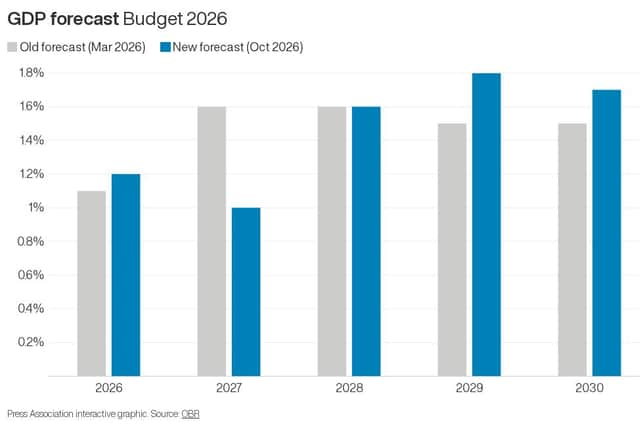
Here’s an illustration of the GDP forecast Mr Healey mentioned earlier:
12.59pm
Support will be given to lower-paid workers: The national minimum wage and national living wage will increase by 3.9% for 2.3 million people.
12.53pm
John Healey has announced a £100 household energy payment to people in council tax bands A to D to help them deal with soaring bills “through to the spring”.
12.56pm
Chancellor John Healey said he will extend the fuel duty cut until July 2027.
He told MPs: “Earlier this year, the Government extended the 5p cut to fuel duty and slashed red diesel to its lowest rate in over 20 years.
“With the war in the Middle East still driving high fuel prices, I am extending these tax cuts for motorists through the winter and spring to July, supporting households, hauliers, and farmers.
“And for anyone who relies on their car for their work, from care workers to engineers, I am increasing the higher mileage rate from 25p to 35p per mile, and making permanent the increase to the standard mileage rate introduced earlier this year.”
12.52pm
The cut to VAT on electricity will be extended to July, taking £50 off the annual price cap, Chancellor John Healey announced.
12.50pm
Ed Miliband laughed and saluted John Healey when the Chancellor joked that predictions of economic gloom were “about as accurate as the predictions of who would be the chancellor”.
Before Mr Healey was appointed to the role by Prime Minister Andy Burnham, Mr Miliband had been tipped for the role. He was appointed Foreign Secretary instead.
12.49pm
Chancellor John Healey said he believes the UK will beat its economic forecasts with the action he is taking in the Budget.
“Three months ago, the Bank of England upgraded their forecasts for UK growth this year. Two weeks ago, the IMF did the same,” he said.
“And today, the OBR has upgraded its forecast too to 1.2% this year, followed by 1% next year, 1.6% in 2028, 1.8% in 2029, 1.7% in 2030 and 1.6% in 2031.
“Yes, there are real challenges ahead, but Britain has beaten the forecasts this year, and with the action I’m taking today, I believe Britain can beat the forecasts again.”
12.46pm
Office for Budget Responsibility forecasts put UK growth at 1.2% this year, 1% next year, 1.6% in 2028, 1.8% in 2029, 1.7% in 2030 and 1.6% in 2031, Chancellor John Healey has said during his Budget speech in the House of Commons on Wednesday.
12.45pm
The Office for Budget Responsibility has confirmed that headroom against the Government’s fiscal stability rule is £15 billion in 2029/30 before rising to £22 billion in 2030/31, Chancellor John Healey has said.
12.44pm
John Healey said fiscal discipline is his first commitment as Chancellor.
He told the Commons: “More than ever, it underwrites every promise this Government makes to the British people.
“In the Budget today, I meet the fiscal rules – the stability rule, the day-to-day spending must be covered by tax receipts. And the investment rule, that Government debt, defined as public sector net financial liabilities, must be falling as a percentage of GDP.
“This year, for the first time, I must meet these rules in the third year of the forecast, and I do.”
He had earlier said it was an honour to deliver his first Budget as Chancellor, as he paid tribute to his predecessor Rachel Reeves.
12.42pm
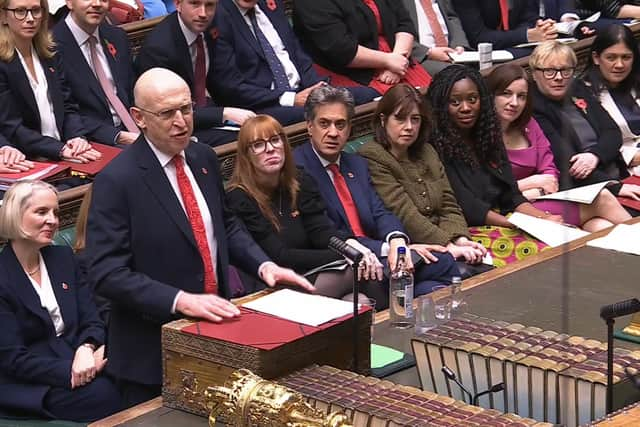
Chancellor John Healey opened his Budget statement by saying it is for “the working people of Britain, for British businesses, big and small”, built on “fiscal discipline”.
He said: “First, by giving Britain some breathing space on the cost of living and the cost of business,
“Second, backing the enterprise of British business to unleash innovation and growth in every postcode
“And third, by tackling the big challenges on energy, on national security, on public service transformation and on housing.”
12.39pm
The budget watchdog predicts the Government will spend £14 billion more on debt interest this year, John Healey has said as he vowed “Fiscal discipline” in the face of economic “storms” the UK must weather.
12.35pm
John Healey promised “a Budget for the working people of Britain” as he began delivering his first fiscal statement as Chancellor.
12.30pm
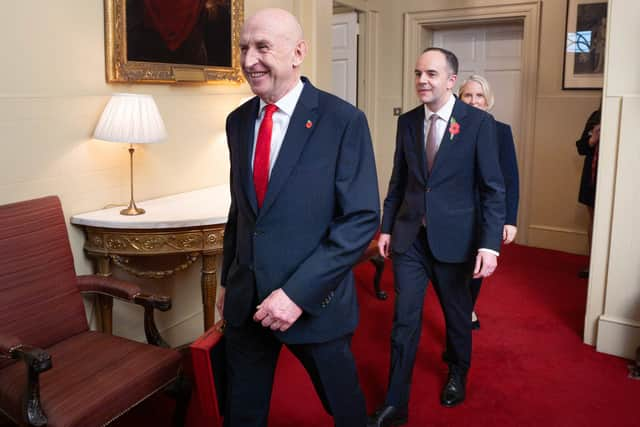
The Chancellor has begun delivering his Budget in the House of Commons.
It is John Healey’s first autumn statement since taking over the role from Rachel Reeves after Andy Burnham became Labour leader and Prime Minister.
11.30am
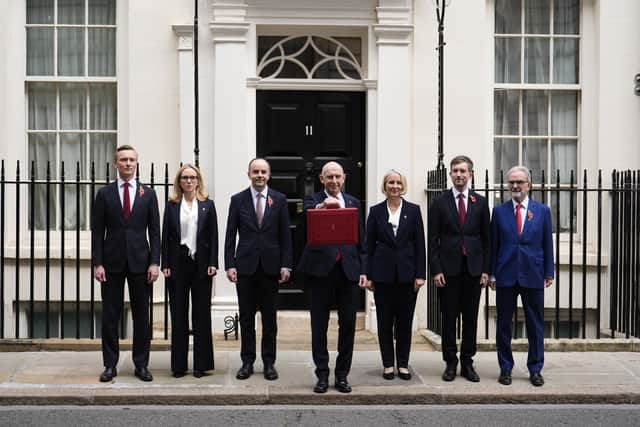
The Chancellor has left No 11 Downing Street, where he posed for the traditional photos holding his red Budget box and flanked by his Treasury ministers, including minister for pensions Torsten Bell, economic secretary to the Treasury Lucy Rigby, financial secretary to the Treasury James Murray, chief secretary to the Treasury Emma Reynolds, exchequer secretary to the Treasury Dan Tomlinson and treasury Lords minister Lord Pitt-Watson.
11am
Holly Mackay, chief executive officer of Boring Money, believes the U-turn on Isa limits will be “hugely beneficial to the nation’s overall financial health”.
She said: “If indeed the Chancellor reverses this change, I think that’s a hugely positive move. This was going to add cost and complexity with little evidence of any behavioural change.
“Fear of loss is the main deterrent to investing and we will not fix this by restricting access to cash.”
Meanwhile, Katie Horne, banks relationship manager at Flagstone, said: “We’re continually told we don’t save enough, and cutting the threshold would only have punished rather than rewarded those who do.
“Saving and investing are not mutually exclusive adversaries. They are collaborative partners in an active financial management plan.
“On top of needing to understand market dynamics to some degree, investing requires a certain risk appetite too – something that, for many, takes years to build, and then declines significantly as they get older.”
10am
Mr Healey is reportedly planning to reverse the decision to slash the annual Isa allowance from £20,000 to £12,000 in his inaugural Budget.
Mr Healey is said to believe the allowance cut was the wrong tool to persuade Britons to invest more in stocks and shares and would rather look to educate savers on the benefits of equity investing, according to the Financial Times.
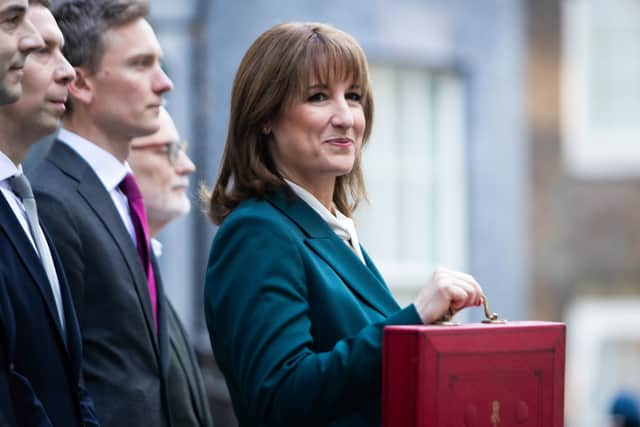
Former chancellor Rachel Reeves announced the Isa cut for savers aged under 65 at the autumn budget last year, with the change set to come into effect in April 2027, as she looked to encourage investment in the stock market.
8am
Prime Minister Andy Burnham said: “Abolishing gas standing charges is about basic fairness and giving people more control over their bills.
“I am determined to reform our broken energy market, so it better serves the public interest.”
7.30am
An early visitor to No 11 Downing Street was MoneySavingExpert founder Martin Lewis. The consumer champion has been urging the Government to remove standing charges to make energy costs more fair.
7am
In a video message ahead of the autumn statement, the Chancellor said: “This Budget is designed to give households breathing space from some of the everyday costs, provide targeted support for businesses and self-employed people, and to start the long-term action needed to get energy costs down for good.”
He acknowledged the country was facing a “difficult moment” and promised changes would be made “responsibly” within Labour’s fiscal rules.
Mr Healey will have limited scope for big giveaways because of stretched public finances, made worse by international market turmoil caused by the Iran war.
He is sticking with the fiscal rules set by predecessor Rachel Reeves, requiring day-to-day spending to be financed by taxes rather than borrowing by 2029/30 and that public debt as a share of the economy should fall in the same year.