
Met ‘failed to flag risks to man who died on bail as records kept on paper’


Ex-Marine Matthew Trickett died in Berkshire in May 2024.
The vulnerabilities of a former Royal Marine found dead on court bail were not shared between police forces partly because notes on national security cases are paper not digital, an inquest has heard.
Private investigator and Home Office immigration officer Matthew Trickett had tried to hurt himself days into his stint in Metropolitan Police custody, Berkshire Coroner’s Court was told previously.
The 37-year-old told station staff he would not do so again while detained but would “at some point” if freed, the inquest heard previously.
Mr Trickett was charged with offences under the National Security Act 2023 the next day, on May 12 2024, and on May 13 Westminster Magistrates’ Court bailed him ahead of a second court appearance, despite an application for him to be remanded for his own protection.
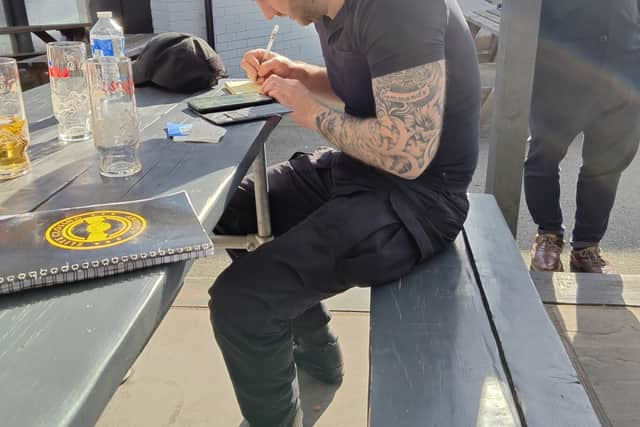
He was found dead on May 19, five days before his Crown Court date.
Mr Trickett had been detained in a central London police station and when granted bail his case transferred to Thames Valley Police, the force presiding over Maidenhead, where he lived and died.
The Met did not inform TVP about the self-harm incident or comments he made indicating suicidal ideation or desire to self-harm, the inquest heard on Wednesday.
The senior investigating officer, who has been granted anonymity, told jurors that this failure happened because: police believed Mr Trickett would be remanded; 11 people linked to his case were arrested and some were in custody for extended periods; and, unlike other offences, National Security Act notes are on paper and must be manually uploaded to police systems.
Senior Coroner Heidi Connor asked the Met officer if TVP should have been made aware of Mr Trickett’s issues in custody.
Speaking behind a screen, he replied: “I think they should have been told, I think Thames Valley Police should have been made aware of the wider circumstances of Matt’s detention and vulnerability there.
“That should have taken place through a set process that should have occurred.”
An officer or police staff member is supposed to log an encounter with “an individual who is displaying vulnerabilities or risk”, he said.
UK police forces try to ensure their various “systems talk to each other” and each has access to a central database called the Police National Computer (PNC), he said.
All forces would have a marker that Mr Trickett had a mental health vulnerability if it was on the PNC, the officer told jurors.
Alternatively, the Met could have told TVP directly.
When asked why neither happened, the Met officer said: “I regret to say in these circumstances we didn’t take those steps.
“Those steps weren’t completed and I think it really comes down to a number of factors.
“One being that me and the investigation team did not think that Matt was going to bailed from court, we thought Matt was going to be remanded in custody for the offences he was charged with.
“Because of that I think there was less attention in terms of the investigation team, in terms of making sure those records were updated.”
Moreover, officers had been carrying out three weeks of “intense operation work” after 11 individuals were arrested in connection with Mr Trickett’s national security case.
They had been in custody for “a long period of time” of 12 or 13 days and “I think officers had overlooked to update the PNC record… with those warning signals.”
The third factor surrounds how counter terrorism and national security policing operate extended custody time limits, he said, telling jurors: “Within those custody periods we use paper records instead of digital records.
“Those specifics around what happened in custody weren’t uploaded automatically as they would with a digital record and because of that there was failure for that information to be passed on to Thames Valley Police.”
The coroner asked if there has been any investigations or training to ensure such incidents do not recur.
The officer said there is now greater oversight of people leaving the type of custody Mr Trickett was in, as a result of “this case and other potentially similar incidents over the last few years”.
National Security Act teams have introduced a checklist “for every person leaving custody” which “tries to prevent the issues that have occurred here”.
There is greater emphasis on the fact national security records are paper and have to be uploaded manually by a police staff member.
The unit has also put “a bit more focus” on sharing information with other partners, including different forces, by ensuring an officer oversees it.
He said he hopes the team gets into a position to ensure “when a vulnerability is identified it is appropriately dealt with by the appropriate agency or unit”.
The risk management checklist affects National Security Act offences and has been shared with counter terrorism policing in London, he told jurors.
“There is a view to sharing it wider across the UK for all of counter-terrorism policing,” the officer added.
There are other processes, checklists and procedures for different crime types across policing, he said.
The inquest continues.