
Zero biological males now in women’s jails, says Scottish Prison Service
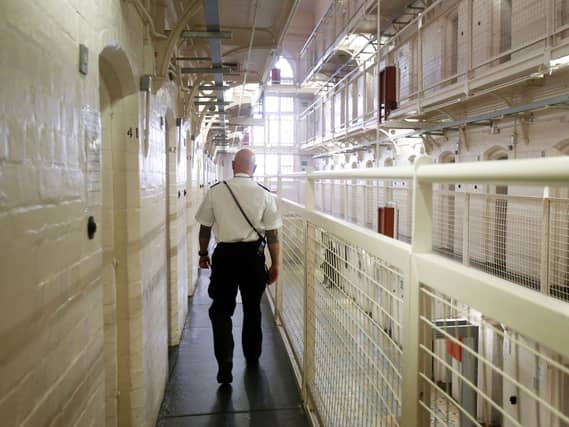

A small number of transgender prisoners were removed from the women’s estate following a legal ruling in June, the service said.
There are now zero biological males in women’s prisons, the Scottish Prison Service (SPS) has confirmed.
The agency said a small number of transgender inmates had been moved following a legal ruling in June.
The judgment found the SPS’s guidance allowing trans prisoners to be held in jails for the opposite sex was unlawful following a Supreme Court ruling on the definition of a woman. This ruling confirmed that sex in equalities law related to biological sex.
Justice Secretary Neil Gray said in the summer that work was under way to comply with the law and move prisoners.
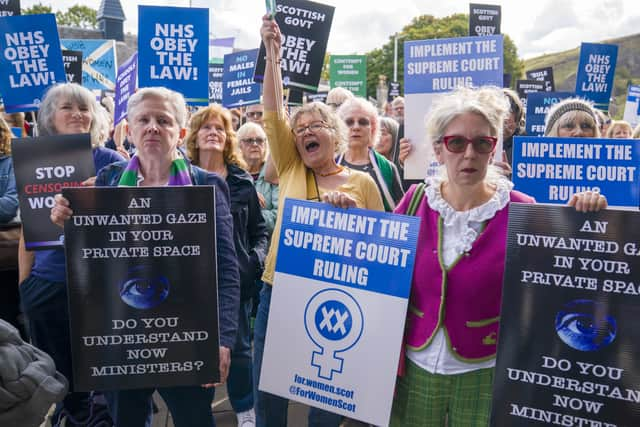
Appearing before Holyrood’s Equalities Committee, Adam Jobson, deputy chief executive of the SPS, confirmed that all transgender prisoners had now been moved.
He told MSPs: “I can clarify that in June 2026, following the Lady Ross’s determination, that we did move a small number of prisoners and there are now zero biological males within the women’s estate.”
Mr Jobson confirmed that transgender women were now held within male prison estates.
Green MSP Holly Bruce said she had “safeguarding concerns” around trans prisoners.
She said: “I do have concerns that there are going to be real risks posed to these women.”
Mr Jobson said trans prisoners were “absolutely” being treated with respect and that detailed plans for their transfer to male prison had been put in place.

Mr Jobson told MSPs the SPS published quarterly the number of people in jails who are transgender.
The equalities committee is examining how new guidance from the Equality and Human Rights Commission (EHRC) on single-sex spaces is being implemented by organisations.
In August, the EHRC code of practice said single-sex spaces open to the public, such as toilets and changing rooms, should be organised based on biological sex.
It also said trans people should use either gender-neutral facilities or the ones that matched their biological sex, in places such as gym changing rooms or rape crisis centres.
Ms Bruce, Green MSP for Glasgow, said the code was having “harmful effects” on “gender non-conforming people, specifically cis women who present more masculinely”.
She said: “I have had constituents write to me about their experiences using bathrooms and leisure facilities, in pubs, in businesses, in many different settings within society, and have been challenged by people within those bathrooms for using those spaces when they have the right to do so.”
She said one constituent had told her they no longer felt safe going to the bathroom on their own.
Appearing before the committee, Michael Dickson, chief executive of the Scottish Ambulance Service, said the NHS was implementing the code “in a way that respects the rights and dignity of all of the people that use our services”.
But he warned against a “political narrative” around it that he said was “particularly unhelpful”.
“This is a legal ruling,” he said, “the implementation of the code is an implementation of the code, but there are people affected by values and representations of arguments, and often from leaders, political leaders, that can make this whole situation far more difficult than just dealing with a legal ruling or just dealing with the guidance.
“I think we can do all that we can do, but there is that wider public narrative that I think is being shaped.”
Equalities committee convener Katie Hagmann said figures from Stonewall showed 11% of lesbians in Scotland felt they had been questioned about their sex assigned at birth, a figure which jumped to 25% for trans people.
Kirsty Cumming, chief executive of Community Leisure UK, said there was “no expectation that staff across leisure centres should be policing toilets or policing areas”.
“But there are mechanisms in place for people to come forward and speak to staff and to be treated with the dignity that they deserve and would expect from a public service,” she said.
Ms Cumming said there was a need for staff training “to feel confident, to feel empowered, to understand how to deal with things sensitively, to operate with dignity, to appreciate the privacy of individuals”.