
Historic reputation of Irish soldiers as 'drunken and reckless' laid to rest in new book

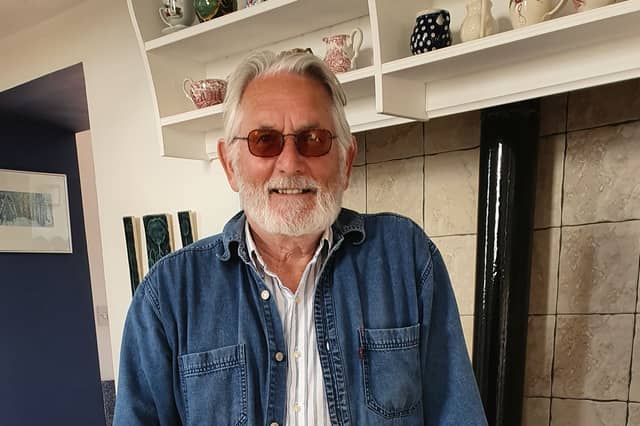

“It’s something I had in mind for the guts of 30 years,” says Professor Thomas Bartlett about ‘The Irish Soldier’, a book of essays he commissioned and edited which gives a comprehensive insight into soldiering among Irish people for more than 1,000 years.
The collection’s full title ‘The Irish Soldier: In Peacetime and at War, at home and Abroad, from Earliest Times to the Present’, indicates its scope, with 34 chapters examining Irish people’s involvement in the military at home and throughout the world, from Brian Boru to the present day.
Its Galway launch took place on Friday last in Charlie Byrne’s Bookshop, when Professor Bartlett’s former colleague in the History Department at the University of Galway, Professor Nicholas Canny, did the honours.
One of the aims with this book was to assess if there was “anything distinctive about Irish soldiers and if the Irish are a martial people”, explains Tom Bartlett, who lectured in history at UCG from 1978 until 1995, when he was appointed History Professor at UCD, a post he held until 2007, when he became Professor of Irish History at the University of Aberdeen.
He was curious to explore if the Irish “were natural soldiers or if in a very under-developed economy, soldiering was the only option”.
Tom and his wife Rebecca, an actress and drama teacher, who helped establish Galway Youth Theatre, live in Dublin but remain connected to Galway and have a house near Oranmore.
Having previously edited 'The Cambridge History of Ireland', he later turned his attention to this project, commissioning experts to cover areas such as the Vikings, the Galloglasses, the Irish who fought with the British during World War I and World War II, and right up to the Women of Honour in the Irish Army.
Contributors were asked to examine the often-expounded theory that Irish soldiers were “more drunken, more brave and more reckless” than their counterparts from elsewhere.
He cites one instance of this claim, relating to Irishmen who fought with the Confederates in the US Civil War and were reputed to have had a particularly visceral approach, known as Celtic Warfare.
Professor Chandra Manning of Georgetown University has written on 'Irish Soldiers in the American Civil War'. Other chapters include ‘The Irish military experience in France, 1690-1800' and 'The Irish soldier in the Crimean War'.
Australia, Canada, South America and Asia are among the foreign fields included in this wide-ranging study, which presents new information about the complexities of Empire and Irish patriotism.
UCD academics Eve Morrison and Mary McAuliffe write on the IRA and Cumann na mBan respectively.
Women’s role in warfare is given ample space in this 640-page book.
“It’s always annoyed me that traditional military stuff was almost completely devoid of females,” Tom says, adding that for every soldier deployed in the British Army, 45 people provided ancillary support, something that’s been generally ignored in history.
Many were women, mostly working as cooks, nurses and washerwomen.
“An army can’t function without that back-up. They are as much a part of the story as the soldiers.”
As for groups like Cumann na mBan, who fought for Ireland’s freedom and were “seriously anti-Treaty”, they “were airbrushed out of the War of Independence and the Civil War. And they were denied pensions, despite the terrible risks they’d taken”.
McAuliffe’s chapter examines their role, even as “the book doesn’t labour any point, but aims to give people an overview of 1,000 years of Irish solders from Brian Boru to the Women of Honour”, says Tom.
That recent “depressing” episode is covered by Eoin Kinsella in the final chapter, ‘Women in the Irish Army’.
The diverse approaches taken by contributors makes for a broad-ranging collection.
For instance, Tom points to independent historian Pat McCarthy’s chapter, 'The Irish soldier in the First World War'.
“He looks at one family, the Collins family of Waterford, with six sons going to fight and two of them returning. It’s a clever piece of writing.”
There’s also “a notable piece on the FCA”, he says of an Fórsa Cosanta Áitiúil or Irish army reserve. This was written by former FCA commandant, Lar Joyce, “to set the record straight about who was in it and what it did”. The FCA existed from 1946 to 2005, and gave many young Irishmen in the mid-20th century “a bit of military experience without joining subversive forces”.
Under British rule, the number of barracks in Ireland was greater than anywhere else in the UK, so it's little wonder they get their own chapter.
“People in uniform were more common in Ireland than anywhere else. They volunteered for the army because it seemed to be a normal thing to do.”
As for Tom's key question about whether Irish soldiers were different and distinctive, these essays show they weren’t. This was despite a commonly held view, “that the Irish were unreliable; great in attack, but unreliable if left sitting around”, he says.
For instance, “the Connaught Rangers were a byword for indiscipline, thieving and reckless bravery”, a view which created its own dangers.
“If you have a reputation for being reckless and drunk, maybe you’ll live to it. But other regiments were as drunken, as ill-disciplined, as brave.”
Religion, however, was a defining trait.
“They were very observant. During World War II, the British had to bring in extra chaplains into the Irish regiments.”
Also, in the American Civil War on the eve of the Battle of Gettysburg, Irish soldiers fighting for the Union received General Absolution. Understandable, given what they were facing into, Tom observes. “As I get older, I get more interested in religion,” he adds wryly.
As for the Connaught Rangers, Tom says the numbers enlisting in that regiment declined drastically in the 1890s, as emigration and alterative work at home, such as building railways, offered choices to men who didn’t want to join up.
The Rangers then recruited men from Dublin and Belfast and the view was they weren’t nearly as hardy or as tall as their Connacht counterparts.
That’s one fascinating fact in a book that “won’t be the final word on anything”, Tom says. He hopes it will generate discussion and cause people to reflect on Irish military history through the ages.
“I just want to get it onto the agenda,” he says of what might well be his swan song.
“I'm done”, he laughs.
‘The Irish Soldier’, published by Four Courts Press, is available in good bookshops and online from the publishers.