
‘It was a miracle’: Connemara woman on her journey back to herself
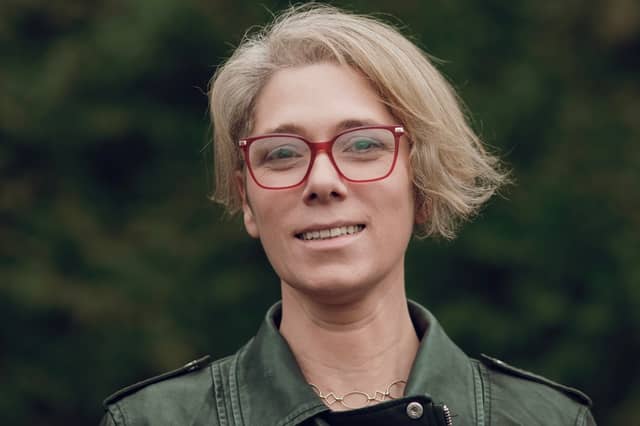

A devastating crash that changed her father’s life, a blood clot and a motorway collision of her own. Now Marian Ní Chonghaile is drawing on three decades of adversity to help others find their way back to themselves.
At 20, she helped care for her father after a road crash ended his working life. At 30, she suffered a clot in her lungs. At 40, she survived a motorway collision herself.
“It was a miracle. I knew it.” Marian Ní Chonghaile remembers what went through her mind as the crash unfolded on the motorway to Limerick. “Wow, we’re alive.”
Marian’s mother, Bríd, came to see her afterwards. At home in Camus, she was still caring for her husband, Martin, who had been badly hurt in a road crash 20 years earlier.
“I suppose I was alive and they knew that,” Marian said when asked how her parents coped with the news. “I think we became very resilient as a family.”
“I was the type to always say I was okay,” she told the Connacht Tribune. “I knew my dad was at home struggling.”
Born in London, Marian was four when her family moved back to Lettermore na Coille, Camus, in the Connemara Gaeltacht.
Martin built their house. He was the man neighbours called if a washing machine broke down or the water hose up the mountain needed fixing. Her mother worked in a local factory and brought food to neighbours who were sick.
Gaeilge, music and storytelling were part of everyday life in Camus. A Gaeilgeoir to the core? “To the core,” she said.
At 14, when two older sean-nós dancers she admired hadn't turned up one night, she took her chance. “I just got up and danced.”
Six years later, when she was just 20, her father was badly injured in a road crash. He spent six months in hospital and never returned to his council job. Her mother became his main carer and their lives became consumed with hospital appointments.
Martin managed dialysis at home and underwent two kidney transplants. Eventually, he was back fetching turf and driving to the local shop.
“He was happy with waking up and being alive,” Marian said.
At 30, Marian suffered a clot in her lungs. She returned to sean-nós in her thirties, going on to teach in Malawi, Russia and Strasbourg. Dancing taught her about “connecting with people, often without needing words”.
Then, at 40, a crash on the motorway to Limerick left her out of work for a year. Much of that time was spent with her parents, drawing strength from her father. “I think I learned so much from him on my own healing journey.”
Breathing exercises helped her cope with the aftermath, particularly when she returned to driving.
“I took my time and I realised eventually it was okay not to be okay,” she said. She went back to teaching adults, but never returned to sean-nós.
A friend's recommendation led Marian to a life coach. By 2019, she had qualified as one herself. Her business cards had barely arrived when the pandemic sent her work online. She later put the business aside to help her mother care for Martin during his final 15 months.
That first Christmas, the family feared they would lose him. He died in March 2024.
“Please, when I leave, get back to your life,” he told his family, all too aware of the years that they had all sacrificed.
Two months later, Marian found a breathwork course with Pat Divilly. When he asked if she was sure, she replied, “Yeah, this is my time.”
She lives in Galway now, but the sea, the mountains and the turn of the seasons in Connemara still shape her work.
Marian has drawn on her recovery to develop Thrive Within · Filleadh Ort Féin, an online programme combining coaching, breathwork and movement.
With Christmas approaching, a time when pressures can mount and grief can feel particularly raw, her message is simple: “We don’t have to wait until we’re completely exhausted or overwhelmed before we start looking after ourselves”.
Filleadh ort féin means “returning to yourself”. Marian says it took years after the crash “to come back to myself”.
The 13-week course begins on November 23 and costs €397. She brings Gaeilge into the sessions, though participants don’t need to speak Irish.
“In many ways, I’ve gone from helping people find their rhythm through dance to helping them reconnect with their own rhythm in life,” she wrote.
Then there’s the dancing. It’s taken a different form since she first got up in Camus at 14. “There’s a lot of movement,” she said, “so that’s my dancing, do you know?”