
Shared fascination with Ballinasloe's psychiatric hospital forges unique friendship
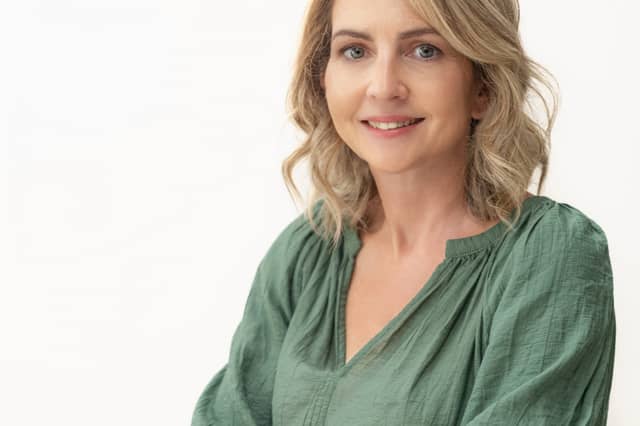

Cork-based author Michelle McDonagh never lived in Ballinasloe but her mother grew up in the town square. That connection shaped two of her novels and brought into contact with Sarah Colohan, from the town. Sarah writes about their shared fascination with St Brigid's Psychiatric Hospital in Ballinasloe.
"When it came to choosing the setting for my debut novel, 'There's Something I Have to Tell You', there was never any question," Michelle says.
"While my stories are fiction, the East Galway market town of Glenbeg that features in my first novel and my latest book is loosely based on Ballinasloe, the town where my late mother, Lucy, was born and reared with her sister and five brothers in a small, terraced house in St Michael's Square, where her brother, well-known carpenter, Joe, still lives."
Michelle grew up in Galway City and her connection to Ballinasloe is through her grandparents, May and Michael Kelly.
"Some of my happiest childhood memories were spent in this place with my granny and grandad, kind, quiet, gentle people who I had a very close bond with," she says.
"Their cosy home was a safe space, a refuge from school and from the street where I lived, and the mean girls who changed their minds from one day to the next as to whether you were in or out of the gang.
"My granny, May, was a lady, who always had the table beautifully laid and was an amazing cook. The range was on all year round.
"My grandad, Michael, was a soft generous man who adored his grandchildren and loved nothing more than spending time with us, whether taking us on walks around the town or bringing us to Salthill on the bus, and swimming in the sea. There was a lot of time spent in pubs with grandad too, while he sipped on pints of Guinness while we were treated to bottles of Lilt and Cidona and bags of Taytos, or sent over to Salmon's Shop to buy sweets and comics.”
The details come thick and warm.
"On Saturday mornings, we were woken by the sound of the cattle arriving in the Square right outside the house and the excitement of market day," she says.
"With the few bob our grandparents gave us, we'd head up to Duane's Bakery for iced buns or over to Hill's for penny sweets. We spent many happy hours browsing through the shelves in Sheridan's before making a decision on which fancy paper or stickers or knickknacks to splurge on.
"We drank ice-cold spring water from the well behind the church, before it got too polluted to drink, and cooled off in the River Suck on hot days, collecting pinkeens in jars with my mother and grandad before releasing them back into the water."
The October Horse Fair was "the highlight of the year for us kids, local and visiting alike", when the amusements rolled into town "bringing stalls filled with knockoff Sindy dolls, dinkies and all kinds of wonders".
Her grandmother's habits found their way into Michelle’s fiction.
"Granny's treat press in the good room, perpetually filled with gifts from people in return for her many kindnesses, featured in my second book,” she says. "It's funny the way these things slip in without you even noticing.”
But, even with those fond memories, St Brigid's was always there.
"I always had somewhat of a morbid fascination with St Brigid's and even as a child, was very aware of the hulking, grey psychiatric hospital on the edge of the town, and of the stigma that surrounded it," Michelle says.
"We used to visit an old uncle who was a patient there, but I stopped telling the kids on our street where we were going after they started slagging us about going to the 'nut house'."
Michelle's just-published fourth novel, 'If These Walls Could Talk', returns to Glenbeg and to an abandoned asylum, St Brendan's – a fictional institution built from St Brigid's own bones.
During her research, she found herself immersed in the online world of urban explorers who have documented the building’s decline since its closure in 2013.
"The wall beside my desk was papered with these photos as I worked, keeping me close to the setting as the story developed," she says.
Her research led her somewhere unexpectedly tender, too.
"For some unfortunate people, abandoned by their families, these places were the only home they knew. The saddest tales were of those people who kept asking the nurses every day, week after week, year after year, whether their families had been in contact, each time being told, ‘no’."
It was through that research that our paths crossed. Michelle came across my feature on St Brigid's, 'The Children I Could Never Forget', and messaged me to tell me it shaped her novel.
"Your feature inspired the character of Megan, a young urban explorer who films a series of YouTube videos in the abandoned St Brendan's Asylum.
"During visits to the boarded-up hospital, Megan finds private patient records strewn around the place and, horrified, removes them to hand them over to the appropriate authorities. This scene was directly inspired by your story."
Among the records was a file of a six-year-old boy who had arrived from a children's home in Cork. According to a former nurse, the boy who came forward after a public appeal, was effectively reared by the female patients on his ward.
"This boy stayed in my head long after reading that piece," Michelle says, "and was to provide the inspiration for a character who had a very similar start to life in my fictional asylum, going on to play a significant role in the plot. All pure fiction of course, but an example of how the things we read, hear about or experience, can find their way into our writing"
It’s a strange and moving thing, as a journalist, to watch a fact you uncovered take on a second life as fiction – to know that a boy who existed, now lives on in a story that will reach readers who will never know his real name, but may not be able to forget him either.
Long before either of us was writing about St Brigid's, Michelle was cutting her teeth in journalism in this newspaper.
"The Connacht Tribune was a fantastic place to train and work as a young journalist, and gave me a strong foundation in news and court reporting as well as feature-writing," she says.
"My editor, the late John Cunningham, was a great boss and mentor who became a good friend, and I made lifelong friends among my colleagues during my 12 years there. We were like a family really and I still miss the craic we used to have, particularly on Thursday afternoons when the weekend was in sight and we all started to get giddy."
The shift from journalism to fiction hasn't been without its own quiet cost.
"Writing fiction is such a solitary job, and while I enjoy it, I miss getting out and meeting people," she admits.
Michelle embarked on full-time fiction after moving to Blarney, Co Cork, where she married and raised her three children. But Galway is never far from her thoughts.
"Not a day passes that I don't pine for Galway. I miss my friends and family, the sea and the people. I don't miss the ridiculous traffic or the weather."
In 'If These Walls Could Talk', Hazel McDermott’s property-developer husband Darragh vanishes after a late-night phone call cuts to silence. His jeep found overturned, he nowhere to be seen.
As Hazel's carefully built life begins to unravel, she discovers her husband has been keeping secrets that could put her family in danger, secrets that lead back, unexpectedly, to an abandoned mental asylum in a Galway town.
“Taut, unsettling, rich with suspense," is how Michelle describes this West of Ireland thriller about deception and the truths we hide, even from the people closest to us.
Her love of Galway is evident in her fiction.
"My second book 'Somebody Knows 'was set between Galway City and Connemara, my third in Blarney, and Galway is again the setting for my current work-in-progress, which will be published next year. It centres on a possible deepfake, the real dangers facing teenagers online and the challenges of being a parent in today's crazy world."
And will Ballinasloe-inspired Glenbeg feature in any future novel?
"Neither St Brendan's nor Glenbeg feature in my fifth book, but I certainly wouldn't rule out setting another book in Glenbeg down the line."
'If These Walls Could Talk' is published by Hachette Ireland.