
Social media can help teens after a stressful day, Galway study finds

University of Galway research suggests that how teenagers use social media matters more than how long they spend online, with emotional support linked to better wellbeing and venting linked to poorer outcomes.
Teenagers who used social media to vent after a stressful day at school frequently found that this was also then associated with poorer wellbeing the following day.
But the same University of Galway research found that using it for emotional support was associated with higher next-day wellbeing for most.
And the researchers suggest that this contrast raises questions about whether screen-time figures alone tell parents much about teenagers' online lives.
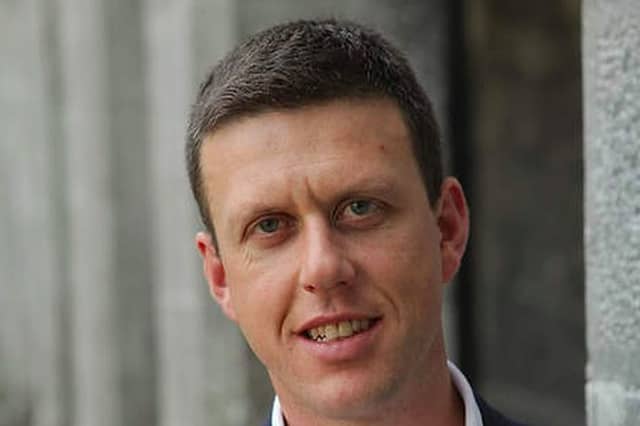
Professor Eoin Whelan, based at University of Galway’s J.E. Cairnes School of Business and Economics, has spent years researching how people use social media and how it relates to their wellbeing.
Speaking to the Connacht Tribune, Prof Whelan revealed findings from his latest study, which examined how teenagers in the West of Ireland use social media in the evenings to cope with the pressures of school life.
The research involved 120 students aged 15 and 16, who completed four surveys a day for two weeks using an app on their phones. Their wellbeing was measured by asking how happy they felt at the time.
The study has not yet been published or peer-reviewed; Prof Whelan hopes it will be published by summer 2027.
The findings varied between teenagers.
For around half of those who used social media as a distraction, such as watching TikTok videos, it was associated with poorer wellbeing the following day. Others had positive experiences or no effect.
Prof Whelan said seeking emotional support online had 'a very positive impact on their wellbeing' for most teenagers.
His findings come as the European Commission has raised serious concerns about TikTok's personalised 'For You' feed.
Preliminary findings issued last weekend concluded TikTok had failed to adequately assess and reduce the risks posed by its recommendation system, provisionally putting the platform in breach of the EU's Digital Services Act.
The Commission warned that repeatedly watching or liking videos about sadness, isolation, weight loss or body image can lead the algorithm to recommend more of the same, potentially increasing anxiety, damaging self-esteem or worsening existing mental health difficulties.
It also questioned safeguards such as the 'Not Interested' button and called for changes to the recommendation system to give users greater control. TikTok disputed the assessment, which is not a final ruling.
The Galway study did not examine TikTok's algorithm directly, but Prof Whelan said the debate about social media and mental health has focused too heavily on-screen time.
Teenagers can have vastly different experiences despite spending the same number of hours online.
His previous research, involving 2,876 teenagers aged 15 and 16 in the West of Ireland, found that the relationship between time spent on social media and mental health was considerably smaller than widely assumed.
Feeling safe at school, having supportive parents and being able to take part in activities mattered more to teenagers' wellbeing than time spent on social media.
“There are risks; there are harms that we need to be concerned about, but maybe it's not the biggest issue facing teenagers today,” he said.
He cautioned against assuming social media is always the original cause of a young person's difficulties. A teenager already feeling lonely or sad may turn to it for comfort, only to encounter material that reinforces those feelings.
Prof Whelan also warned that blanket bans on social media for under-16s could have unintended consequences, particularly for teenagers who rely on online communities for friendship and emotional support.
Those in isolated rural areas or difficult circumstances at home may have fewer opportunities to find support elsewhere.
“We have to consider what the negative consequences of banning or restricting social media are as well,” he said.
Prof Whelan said social media companies must take responsibility for the algorithms and features they offer, although parents, regulators and young people also have a role to play.
His advice to parents was to look beyond screen-time figures and pay attention to how their teenager was actually feeling.
“Everyone is different. You have to have the conversation with your own teenager,” he said.