
From Drive Safe to What’s On Locally: Mayo app developer Andrew Irwin on AI, ADHD and what comes next
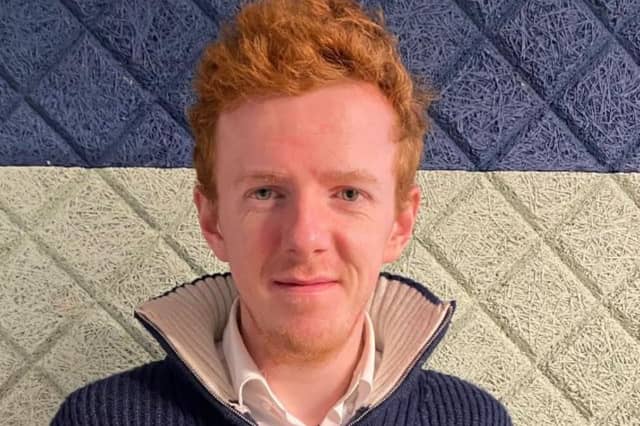

A decade after creating his award-winning Drive Safe app, Westport’s Andrew Irwin is embracing AI, exploring his ADHD journey and trying to create technology that brings people together.
There is something rather fitting about Andrew Irwin’s initials being AI. The Westport app developer has spent much of the past decade exploring what technology can do, from creating an app that helped people put down their phones while driving to developing a platform designed to show people what is happening in their local area.
Now he is entering a new chapter, rebranding DapDap.ie as What’s On Locally.
The idea is simple: bring events together in one place so people can easily find out what is happening around them. The idea began in Westport, but Andrew hopes it could eventually work anywhere.
“I just want to make something that the community of Westport can use and benefit from,” he says.
That desire to make something useful has been a recurring theme throughout his journey. In 2015, his mother suggested that someone should develop a way of stopping people from using their phones while driving. Andrew took the idea and ran with it.
Apps from Mayo for Mayo
Drive Safe was Andrew’s first app. It put a driver’s phone on silent and automatically replied to calls or texts, explaining that they were driving. He later developed automatic detection, so the app could recognise when someone was driving and activate itself. That was the feature that changed everything.
Drive Safe was eventually used more than 250,000 times around the world, with more than 30,000 downloads. It also won three national awards for innovation in road safety, including the Road Safety Authority’s Leading Lights Award and two awards from JCI Ireland.
At the time, Andrew did not fully appreciate the scale of what he had created.
“It’s only more looking back now that I think about it. At the time, I guess I didn’t appreciate the gravity of it,” he says. “I had no expectations of it being anything really. I just kind of did it. My main focus was to see how I could make it as good as possible.”
That same instinct led to DapDap, which he began developing in 2018 as a way of helping people find out what was happening locally. He launched it in 2019, initially focusing on Westport, and attracted more than 1,000 downloads over the summer, with hundreds of events being added.
Unlike Drive Safe, DapDap involved gathering events, attracting users, managing websites, marketing and finding a sustainable business model. Andrew soon discovered that turning an idea into a business was very different from building an app. The project became complicated, he became overwhelmed and eventually put it on hold.
When he returned to it last year, AI had changed what was possible. Work that had taken several months in 2018 could be recreated in around a month.
“It completely changes your experience of what you do,” he says.
A new chapter with What’s On Locally
Now DapDap is becoming What’s On Locally.
Andrew wants to make it easier for people to find events without putting all the responsibility on organisers to upload them. His ambition is to automatically gather information from different websites, creating what he describes as almost a “Google for events”.
This time, he is approaching the project differently. Rather than putting himself under immediate pressure to turn it into a business, he wants to create something useful for his community.
“I just want to make something that the community of Westport can use and benefit from,” he says. “I hope it will bring the community closer together.”
That may sound surprising from someone so immersed in technology, but Andrew considers himself a people person first.
He grew up in Westport in a family connected to the hospitality business and says that experience shaped him.
“As much as I like technology, I still feel like I’m a people person,” he says. “I love people first.”
ADHD and Technology
Another important part of Andrew’s story is ADHD. He began to suspect he had ADHD in 2021 and was diagnosed last year.
Learning more about it helped him understand his difficulties with planning, organisation and time management, as well as strengths such as creativity and curiosity.
“It can be a double-edged sword,” he says. “You have great interest to want to do all these things, but I have to learn to do them in a more structured way.”
He now talks openly about ADHD and is involved in a podcast and social media work aimed at raising awareness. He is also developing The ADHD Journey, a website intended to bring together information and resources for people trying to navigate life after an ADHD diagnosis or assessment.
Andrew believes AI could become particularly useful for people with ADHD, describing it as a potential “second brain” — something that can help with planning, organising and breaking large tasks into manageable steps.
He is equally fascinated by where AI could take technology generally.
“We’re going away from having to learn or manage computers. We’re just going to be able to talk to the computer,” he says. “You could make an app, all you need is your laptop.”
But he is conscious that AI brings risks as well as opportunities, comparing it to nuclear energy. His enthusiasm for technology has also reinforced his belief that rural Ireland can play its part. He believes rural Ireland has more potential in technology than many people realise. At a conference in Castlebar, he was surprised by the number of people in the region working remotely for major technology companies.
Bringing people together
For Andrew, however, the future is not necessarily about spending more time behind a screen.
One of his biggest ambitions is to eventually move to Mexico, where his girlfriend Judith is based. He even imagines creating a co-living space and an ADHD retreat, where people could spend several months learning, creating and developing a better understanding of themselves.
Raising awareness matters to him because he believes ADHD still carries too much stigma.
“If people have poor eyesight, they go to the optician and get glasses and it helps them,” he says. “With ADHD, it’s not as clear-cut, but it doesn’t need to have so much stigma.”
It is an ambitious vision, but then ambition has been a feature of Andrew’s life since his first app. The teenager who built Drive Safe did not begin with a grand business plan. He saw a problem and tried to solve it
Andrew’s best friend Conor Mooney is currently in Madrid, while Judith is in Mexico, and Andrew says he hopes his various projects will eventually allow him to combine technology with the thing he values most: people.
“I love technology, music and design,” he says. “But I like people.”
And perhaps that is the thread running through everything Andrew Irwin does — using technology not simply for technology’s sake, but to solve problems, help people and, ultimately, bring them a little closer together.