
Refugee voices brought to forefront at climate conference in Mayo
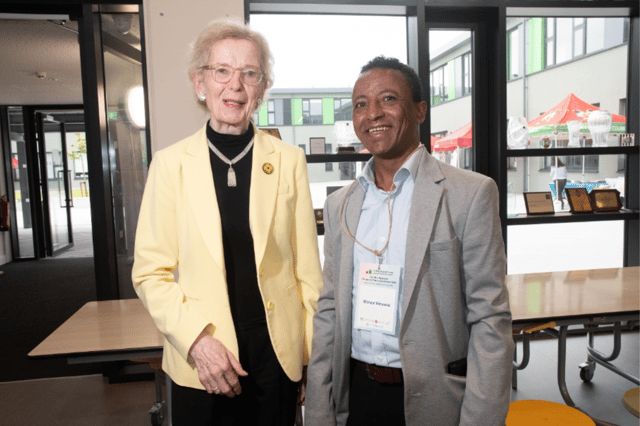

A powerful session in Ballina explored the links between food security, displacement, climate change and the importance of care and community
Refugee perspectives were brought to the forefront at the Mary Robinson Climate and Nature Conference 2026, where a Mayo-led session examined the interconnected challenges of food security, displacement, care and climate change.
The session, titled ‘Food Security and Care in the Displacement and Climate Change Context’, was organised by the Mayo Local Authority Integration Team (Mayo LAIT) with Mayo County Council Climate Action Coordinator Laura Dixon.
Held under this year’s conference theme, ‘Food and Care: A Meitheal for Our Time’, the session formed part of the Justice & Injustice strand.
Chaired by Dr Mark Garavan, retired lecturer at Atlantic Technological University and author of Compassionate Activism and Of Care, the discussion featured people with lived experience of displacement and migration, including climate change activist and community development worker Mary Thebe and journalist and media consultant Michael Minassie.
A key focus was the importance of ensuring refugee voices are heard in conversations around climate action, food systems and community development.
Mary Thebe spoke about her experiences in Zimbabwe and the deep connection between people, land and food. She highlighted the ecological grief experienced when people are separated from their homes and traditional food systems, as well as the disruption of seasonal food patterns and the growing distance between communities and food production.
She also emphasised the role of locally produced food and care in rebuilding communities and strengthening resilience.
Michael Minassie drew on his experience as a journalist covering conflict and displacement, including the humanitarian crisis in Tigray. He reflected on the use of food as a weapon during conflict and challenged participants to consider what genuine care means beyond borders, communities and identities.
Dr Garavan also drew connections between contemporary displacement and Ireland’s own experiences of famine and emigration.
Attendees described the session as “powerful,” “humbling” and “essential.” Participants also stressed the importance of creating more opportunities for refugees to share their experiences directly.
The session reflected the spirit of meitheal, Ireland’s tradition of collective effort and mutual support, demonstrating how listening, empathy and collaboration can help communities respond to the challenges of climate change, migration and food insecurity.