
Newcomer Wong holds balance of power as final count leaves vote split
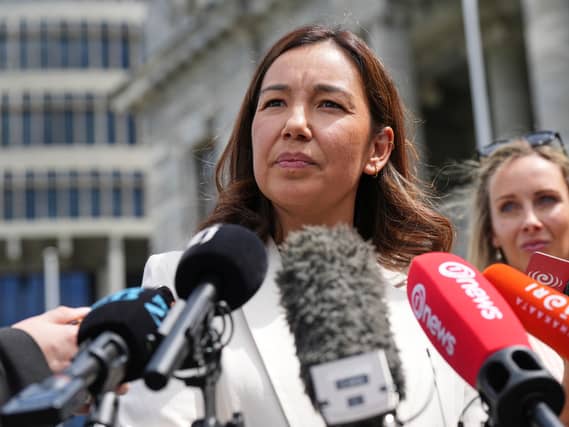

Opportunity party leader Qiulae Wong could decide who takes over as the next prime minister of New Zealand.
The final vote count in New Zealand’s election published on Friday showed neither the right-wing incumbents nor the left-wing opposition bloc won enough seats to form a government, giving a centrist party new to parliament the balance of power.
It left conservative Prime Minister Christopher Luxon the only leader with a viable path to victory, but he faces the prospect of fraught negotiations with three divergent minor parties who will seek deep policy concessions to secure their support.
Endorsement from all three would be necessary to break the election deadlock and return Mr Luxon’s centre-right National party for a second term in office.
The election on November 7 was the tightest vote in years, and the conservative bloc finished the night with a wafer-thin majority.
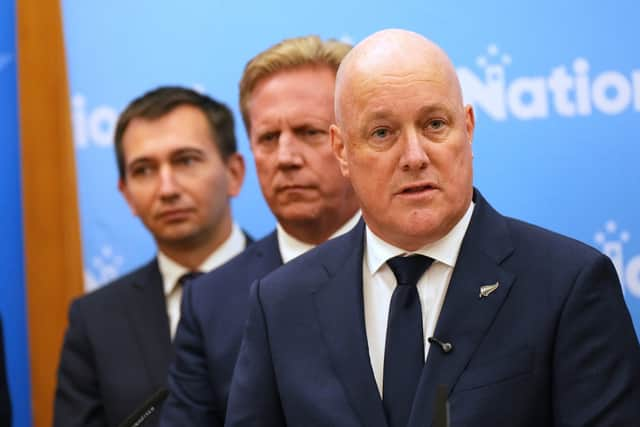
But after counting 400,000 so-called special votes, including those cast by New Zealanders living abroad, the Electoral Commission said on Friday that National had lost two seats, finishing with 40.
The right-wing parties now have a collective 65 seats in a 130-seat parliament, one short of the 66 needed for a majority government.
The left-wing opposition, led by the Labour party’s Chris Hipkins, won 58 seats, up by one from election night. Labour itself won 36 of those seats.
The figures leave a new entrant to Parliament, the Opportunity party – an unaligned centrist group that won seven seats – with the ultimate power to propel Mr Luxon to power.
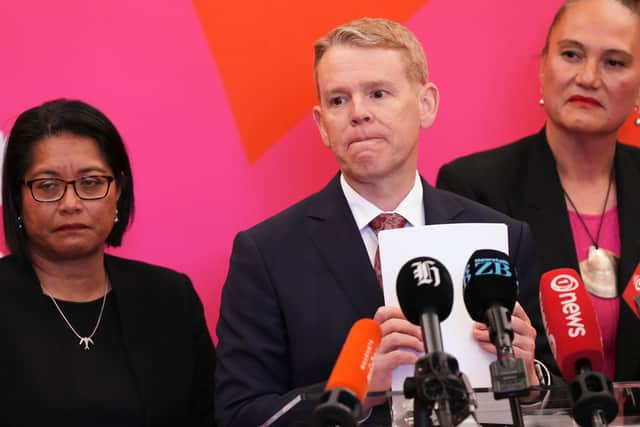
Opportunity’s support would not be enough to install a left-wing government, Mr Hipkins admitted on Friday in an apparent concession of defeat.
Mr Luxon said on Friday that he was confident he could form a government with Opportunity and his traditional partners, the libertarian ACT and the populist NZ First.
However, his route to power is not simple because some of Opportunity’s socially liberal, technocratic and pro-environment values are at odds with the policies of parties on the right.
Opportunity is led by 38-year-old business consultant and political newcomer, Qiulae Wong, who has said she could work with either side to form a government.
Ms Wong’s pledges of evidence-based centrism and an end to partisan bickering apparently appealed to voters, who delivered a stinging rebuke to the major parties that have long dominated New Zealand politics.
Both Labour and National secured less than 30% of the preferred party vote.
Analysts said it reflected voters’ malaise about high living costs and a lack of enthusiasm for both Mr Luxon, who survived two confidence votes among his lawmakers this year, and Mr Hipkins, who led Labour to a 2023 election loss.
Making a deal will be a gruelling task. Opportunity’s five, so-called “bottom line” policies include stronger measures on climate change and an end to bottom-trawling fisheries, which are in direct opposition to the stances of NZ First and ACT.
Ms Wong also repeated on Friday a position that she would not enter a government where NZ First leader Winston Peters served as foreign minister, a role he held until the election.
Mr Peters has been lambasted by his detractors for remarks he has made in parliament about Asian people, which Ms Wong said made him unsuitable to represent New Zealand abroad.