
US authorities say flight departures can resume following nationwide ground stop
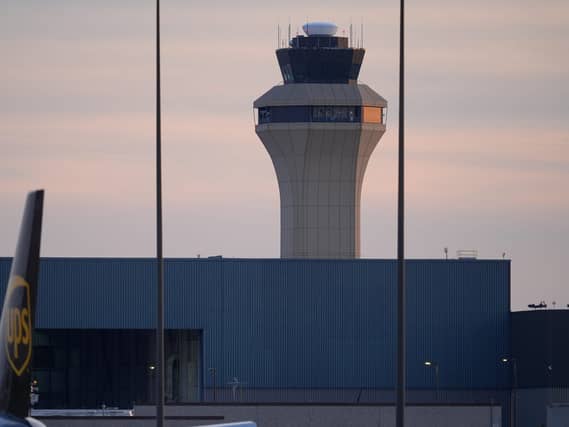

The FAA had grounded all flights nationwide on Friday afternoon, causing hundreds of flights to be diverted.
The Federal Aviation Administration (FAA) said that airplane departures can resume after the agency lifted a nationwide ground stop that Trump administration officials blamed on “overloaded”, “outdated” systems.
Even with the order being lifted on Friday night, the airlines will not be able to return to normal operations immediately because so many of their planes and crews are out of position.
The FAA had grounded all flights nationwide on Friday afternoon, causing hundreds of flights to be diverted. Officials cited “extraordinary circumstances” caused by communications problems at regional air traffic control centres.
Homeland Security secretary Markwayne Mullin told reporters at the White House that the introduction of some new technology into an old air traffic control system overwhelmed it. He could not rule out another outage.
The nationwide ground stop was the first since January 2023, when a key FAA computer system malfunctioned, and the second since the aftermath of the September 11, 2001 attacks.
There was no indication the communications failure was related to a cyberattack.
The consequences were profound, disrupting potentially thousands of planned flights through at least late Friday night and upending travel plans for passengers.
International flights were being handled on a case-by-case basis, according to Mr Mullin, with some seen taking off Friday evening.
Asked whether Mr Mullin could rule out a cyberattack or rogue artificial intelligence incident, he said: “There’s nothing completely certain right now. It doesn’t appear that way.”
He said there are no “footprints” showing an attack and that it appears to be “mechanically driven”, adding that officials were still looking for the cause.
At least 827 flights were diverted so far as a result.
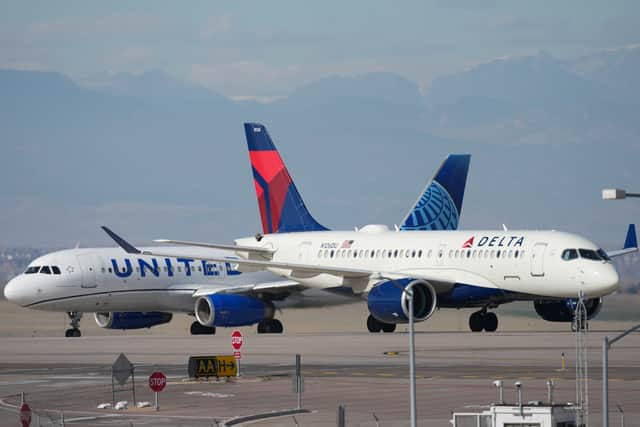
The airports where many of the flights ended up being diverted included Washington Dulles International Airport, Los Angeles International Airport, Cincinnati/Northern Kentucky International Airport and Nashville International Airport.
Mr Mullin had said investigators will look at whether there is any link to the FAA’s nationwide roll-out of a new artificial intelligence system to help identify problems and reroute planes.
But that system operates out of one location near Washington DC, and just sends recommendations to the air traffic control centres.
The government has been working to overhaul the outdated technology that air traffic controllers rely on since Congress approved 12.5 billion dollars for the project last year.
Miles of old copper wires have been replaced with fibre optic lines and old radio systems are gradually being replaced at airports across the country.
But much work remains. Transportation secretary Sean Duffy has said that another 30 billion dollars will be needed to complete the work, and the White House has begun lobbying Congress to approve it.
The problem appeared similar to a regional air traffic control communication outage in September that snarled hundreds of flights across the Northeast, aviation safety expert Steve Arroyo said, except this time on a nationwide scale.
It may be linked to the outdated technology used by air traffic controllers.
“If you don’t have that ability, whether it’s because the old wires that they have are just run down or for whatever reason, you’ve got to stop airplanes on the ground,” said Mr Arroyo, who is a former United Airlines pilot.
“And not put them in the air where you’re going to risk not being able to communicate with them.”
Friday’s ground stop was different than the one after September 11 because planes were not being told to land immediately and pilots likely were able to communicate with ground controllers at airports, Mr Arroyo said.