
Jury will return to Central Criminal Court tomorrow to consider verdict in triple murder trial
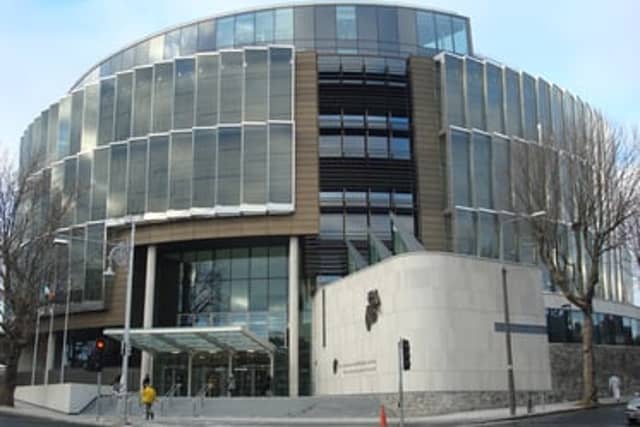

The jury of six men and six women began considering their verdict shortly after 2pm this afternoon and have spent a total of one hour and 56 minutes deliberating in their jury room in the Criminal Courts of Justice building.
A jury will return to the Central Criminal Court tomorrow to consider its verdict in the triple murder trial of a 32-year-old man charged with fatally stabbing his parents and special needs brother to death at their Co Louth home.
The jury of six men and six women began considering their verdict shortly after 2pm this afternoon and have spent a total of one hour and 56 minutes deliberating in their jury room in the Criminal Courts of Justice building.
At 4pm today, the registrar at the Central Criminal Court asked the foreman of the jury if they had reached a verdict on any of the three counts on which they all agreed. He replied: "No."
Presiding judge Mr Justice Mícheál P O’Higgins told the panel that he would "call things off for today" and invited them to come back to court tomorrow morning to resume their deliberations.
He reminded them to "maintain an open mind" and not to access extraneous information.
Robert O'Connor (32), of Drumgowna, Louth Village, Dundalk, Co Louth, has pleaded not guilty of murder by reason of insanity, or guilty of manslaughter on the basis of diminished responsibility to the triple murder of his mother Louise (56), his father Mark (54) and his brother Evan (27) at their home between September 28 and 29 2025, both dates inclusive.
The Central Criminal Court jury has been told that the accused accepts he caused the death of the three victims, who had sustained a combined 139 stab wounds.
The panel have been told by the prosecutor in her opening speech that the "battleground" between the prosecution and defence in the trial is whether Robert O'Connor was insane at the time.
Before sending the panel out to begin their deliberation at 2.11pm today, Mr Justice O'Higgins said he had made a decision that the 12 jurors should have the psychiatric evidence in the case.
The judge said he did not want this evidence to overly dominate their discussions but yet he didn't want to curtail them in any way.
He said it would "be a good balance" if they were provided with four copies of the two transcripts of the psychiatrist's evidence.
Mr Justice O'Higgins asked the panel to consider the reasons given by each psychiatrist for their conclusions and also the reasons each gave "for disagreeing with their counterpart's analysis".
The judge told the jurors that they must be unanimous in their verdicts and asked them to take their time before sending them away to commence their deliberations.
Mr Justice O’Higgins said the psychiatric evidence in the case reduces the choice the panel has to one of two verdicts; namely not guilty by reason of insanity or guilty of manslaughter by reason of diminished responsibility.
Two psychiatrists, who have given evidence in the trial, are in agreement that the accused was suffering from a relapse of schizophrenia when he fatally stabbed the three members of his family.
However, whilst both expert witnesses are of the view that guilty of manslaughter by reason of diminished responsibility under section 6 of the Criminal Law Insanity Act 2006 would be an appropriate verdict, they differ on whether the accused qualifies for a special verdict of not guilty by reason of insanity under section 5 of the act.
Consultant forensic psychiatrist Dr Fiona Toal, called to give evidence by the defence, testified that Robert did not know what he was doing was wrong and couldn't refrain from committing the act. She found that the accused met the criteria for a special verdict of not guilty by reason of insanity.
Consultant forensic psychiatrist Dr Ronan Mullaney, called to give evidence by the prosecution, has told the trial that the accused met the criteria for a verdict of guilty of manslaughter by diminished responsibility and does not meet the criteria for the special verdict of not guilty by reason of insanity.
The three criteria for a verdict of not guilty by reason of insanity under the Criminal Law Insanity Act 2006 are that an accused did not know the nature and quality of the act, or was unable to appreciate that what they did at the time was wrong or would have been unable to refrain from their actions.
The judge told the jury that if they were satisfied as a matter of probability on any of the three criteria under section five of the Criminal Law Insanity Act 2006, then they must return a verdict of not guilty of murder by reason of insanity.
However, Mr Justice O'Higgins said that if the panel was not satisfied on the balance of probabilities that the accused was legally insane at the time of the killings, then they don't return the insanity verdict under section five and instead go on to consider the alternative verdict of diminished responsibility under section six.