
Louth murder trial jury given new seating arrangements in courtroom
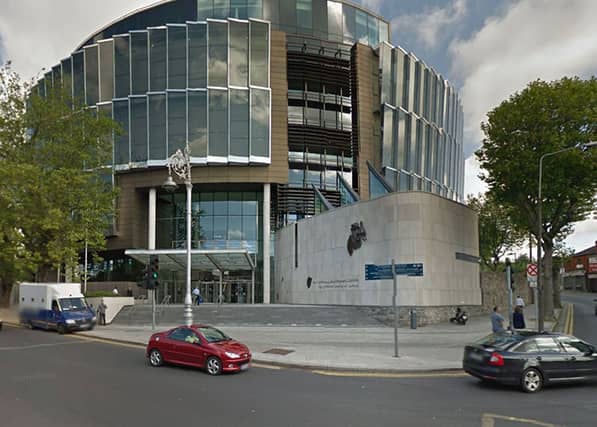

Court
A murder trial jury have been given new seating arrangements in a courtroom to enable them to maintain social distancing due to the outbreak of the coronavirus.
Addressing the 12 members of the jury in the Central Criminal Court trial of Paula Farrell this morning, Mr Justice Paul McDermott said certain seating arrangements had been made for them concerning their proximity to each other in the courtroom.
The judge made the comments today after it was announced last week that no new jury trials will be commencing in criminal courts until June 10 as a result of the coronavirus. Ongoing criminal trials are to continue to their conclusion.
Instead of the 12 jurors sitting beside each other in the jury box, six jurors are now sitting spaced out from each other on individual cushions in the body of the courtroom and the remaining six jurors are in the jury box with a seat between them. Mr Justice McDermott said these arrangements would continue for the remainder of the trial.
"Your jury room is adequate for deliberations but there will be facilities available for you to break up as a group," said the judge, adding that two jury minders had now been assigned to them for the remainder of the trial to address this issue.
Mr Justice McDermott told the jurors to let him know if they had any difficulties or concerns of a personal nature regarding the new seating arrangements.
Following the judge's address Ms Farrell, who admits stabbing her partner to death during a drunken row, continued to give evidence in her trial.
Ms Farrell (47) of Rathmullen Park in Drogheda has pleaded not guilty to murder but guilty to manslaughter for the unlawful killing of Wayne 'Quilly' McQuillan (30) at Ms Farrell's home on New Year's Day 2014.
The mother-of-three gave evidence last Friday that she began to drink heavily when she was younger in order "to block out" her problems as she could not cope with them.
The Louth woman has also told her trial that she met Mr McQuillan on the night of her 40th birthday and he was ten years younger than her. Asked last Friday afternoon by her defence counsel Caroline Biggs SC if they had a good relationship, Ms Farrell said: "We did and we didn't".
Ms Farrell told Ms Biggs today that she and the deceased would argue over "stupid things" and agreed that there was always "drink on board" when arguments took place.
Ms Farrell testified that she and Mr McQuillan were drinking before they rung in the New Year together on the night of December 31, 2013. They were sitting on the sofa in her home that night when Mr McQuillan stood up, pulled down his boxers as well as her pyjama bottoms, said Ms Farrell. "He got in between my legs and was trying to get his penis inside me but couldn't. I was trying to push him off by his shoulders," she said.
The accused woman said Mr McQuillan got his penis "a little close" to her vagina but had not penetrated her fully. She did not want to have sex and told Mr McQuillan to get off her but he began to strangle her with his hands around her neck, she said. "I thought I was dying, I couldn't breathe," she said, adding that Mr McQuillan was on top of her for awhile. "My hands were swinging and I was trying to get him off me as he was hurting me," she continued.
When she got Mr McQuillan off her, Ms Farrell said he walked to the kitchen door and she got off the sofa and pulled her pyjama bottoms up. Ms Farrell said she did not remember walking from the couch to the sink and taking a knife from a knife block. "I went from the sink to the kitchen door which I don't remember and I stood in front of him and stuck the knife into him," she said, adding that she had "used the knife twice".
Ms Farrell said Mr McQuillan never said anything when she stuck the knife into him and he had "just walked up the hall" with his pants down. She said she stabbed him again at the meter box but did not remember this.
Ms Biggs asked Ms Farrell if she accepted that she had stabbed Mr McQuillan four times but only remembered stabbing him twice. "Yes," she replied.
Ms Farrell said she felt "numb" and "in shock" at the time because of what had happened her. She did not intend to kill her boyfriend or cause him serious harm and just wanted to "hurt him the way he hurt me", she said. "I don't think I realised what I had done," she continued and agreed that she had not called an ambulance.
The accused woman said she walked back up the hall, washed her hands in the kitchen sink and dropped the knife into the basin.
Ms Biggs asked her client why she did not tell gardai that Mr McQuillan had tried to have sex with her on the night and his penis had gone into her vagina "a little bit". "I didn't want to believe what had happened and wanted to pretend it had been a bad dream as it happened to me before," she replied.
Ms Farrell has given evidence that she was sexually abused by a named man from seven years of age until 14 and told him in later years that he had "ruined" her life.
In cross-examination, Ms Farrell told Gerard Clarke SC for the DPP that she accepted she had caused the death of Mr McQuillan.
Mr Clarke put it to the accused woman that "this story" she told the jury about being sexually attacked by Mr McQuillan was "a fabrication" and consisted of lies. "It's not lies," she replied.
Ms Farrell also accepted that she had been interviewed by gardai on four separate occasions and had not mentioned the attack.
Mr Clarke asked Ms Farrell to explain why it had taken 15 months after she had killed Mr McQuillan to mention the sexual attack to a doctor. "I didn't want to believe it happened all over again as it happened to me when I was a child. I was abused," she replied.
She told Mr Clarke that she was not blaming her intake of alcohol on the night for having killed Mr McQuillan.
The jury has heard that Ms Farrell told gardai in her interviews that she and Mr McQuillan had started "tackling each other" in the kitchen on the night and "he had me by the wrist and neck and I got a bump on my head from him." She said Mr McQuillan "had me on the two-seater in the kitchen" and when she got up, she said, "I didn't want him to get the better of me. I got the knife then and I stuck the knife in him." She thought she stabbed him "towards the top of his chest" and a second time "a bit lower down", the court heard.
Evidence has also been given by former Deputy State Pathologist Dr Michael Curtis that he found four stab wounds on Mr McQuillan, one to the upper right arm, one to the front of the chest and two wounds to the left shoulder which were situated 1.1cm apart from each other and parallel. The expert witness told the jury that there could have been “potential survival with prompt medical intervention” for Mr McQuillan.
Ms Farrell will continue to be cross-examined by Mr Clarke on Wednesday afternoon.