
Louth triple murder accused stabbed special needs brother at least 70 times, court told
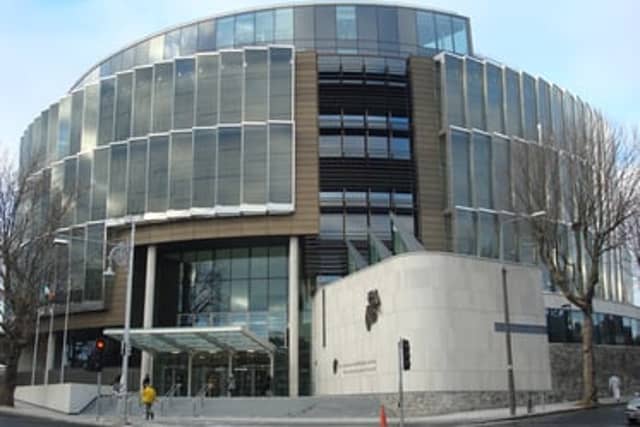

Robert O'Connor (32), of Drumgowna, Louth Village, Dundalk, Co Louth, has pleaded not guilty of murder by reason of insanity, or guilty of manslaughter on the basis of diminished responsibility to the murder of his parents and brother Evan
Triple murder accused Robert O'Connor stabbed his special needs brother at least 70 times, with the majority of the wounds inflicted while he was still alive, a Central Criminal Court jury has heard.
The Chief State Pathologist testified today that Evan O'Connor had defence-type injuries that indicated he had possibly tried to grab the knife from his brother during a sustained assault.
Robert O'Connor (32), of Drumgowna, Louth Village, Dundalk, Co Louth, has pleaded not guilty of murder by reason of insanity, or guilty of manslaughter on the basis of diminished responsibility to the triple murder of his mother Louise (56), his father Mark (54) and his younger brother Evan (27) at their home between September 28 and 29 2025, both dates inclusive.
The Central Criminal Court jury have been told that the accused accepts he caused the death of the three victims.
Professor Linda Mulligan today told Roisin Lacey SC, prosecuting, that she conducted a postmortem examination on Evan O'Connor's remains on September 30, 2025.
The witness said Evan had been diagnosed with autism and was prescribed antipsychotic medication and antidepressants.
Prof Mulligan said Evan weighed 90 kilograms and there was heavy blood-staining over his body. She said the hands and soles of the feet were blood-stained. He was dressed in blue and white shorts, which were also heavily blood-stained.
The expert witness said Evan had 25 stab wounds to the head and neck area, as well as five stab wounds to the front of the body.
One of the stab wounds to the left of the chest had entered the cavity between the ribs. The witness said the depth of this injury was 13cm but it didn't go into the heart, stopping at the surface.
Evan had ten stab wounds to the right arm, with a lot of the wounds in the one area. Prof Mulligan said the injuries to the right arm were classical of defence injuries, where Evan had possibly tried to grab the knife and it went through the back of the hand.
The witness said Evan had 19 stab wounds to the left arm and a lot of these, particularly the ones going through the hand, were consistent with him protecting himself or trying to grab the knife.
The expert witness found four stab wounds to Evan's right leg and 11 to the left leg.
One of the stab wounds to the head, which was in line with the left ear, had penetrated the skull bone, causing a defect inside but hadn't caused damage to the brain, said Prof Mulligan.
The pathologist also found 26 'slash' or incised wounds to the deceased's body.
Asked by the prosecutor about the slash wounds to the right and left arms, Prof Mulligan described these incidents as 'dynamic', with people moving about.
The witness went on to say that some of the incised wounds on Evan were probably associated with the blade of the knife going in and out of the stab wounds. She stated that the injuries to the palms and forearms were in keeping with defence-type injuries.
Prof Mulligan found both lungs had collapsed and that the sack around the heart had defects from two stab wounds but the organ itself was uninjured.
In conclusion, the expert witness said Evan had approximately 75 stab wounds and that he had been stabbed at least 70 times, with some injuries difficult to isolate because of the tracks intersecting.
Prof Mulligan said the vast majority were sharp force injuries suggesting Evan was still alive and circulation still present when they were sustained.
The witness said no major blood vessels had been damaged in the chest. There was also no significant internal bleeding to suggest death was rapid and the lungs hadn't bled profusely in the chest cavity. She said the blood loss from the wounds would have led to shock, collapse, coma and death in this case.
The majority of the stab wounds were between 2cm and 4cm, whilst the deepest wound was 15cm.
Prof Mulligan said moderate, if not significant force was used to inflict injuries to the skull bones that had almost penetrated this area.
The witness said this was a sustained and violent assault. The cause of death was blood loss and probable bilateral pneumothoraces leading to hypovolemic shock and lung collapse from multiple stabbed and incised wounds.
The trial continues this afternoon before Mr Justice Mícheál P O’Higgins and a jury of six men and six women.