
Robert O'Connor guilty of manslaughter by diminished responsibility

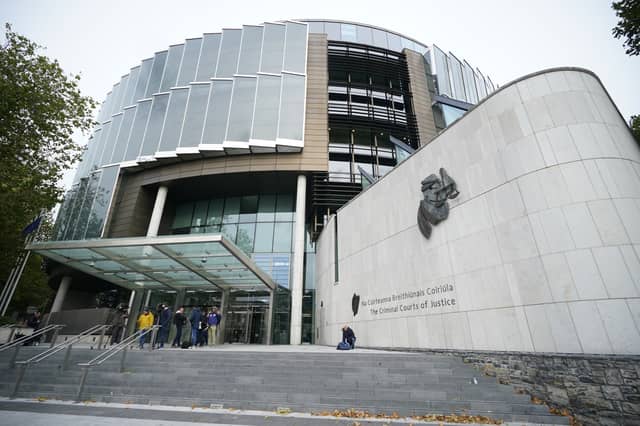

The 32-year-old man stabbed his parents and younger special needs brother to death at their Louth home
A 32-year-old man who stabbed his parents and younger special needs brother to death at their Co Louth home has been found not guilty of their murders but guilty of manslaughter by diminished responsibility by the unanimous verdicts of a Central Criminal Court jury.
The panel accepted the evidence given by two psychiatrists that Robert O'Connor was suffering from a relapse of schizophrenia when he killed the three members of his family and that the partial defence of guilty of manslaughter by reason of diminished responsibility under section 6 of the Criminal Law Insanity Act 2006 would be an appropriate verdict.
The State had submitted in their closing speech that verdicts of guilty of manslaughter by reason of diminished responsibility were more in accordance with the preponderance of the evidence in the case and also reflected the harmony of both psychiatrists.
Whereas lawyers for Robert O'Connor had asked the jurors to consider finding him not guilty by reason of insanity so that he could get the "proper mental health treatment" he needed and "not be misdiagnosed for a fourth time".
Robert O'Connor (32), of Drumgowna, Louth Village, Dundalk, Co Louth, had pleaded not guilty of murder by reason of insanity, or guilty of manslaughter on the basis of diminished responsibility to the triple murder of his mother Louise (56), his father Mark (54) and his brother Evan (27) at their home between September 28 and 29 2025, both dates inclusive.
The Central Criminal Court jury has been told that the defendant accepted he caused the death of the three victims, who had sustained a combined 139 stab wounds.
Robert O'Connor had told gardai he stabbed his autistic brother Evan like a "blood bag" and later described in his interviews how his mother had asked him to let his younger brother go as he held them by knife point in their sitting room.
A pathologist testified that the majority of Evan's wounds were inflicted by his eldest brother while he was still alive.
Robert O'Connor, who was not maintaining his schizophrenia medication and using cocaine in the months before the three killings, told officers that he had a row with his parents over drugs, lost his head and only meant to kill his father and brother, but not his mother.
The jury of six men and six women spent four hours and eight minutes deliberating over two days before bringing in unanimous verdicts on each of the three counts.
The presiding judge Mr Justice Mícheál P O’Higgins exempted the panel from jury service for the next six years.
The panel had been told by Roisin Lacey SC, prosecuting, in her opening speech that the "battleground" between the prosecution and defence in the trial was whether Robert O'Connor was insane at the time.
Whilst both expert psychiatric witnesses were of the view that guilty of manslaughter by reason of diminished responsibility under section 6 of the Criminal Law Insanity Act 2006 would be appropriate verdicts, they differed on whether the defendant qualified for the special verdicts of not guilty by reason of insanity under section 5 of the act.
Consultant forensic psychiatrist Dr Fiona Toal, called to give evidence by the defence, testified that Robert did not know what he was doing was wrong and couldn't refrain from committing the act. She found that Robert met the criteria for special verdicts of not guilty by reason of insanity.
Whereas psychiatrist Dr Ronan Mullaney, for the prosecution, had told the trial that Robert met the criteria for verdicts of guilty of manslaughter by diminished responsibility and did not meet the criteria for the special verdicts of not guilty by reason of insanity.
Dr Mullaney found the defendant had expressed remorse and his question to gardai about "what kind of time" he might expect indicated "a good understanding of his role".
The three criteria for a verdict of not guilty by reason of insanity under the Criminal Law Insanity Act 2006 are that the defendant did not know the nature and quality of the act, or was unable to appreciate that what they did at the time was wrong or would have been unable to refrain from their actions.
In his charge to the panel following the three-week trial at the Central Criminal Court, Mr Justice O’Higgins said the psychiatric evidence in the case reduced the choice the panel had to one of two verdicts; namely not guilty by reason of insanity or guilty of manslaughter by reason of diminished responsibility.
Mr Justice O'Higgins said that if the panel was not satisfied on the balance of probabilities that Robert was legally insane at the time of the killings, it was only then that they would go on to consider the alternative verdict of diminished responsibility.
The judge told the jurors if they were considering the possibility of a verdict of diminished responsibility, they must then ask themselves three questions; namely have the prosecution satisfied them beyond a reasonable doubt that the defendant did the killings; are they satisfied on the balance of probabilities the defendant was suffering from a mental disorder and that the mental disorder was such as to diminish substantially the defendant's responsibility for the killings.
"Was his mind in control or was the mental disorder in control at the material time?" asked the judge.