
7 surprising benefits of ivy in your garden

Often maligned by gardeners, this Christmas evergreen is worth learning to love, experts say.
So often, ivy gets a bad press from people who criticise its rampant nature, accusing it of damaging masonry, clogging gutters and strangling trees.
But ivy should be celebrated, argues Emma O’Neill, head gardener at charity Garden Organic, which promotes organic gardening.
So, what should we learn to appreciate about this common plant, which is often prominent in Christmas displays?
It hides eyesores
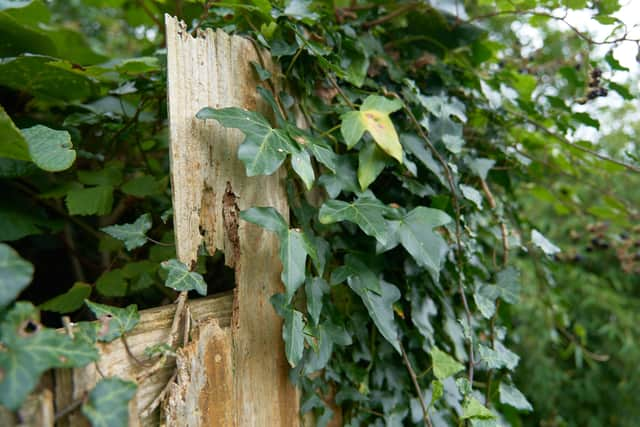
“It’s an extremely attractive, easy-to-grow plant that can provide really good cover for those unsightly areas of your garden that you don’t like, whether that’s a crumbling wall or a bare fence,” says O’Neill.
Ivy can bring texture and colour to a garden and there are many differing leaf shapes in shades ranging from deep green to variegated with golden yellow, white and cream leaf markings. Some leaves take on a purple hue in winter.
“They pick up on the low light levels, particularly if you’ve got variegated types,” she says.
It cools down your home in summer
A study by the RHS and the University of Reading has found ivy is the most effective plant cover for cooling buildings by more than 5C in summer and reducing humidity. Air trapped in the leaves and stems then acts as building insulation for the winter months, the charity says. If it covers fence panels and other boundaries it also traps airborne pollutants.
It’s great for wildlife
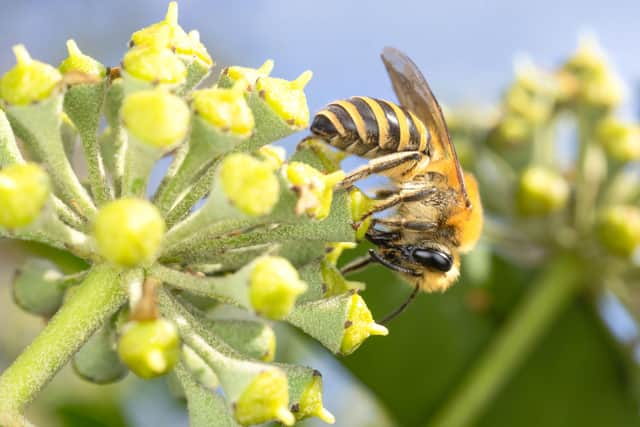
“If you leave ivy to flower over the winter, when barely anything else is out, not only are the creamy white flowers attractive, but they’re nectar-rich and great for bees and hoverflies,” says O’Neill.
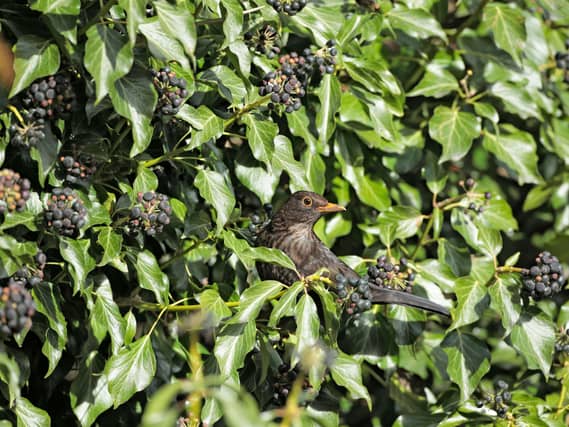
Ivy is a fantastic habitats for nesting birds – the preferred nesting place for dunnocks, flycatchers, wrens and robins – and it also produces black berries, a high-fat, energy-dense winter and early spring food source for birds.
Beneficial insects including beetles will hide in the leaves to protect themselves from predators. Its leaves are also an important food source for caterpillars of many butterflies and moths, the RHS adds.
It’s a quick, easy fix
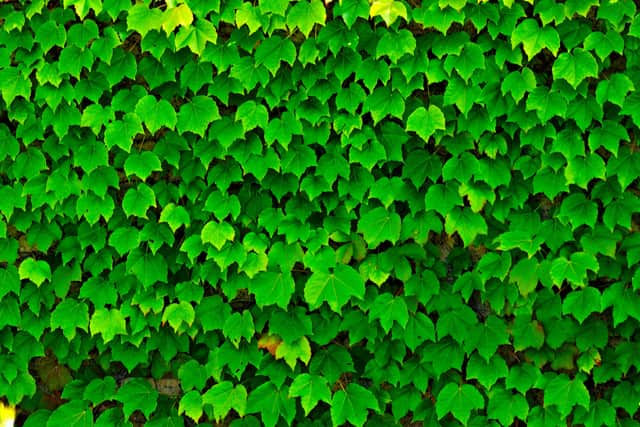
“It grows rapidly and unlike clematis, for instance, it self-clings so you don’t need to tie it in. It doesn’t need regular pruning but you can cut it back hard to keep it within its space,” says O’Neill.
Positioning is important, she continues. So if ivy is positioned next to a tree it’s going to climb up it and the same with your home.
“You can keep it very tightly clipped to keep it in space but otherwise it’s very like wisteria. It will just keep going. That’s more about maintenance,” she says.
“It’s also a lovely evergreen backdrop for other plants. It looks really good with things like mahonia, which flowers in a similar period and produces bright yellow flowers which stand out against the green foliage.”
Ivy is resilient
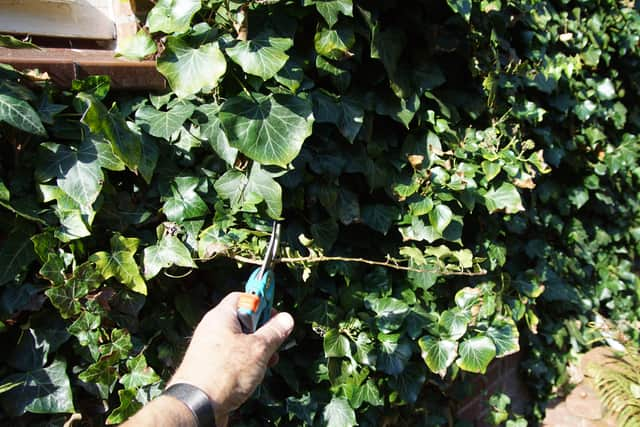
“You can chop ivy really hard back and it will come back and you can train it to go in a different direction.”
It’s easy to pull out if it’s threatening to take over, she adds. “It’s not invasive in the same way that, say, Japanese knotweed is. You can easily cut it back.”
It’s a welcome addition to container and wreath displays
Smaller types widely available in garden centres are ideal as trailers in mixed containers, in both summer and winter baskets and pots. At Christmas you can use it on wreaths or trail it in a mantelpiece display or as a table runner addition. The clusters of black berries it produces make a great addition to garlands and hazel hoops and should maintain their colour over the main Christmas period.
It doesn’t necessarily damage trees and house walls
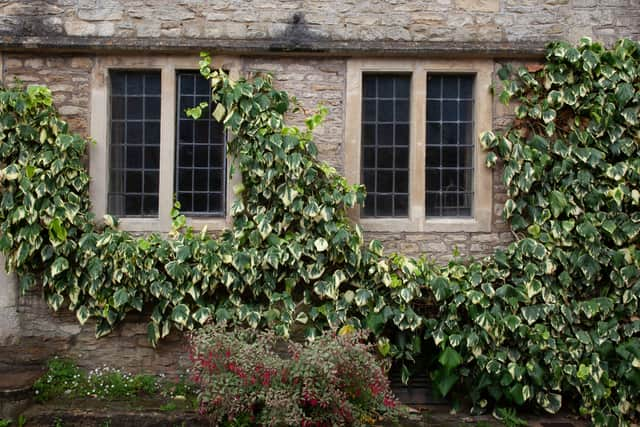
There’s a lot of information out there claiming that ivy damages trees, smothering the trunk and depleting it of light and nutrients, but O’Neill says it depends on the tree’s age.
“If it’s a very young tree it could potentially start shading out all the light that the tree is going to get, if it’s covering the whole of the canopy, but realistically I would say that ivy doesn’t cause that much damage to trees.
“They are competing, but that’s the same as any plant that you plant next to a tree. Obviously they will be competing for nutrients and water because their roots are down there, the same as the tree, but in terms of actually strangling and killing the tree, I say the tree would win every time. It’s all about keeping ivy in check, which is what you do with all plants.”
O’Neill cites the exceptionally tall, vigorous rambling rose ‘Paul’s Himalayan Musk’, which many gardeners position to climb up a tree because it produces pretty pale pink flowers in open sprays and looks great climbing up a trunk.
“It’s a massive rambler and will flower within the tree, but that’s the same thing. It’s all about keeping things in check.”
With buildings, O’Neill says that ivy’s bad reputation for damaging buildings often stems from its growth on already weakened masonry, not its inherent invasiveness.
The RHS adds that in most cases ivy does not damage the walls it grows on and that its aerial roots are unable to bore into sound masonry, often only causing damage when they are removed with force.