
‘A football-sized lump in my abdomen led to total hysterectomy and menopause in my 30s – I don’t fit into any category’
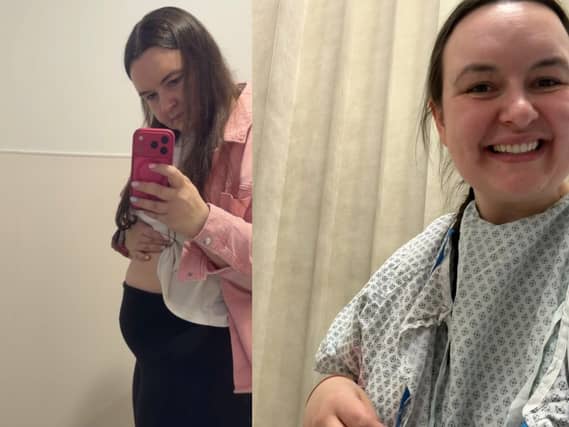

Katherine Glyde’s total abdominal hysterectomy in April caused immediate surgical menopause.
A woman whose “football-sized” lump in her abdomen led to a total hysterectomy, causing surgical menopause in her 30s, is campaigning for further support as she feels she does not “fit into any category”.
Katherine Glyde, 36, a business owner who lives in Romford, Essex, said it took nearly two decades to receive an endometriosis diagnosis, as she was diagnosed with “everything but” the condition over the years.
However, ahead of her cervical screening, known as a smear test, in February, she noticed a large lump in her abdomen – and after the appointment, she was referred for “urgent” testing and scans.
Katherine was told she had fibroids, which are non-cancerous growths that develop in or around the womb, with one measuring 27cm, and she needed a hysterectomy – a surgical procedure to remove the womb.
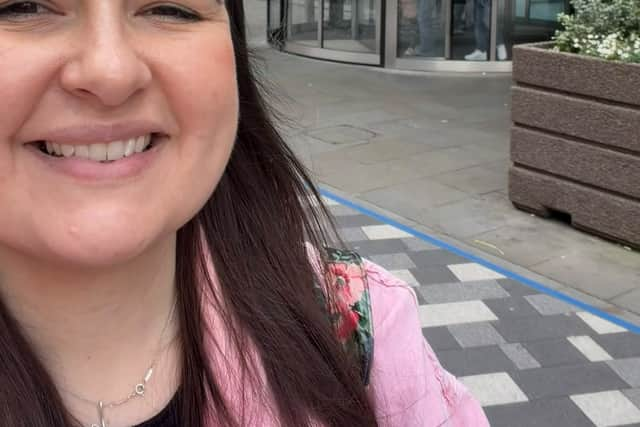
She said the total abdominal hysterectomy in April caused immediate surgical menopause, leaving her with a 25cm scar, and she experienced her first hot flush just hours after the surgery.
Now, six months later, during World Menopause Awareness Month, Katherine is pushing for greater guidance and support for younger women experiencing menopause.
“You don’t fit into any category, really. You don’t fit into the typical menopause space,” Katherine told PA Real Life.
“This happened to me in 24 hours. It didn’t happen in a few years, it didn’t happen gradually.
“There’s no guideline for what you do afterwards, and I think this needs to change.”

From “period number one”, aged 11, Katherine said she experienced heavy bleeding, severe pain and struggled with her mental health, but her symptoms were not taken seriously.
She explained: “I would frequently bleed through my school uniform and have to get changed.”
Katherine said she was prescribed the contraceptive pill by her GP, aged 12, but her symptoms persisted and worsened.
She continued to visit the GP but said she was repeatedly dismissed and misdiagnosed.
“After (the pill), the GP said, ‘Well, it’s nothing to do with your periods because your periods are fixed’,” she said.
“Then they said, ‘OK, we’re going to send you to gastroenterology’.”
After more appointments, Katherine said she was told her symptoms were due to irritable bowel syndrome (IBS), a condition which affects the digestive system.
She was later diagnosed with glandular fever, a viral infection, due to her low energy levels and pain.
“I got told it was everything but (endometriosis),” she said.
After 17 years of debilitating symptoms, Katherine said she was diagnosed with endometriosis, aged 28, followed by polycystic ovary syndrome (PCOS), now known as polyendocrine metabolic ovarian syndrome (PMOS).
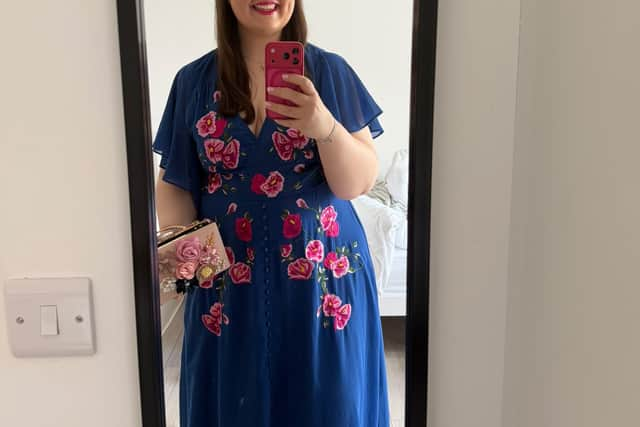
She said she had been “navigating” everything by herself up until this point and, after visiting an endometriosis specialist privately in 2021, nothing else was flagged.
However, ahead of her routine smear test in February, which checks the health of the cervix and helps prevent cervical cancer, she noticed a large lump in her stomach.
“The nurse said, ‘I can’t find your cervix, but it can move around, don’t worry about that’, and I said, ‘Is that why I’ve got this weird lump in my stomach?’,” Katherine explained.
“Then she said, ‘Hold on a minute. Let me finish the smear test, and then we’re going to talk about this’.
“At the time, I had what can only be described as what felt like a football in my tummy, and when I pushed on my stomach, it was rock hard.”

Katherine said she was also experiencing severe back pain and bowel and bladder issues, which she thought were related to a kidney infection, and she was referred to gynaecology for “urgent” testing and scans.
This is when Katherine learned she had four fibroids, with the largest one measuring 27cm, and she was told the swelling was “the equivalent of being 34 weeks pregnant”.
She said there were additional questions over whether the largest fibroid was cancerous, but this was not confirmed and investigations remain ongoing.
“The questions were initially like, ‘Can we just remove the fibroids? Can we do it avoiding a hysterectomy?'” Katherine said.
“Initially, I very much thought, ‘I don’t want to have a hysterectomy. I don’t really want to have surgery at all’.
“Every appointment got scarier and scarier than the one before.”
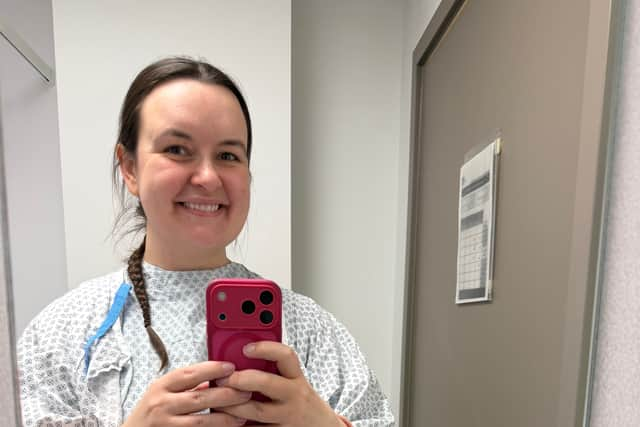
Katherine said that because of her “period issues” from a young age, and subsequent endometriosis diagnosis, she knew having children naturally might not be a possibility.
So, when it was confirmed that a hysterectomy was the best course of treatment, she “made peace” with this decision – but she still found it challenging.
“I think I coped with it well, but there would be certain moments that would just completely break me,” she said.
“I’d almost put (having children) aside… but when it was suddenly taken away, that’s a whole other element of grief that you have to navigate.”

Katherine said doctors discussed her taking hormone replacement therapy (HRT) before her surgery and, since her mother had undergone a hysterectomy, she was aware of surgical menopause.
However, with tests beforehand showing she had “no signs of perimenopause”, she said she went from “one to one thousand” and experienced her first symptom almost immediately after the surgery in April.
According to the NHS, menopausal symptoms can include hot flushes, depression, vaginal dryness, sleep problems, known as insomnia, fatigue and night sweats.
“I thought, in my head, I’d have some time to recover from the surgery and then it would all start. It wasn’t like that,” she said.
“I remember waking up (the night of my surgery), absolutely dripping in sweat, and then suddenly being freezing cold.
“I messaged one of my friends who said to me, ‘Congratulations, you’ve just had your first hot flush’… but the worst thing that I’ve experienced so far is the insomnia.”
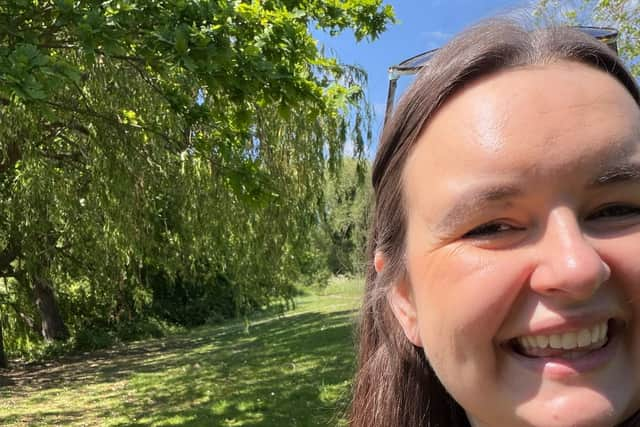
Katherine explained that her HRT, which she takes in the form of patches, has been tweaked and her insomnia has since improved, but she still experiences hot flushes and struggles with her mental health.
Other side effects have included weight gain, food cravings and hair loss, and she even temporarily had tinnitus, commonly described as a ringing sound in the ears.
Katherine said it feels like she is constantly operating at about 60% health and she feels there is a lack of support for younger women experiencing menopause.
She wants to push for more guidance and follow-up appointments for those in surgical menopause to help them learn how to continue living a “normal life”.

“It’s hard to see menopause and mid-life used interchangeably,” she said.
“I’m not the only person who’s my age who’s had a hysterectomy… but I’ve gone to menopause-specific events, and people don’t think I’m there for myself.
“For other younger women going through surgical menopause, I’d say, it’s not over, it’s not mid-life, it’s whatever point of life you’re at.
“You will be OK and you will build a new life without a womb.”

Dr Susanna Unsworth, women’s health expert for Intimina, said: “Menopause only affecting women over 50 is a common misconception.
“While the average age of menopause in the UK is 51, anything over the age of 45 is considered within the most common range. Furthermore, around 4% of women go through menopause before the age of 40.
“Hormonal changes can affect women in their 30s and 40s, and it is important to consider menopause as a possible factor when assessing symptoms, while still ruling out other medical causes.”
For more information and support, visit: intimina.com.