
Athlete who saw best friend take ‘last breath’ after plane crash and lost wife to cancer prepares for ‘monumental’ race
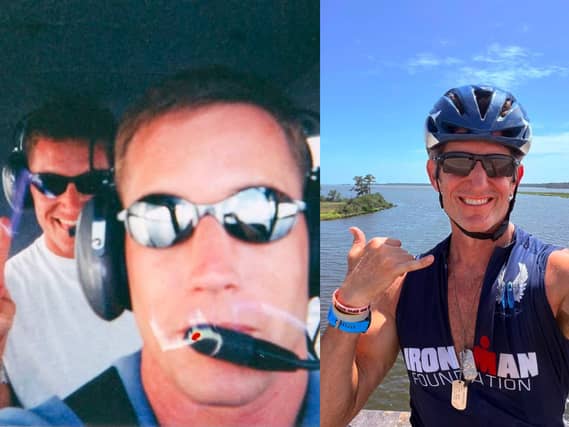

Scott Christmas survived a plane crash which claimed the life of his best friend before later losing his wife.
An endurance athlete who watched his best friend take his “last breath” following a plane crash, and later lost his wife to cancer, is preparing for the most “monumental” race of his life this year.
In 1996, Scott Christmas, now 57, a senior sales rep for Medtronic who lives in Fairhope, Alabama in the US, survived a plane crash which claimed the life of his best friend and “brother”, Captain Owen Duke, aged 32.
Scott said he was given a less than 3% chance of survival and less than 5% chance of recovery, but after waking from a two-week coma, he made three promises to honour Owen, known as “Wen”.
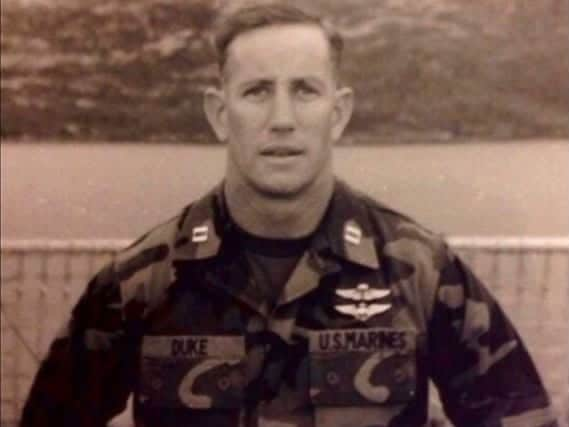
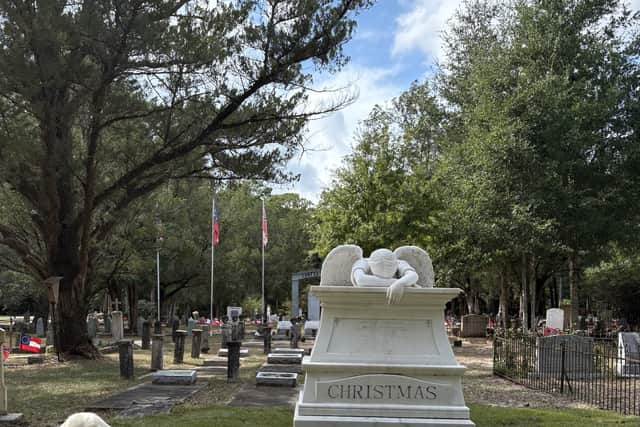
The first was returning to triathlons and the second was that he would not pay his respects at his resting place at Arlington National Cemetery until he completed the Marine Corps Marathon.
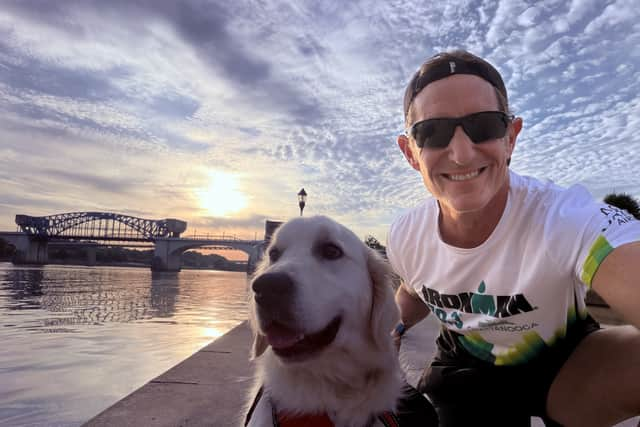
Three decades on, Scott is preparing to fulfil his third promise to take part in the Ironman World Championship in Kona, Hawaii, in October, followed by the Marine Corps Marathon, and he will then return to Arlington to lay both medals there.
Scott will additionally be racing in memory of his late wife Amy, who died from brain cancer in 2017, aged 45, making this an incredibly special but “emotional” event.
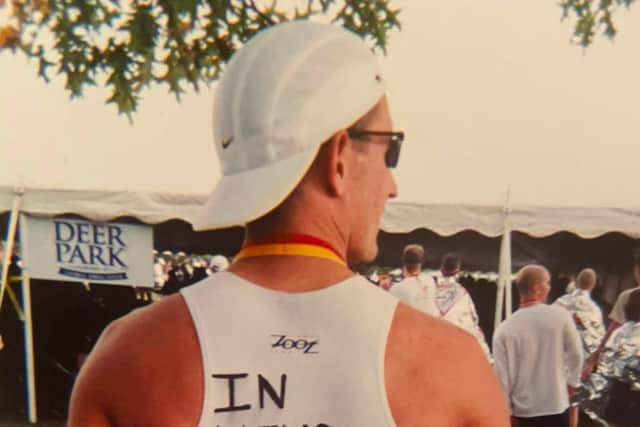
“I was the last person to see both Wen and Amy take their last breaths… but I do think that was a gift from God to me,” Scott told PA Real Life.
“I got to watch them cross their final finish line and, fast forward down the road, they’re going to be the first people I see when I cross my final finish line.
“I know that, one day, he’s going to be getting out of the aeroplane and she’s going to be sitting in my seat, waiting to pick me up and take me home.”
Scott said he and Owen grew up together and he called him his “brother” because they were “basically family”.
He said Owen, an active duty helicopter pilot in the US Marine Corps, was “wild, adventurous and infectious” and “everybody loved” him.
“He was a good-looking guy, fun, and had a smile that was just as contagious as could be,” Scott said.
“There’s a cartoon in America called Calvin and Hobbes – Owen was Calvin and I was Hobbes.
“It’s always been my favourite comic growing up and now I know why, because it describes the two of us perfectly.”
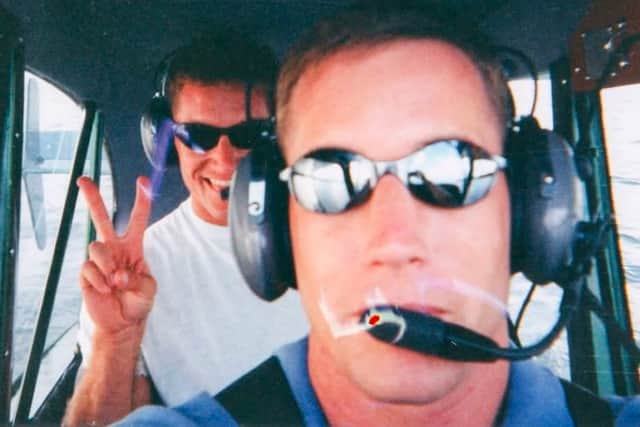
In July 1996, Owen was flying a sea plane cross country before going to his next duty station, and he stopped off in Mobile, Alabama, to spend a “magical weekend” with Scott and his family.
Owen asked Scott to join him for a flight on July 15 before he left the next day and, although Scott was hesitant because of being in a plane crash three years prior, he eventually agreed.
Speaking about the flight, Scott, who was in the back of the plane, said: “He got up to about 500 feet and said, ‘Ready to go up?’ I said, ‘Roger that’.
“He nosed it down to get lift and they estimated that, at about 1,000 feet, we stalled out and the plane went vertical.
“We fell back and slowly corkscrewed into six feet of water, estimated at about 100 miles per hour. Hitting water at that speed is like hitting concrete.”
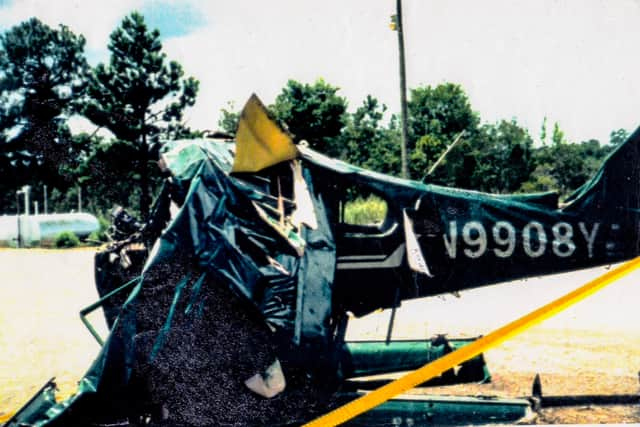
Scott said it felt like everything happened in slow motion but, when they “drilled into six feet of water”, his body effectively “folded in two” thanks to the lap belt.
The trapped were “trapped underneath” the water and, although Scott was able to remove his own belt, he could not help Owen.
“He was fighting to get out, so I got down to him and tried to get his six-point harness off and I couldn’t do it, so he drowned,” Scott said.
“After that, I went back up and got another breath and then I was fighting for my life. I was actively dying.”
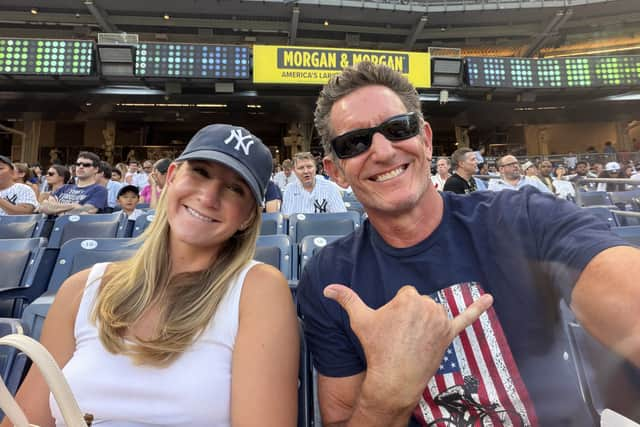
Scott said his body was in “grave condition” but, thankfully, there was a boat on the water which rescued him before he was airlifted to hospital.
He said the fuel from the plane caused him to suffer “second-degree chemical burns over 80% of his body” and, after breaking his back and sustaining nerve damage, his right leg was paralysed.
“I kept on saying, ‘My brother’s still in there’,” Scott said.
“I knew he was gone – I mean, I watched him take his last breath – but I didn’t want him left in there.
“Then they touched down (at the hospital) and said, ‘If we don’t operate, you’re going to die’.”
Scott said he was given a less than 3% chance of survival and later found out he was “bleeding out through a ruptured spleen”, his right foot had “folded in two”, and he had kidney and liver damage and a severed thoracic aorta in his heart.
The tissue in his wrist had “exploded” and he had a severe laceration in the back of his head, along with 33 shear injuries in his brain, known as traumatic brain injuries (TBIs).
He said he ended up having more than 100 units (with one unit measuring just under a pint) of blood transfused between two surgeries, as he was “bleeding out” – the NHS says the average adult has around 10 pints of blood.
“They didn’t think I was going to make it through the night,” he said.
Post surgeries, Scott was moved from the intensive care unit to a regular hospital bed but, because of the severe burns, he said his “body metabolised and ate itself”, meaning he lost 60lbs, and his skin “peeled like a lizard”.
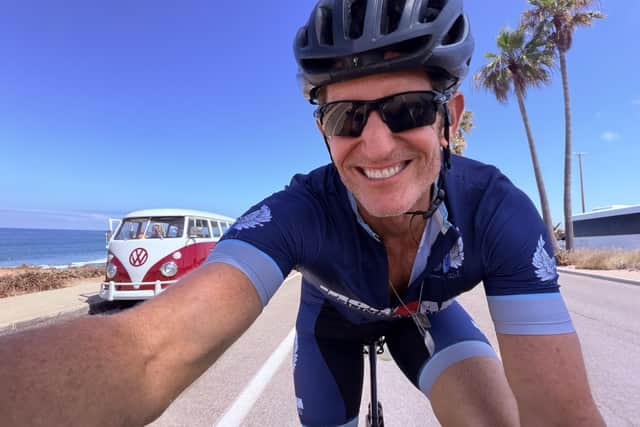
Scott said the events of the crash left him feeling depressed, as “everybody else’s life was going on and (his was) forever altered” – but a traumatologist gave him some “powerful words” of encouragement.
“The traumatologist said, ‘Never in my life have I ever seen somebody come in, in your condition, and survive’,” Scott explained.
“Then he goes, ‘God must have a purpose for you, and I hope you find that purpose one day because he kept you here for a reason’.”
Scott then moved back into his parents’ home, aged 26, and started rehabilitation while wearing a back brace.
While he nearly gave up several times and was “checked out”, he said his physiotherapist gave him some “tough love” and this was a “turning point”.
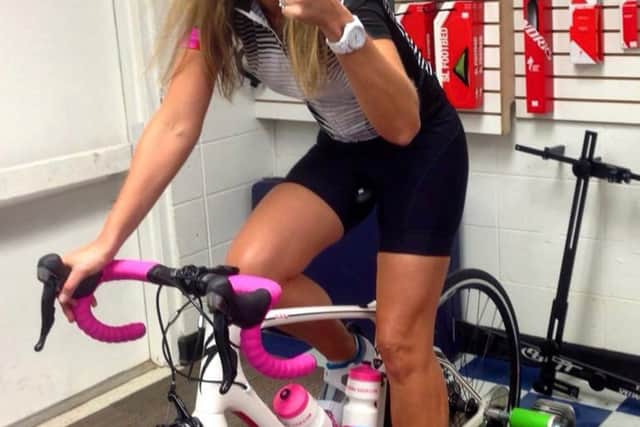
“I’m one of those guys if you tell me I can’t do something, I’m going to do it,” he said.
“My favourite quote of all time is from Rocky, and it’s: ‘It ain’t about how hard you’re hit, it’s about how hard you can get hit and keep moving forward’.”
With patience, determination and “hope”, Scott focused on rebuilding his strength and bought his first-ever custom triathlon bike, which he named “The Dukester” after Owen.
He said his first group ride in 1997 after the crash was “very impactful” and, over the following years, he completed more races and triathlons, including his first full Ironman in 2001, as part of his three promises to Owen.
“On every ride, I whisper out loud, ‘OK, Dukester, take me home’, and he’s done that a thousand times since then,” Scott said.
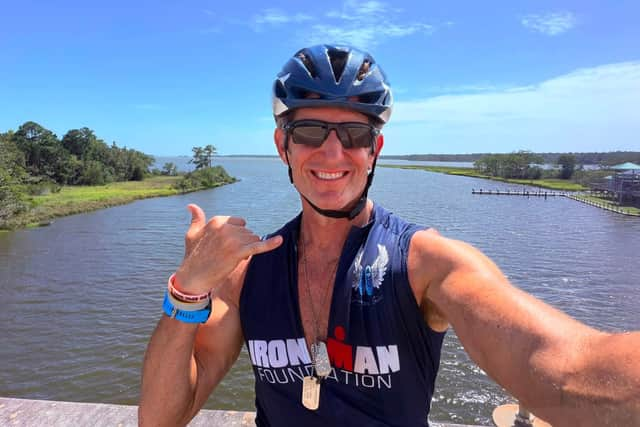
Every year, on the anniversary of the crash, Scott completes a memorial bike ride on his own for Owen and this year, 30 years on, Scott said it was particularly “emotional”.
This year also marks nine years since his late wife Amy, an ophthalmologist and Ironman athlete whom he described as “drop-dead gorgeous and unbelievably smart”, died in September 2017.
While Scott said his accident is “forever present” in his life, he is determined to keep honouring Owen and Amy in his endeavours, and he is writing a book titles A Place Called Hope.
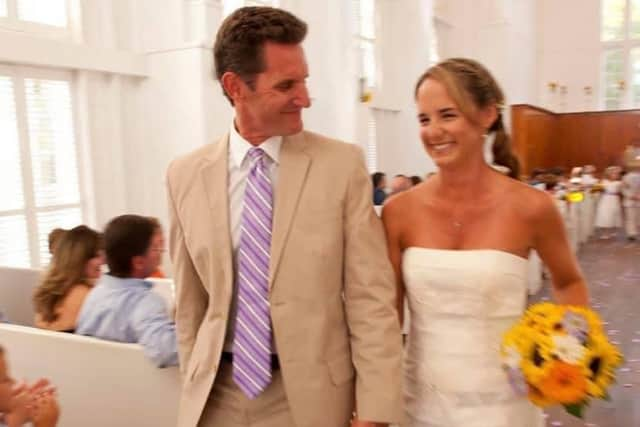
He said the upcoming Ironman in October will be emotional, but he hopes his story inspires others as he believes the “single most powerful thing you can give somebody is hope”.
“There’s not a single day that I don’t think about Wen, there’s not a single day that I don’t think about my wife, so I’ve got two angels up there who are carrying me down the road,” he said,
“It’s Wen’s story, it’s Amy’s story, and they are forever part of my fabric and part of my soul.
“All I’m trying to do is make my way home and then, along the way, spread a little message of hope for those who are struggling in their own journey.”