
Calum Franklin’s herb pie recipe
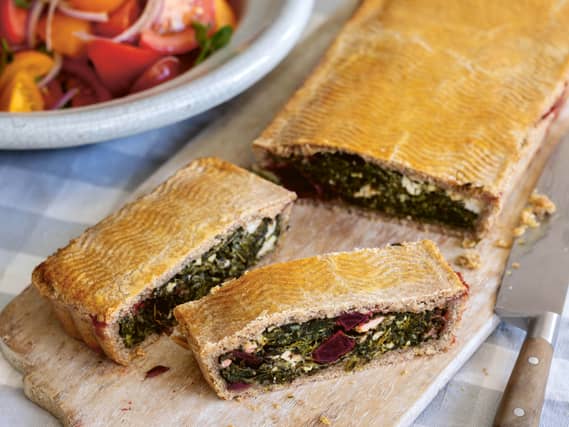

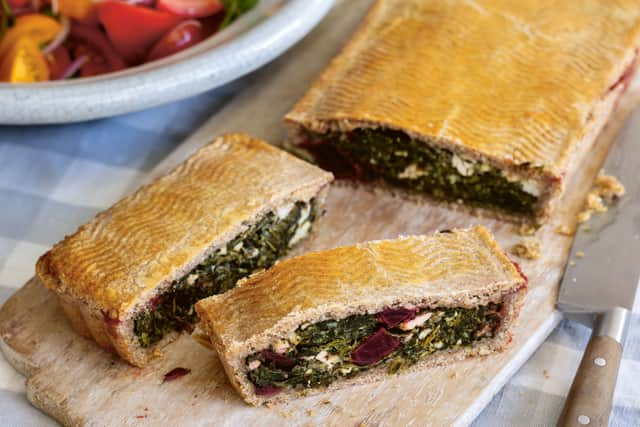
Rich, buttery and packed with herbs, spinach and cheese, this is perfect served up on a chilly evening.
“There is a recipe for herb pie in Elizabeth Raffald’s 1769 book, The Experienced English Housekeeper. It was created for Lent and as such was devised to use up a multitude of green leafy vegetables, including beet leaves, spring greens, spinach and parsley, that would have been thickened with oats and butter,” explains king of pies and chef Calum Franklin.
“In my version, I have created a much lighter pie crust using wholewheat flour that relies on rapeseed oil for its structure. If you prefer, you can replace the rapeseed oil directly with olive oil. And feel free to experiment with the herbs that go into the filling; different herbs will alter the flavour profile of the pie depending on how they complement each other. For the cheese, I have used Graceburn, which is similar to feta but made with raw cow’s milk. If you cannot source Graceburn, regular feta made with sheep’s milk is a good swap.”
Calum Franklin’s herb pie recipe
Ingredients:
(Serves 4)
15g softened butter, for greasing
1 egg yolk, strained and beaten with 1 teaspoon water, for egg washing
For the wholewheat and rapeseed oil pastry (800g):
5g fine table salt
190g water
130g cold-pressed rapeseed oil
280g wholewheat flour
200g plain flour
For the filling:
750g spinach, washed
20ml vegetable oil
1 brown onion, peeled and thinly sliced
3 eggs, beaten
1 bunch flat-leaf parsley, leaves picked and roughly chopped
1 bunch basil, leaves picked and roughly torn
½ bunch dill, leaves picked and roughly chopped
½ bunch mint, leaves picked and roughly chopped
100g cooked red beetroot, cut into 1cm cubes and patted dry
250g Graceburn or feta cheese, crumbled
Fine table salt and freshly ground black pepper
Equipment:
36x12cm rectangular loose-bottomed tart tin
Textured wooden rolling pin with the design of your choice (optional)
Method:
1. To make the pastry: Dissolve the salt in the water and then mix with the oil. Sift both the flours into the bowl of a stand mixer and whisk to combine. Gradually pour the oil mixture into the flour and beat with a paddle attachment on a medium speed to incorporate the oil into the flour. Continue mixing until a rough dough forms and there is no flour left at the bottom of the bowl. Alternatively, if you don’t have a stand mixer and are making the pastry by hand, combine both flours in a large mixing bowl.
2. Create a well in the middle of the flour and gradually pour in the oil mixture, mixing with a wooden spoon to gently nudge the flour into the centre from the outside edges. Continue to bring everything together until a rough dough forms and all the loose flour is off the bottom of the bowl. Finish kneading the dough very lightly on your work surface just until smooth. Flatten the dough into a rectangle, wrap it tightly in clingfilm and chill in the fridge for at least 1 hour before using as directed in the recipe.
3. Line a baking tray with parchment paper. Divide the dough into two pieces, one weighing 500g and the other weighing 300g. On a lightly floured surface, roll out the larger piece to a 45 x 20cm rectangle, about 5mm thick. Roll out the remaining dough to a smaller 40 x 15cm rectangle, also 5mm thick. Slide the rolled-out dough onto the lined tray and chill in the fridge for 30 minutes.
4. In a wide-based pan with a lid, bring a few tablespoons of water to a simmer over a medium heat. Add the spinach to the pan, pop the lid on and cook for 2 minutes. Take the lid off, sprinkle in a few pinches of salt, then quickly stir the spinach with a wooden spoon to finish steaming. Transfer to a bowl.
5. In the same pan, warm the oil over a medium heat. Add the onion to the pan and cook for a few minutes until just softened. Add the wilted spinach, then drain in a colander. Using the back of a large spoon, press the spinach against the colander to expel any excess water. Spread the spinach out in the colander to cool slightly.
6. Wrap the onion and spinach in a clean dish cloth or kitchen towel, then squeeze out any remaining moisture. Transfer the mixture to a chopping board and roughly chop.
7. In a large mixing bowl, combine the onion and spinach with the beaten eggs and chopped and torn herbs. Season with 1 teaspoon each of salt and pepper. Finally, fold in the diced beetroot and crumbled Graceburn or feta cheese.
8. Preheat the oven to 200°C fan/220°C/gas mark 7 and grease the tart tin with the butter.
9. Line the greased tart tin with the larger rectangle of dough. Prick the bottom all over with a fork. Fill the tart case with the filling mixture. If you are using a patterned rolling pin, you can decorate the smaller rectangle of dough for the lid now – I used a wooden rolling pin etched with wavy lines to create a decorative pattern before adding the lid to the pie. Lay the smaller rectangle of dough on the top and seal the edges together. Trim off any excess pastry overhanging the lip of the tin with a sharp knife, then lightly brush the pastry lid with a thin coating of the egg wash. Place the pastry-lined tin in the fridge to chill for 30 minutes.
10. Lightly brush the pastry lid with a final thin coating of the egg wash. If you are using the tip of a sharp knife to score a decorative design into the top of the lid, you can do that now.
11. Place the tin in the centre of the oven and bake the pie for 45 minutes, turning the pie 180 degrees in the oven halfway through the cooking time. Remove from the oven and leave the pie to rest in the tin for 30 minutes before lifting it out and slicing.

The Modern Pie Maker: A mouth-watering Journey Around Britain in Eighty Recipes by Calum Franklin is published in hardback by Bloomsbury, priced £26. Photography by John Carey. Illustrations by Calum Franklin. Available now.