
Couple whose twins died three weeks apart now campaign for further testing and research to ‘prevent it happening again’
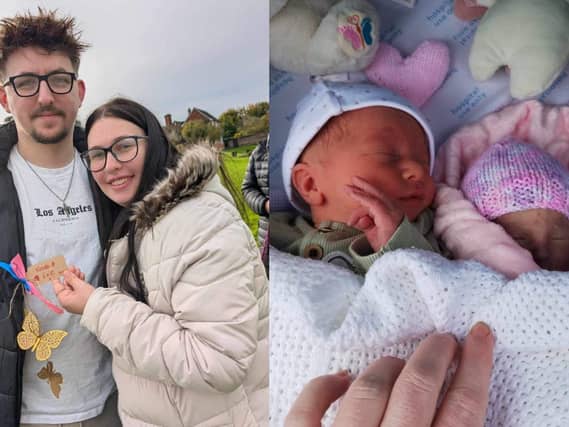

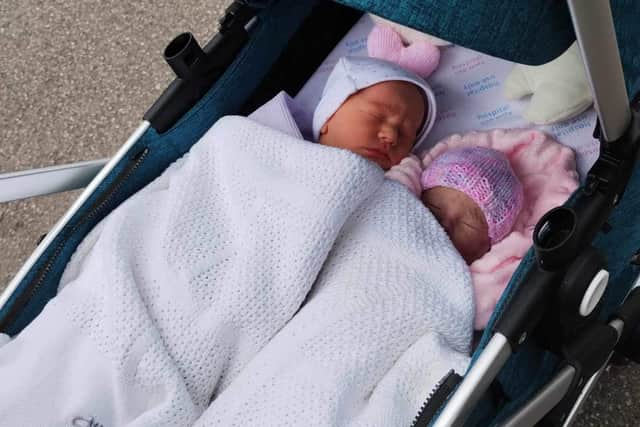
Jasmine Wheaton and Matt Snook’s twins, Evie and Noah, were born in April 2024 and died from different conditions.
A heartbroken couple whose twins died three weeks apart are now campaigning for further testing and research to “prevent it from happening again”.
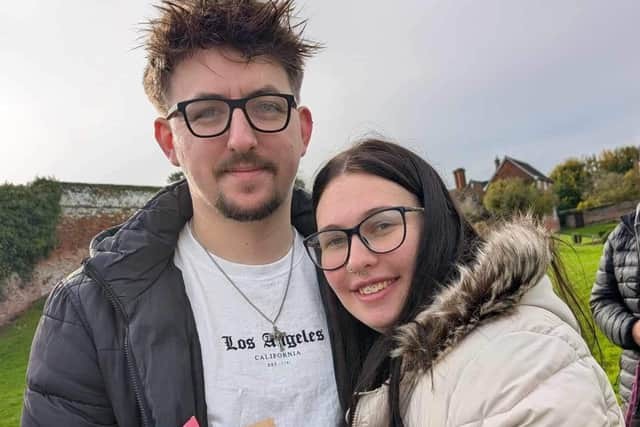
Jasmine Wheaton, 24, who lives in Basingstoke, Hampshire, with her partner Matt Snook, 25, gave birth to twins Evie and Noah via C-section in April 2024.
Evie died less than two hours after birth due to Edwards’ syndrome, a rare genetic condition that cannot currently be cured, and associated heart complications.
After coming home, Noah became unwell at 15 days old and he was subsequently diagnosed with group B strep sepsis, with meningitis suspected, and died at just three weeks old.
Before the pregnancy, the couple said they had not heard of group B strep, a type of bacteria called streptococcal bacteria, and were unaware that testing was available, but they want to ensure other parents are aware and do their research.
The couple have since given birth to their son Hudson, now one, but still struggle with grief and think of the twins every day.
Jasmine told PA Real Life: “I find it harder now as we’ve got a one-year-old and, with everything he does, you wonder, ‘What would the twins be doing now? What would they look like? What would they be saying?’
“You’re just comparing with everything you do and you always think, ‘They should be here doing this’.”
Jasmine had always dreamed of having children but said falling pregnant was “completely accidental”.
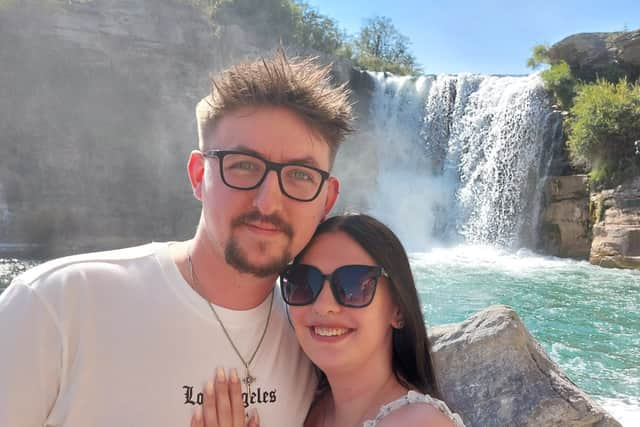
In 2023, while driving to visit Matt’s family, the couple decided to stop off at a service station and buy a pregnancy test as Jasmine’s period was late – and the result was positive.
Jasmine wanted to “play it cool” and reveal the surprise when they were back in the car, but Matt said he knew “the second she looked at (him)”.
“I couldn’t hide it, I was over the moon,” Jasmine said.
During a pregnancy scan shortly after, it was confirmed the couple were having twins – although the genders were not confirmed at this stage.
It was noted one of the babies had fluid around the back of their neck, indicating they “could have a syndrome of some sort”, and Jasmine had an amniocentesis – a test to check for certain health conditions.
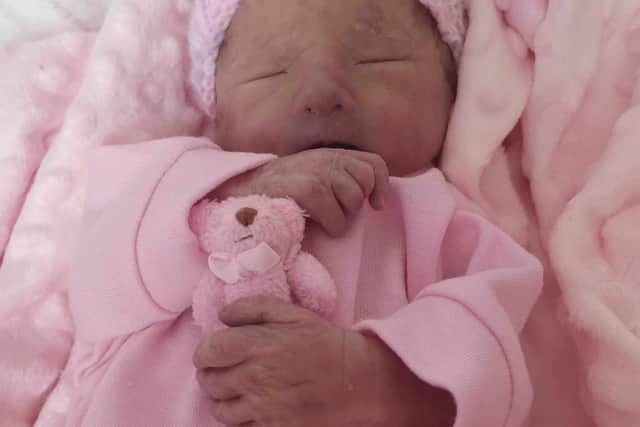
A week later, the couple received a call to say one of the twins had Edwards’ syndrome, also called trisomy 18, and Jasmine “broke down”.
She said: “Doctors said she would have a short life if we managed to even get to labour. They said there was a high potential that she’d pass away in the womb.”
Matt added: “They said, ‘It’s an illness not compatible with life’… They just wanted us to know that the odds were not in her favour.”
The couple said they were given the option to terminate the twin pregnancy or just for Evie – although this might put Noah at risk – or “see how far (Jasmine) can carry on”.
They decided to proceed with the pregnancy and Jasmine reached 37 weeks, which is often considered full term for twins.
Jasmine said: “We just thought, ‘We’ve got to get to every scan and try and make it through for Noah and let him be our little light at the end of the tunnel’.”
Jasmine had a C-section to deliver the twins on April 15 2024 and the couple had arranged for a photographer to be present post-birth to capture photos of the babies.
Noah was delivered just before Evie, but she died one hour and 39 minutes after birth in Jasmine’s arms.
Jasmine said: “I was naive, to be honest, as they had sent us links to read up on what to expect, and there were cases where the baby had been alive for six months.
“I thought, ‘She’s going to live for a couple of days’, but I just held her the whole time.”
Matt added: “I just turned around and collapsed into my old man’s arms.”
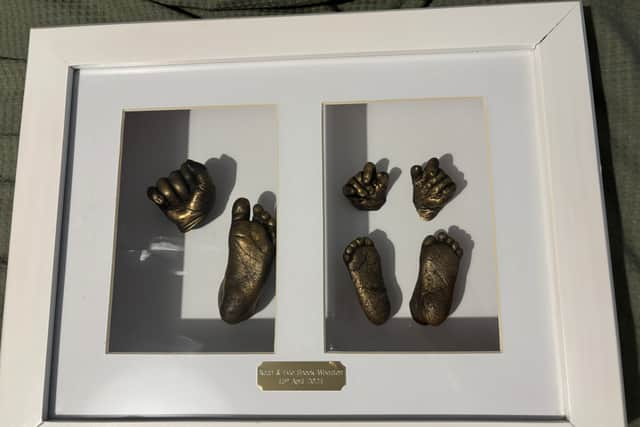
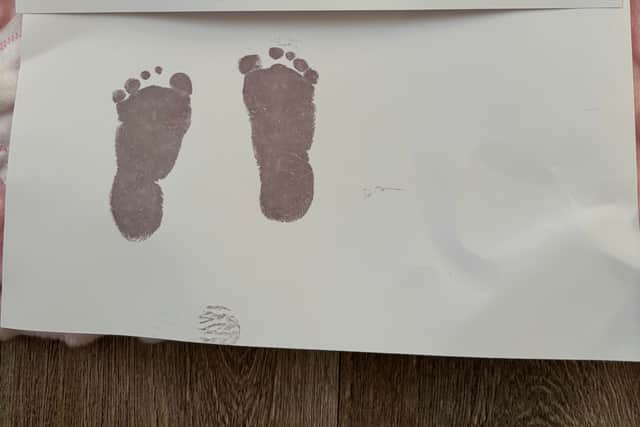
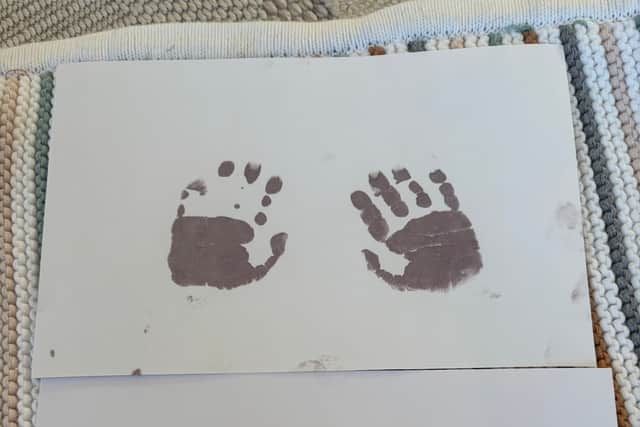
The couple took Evie and Noah’s hand and footprints, along with moulds, but Jasmine said she initially struggled to bond with Noah in hospital, as her trauma response is to “shut down and go into (her) shell”.
She additionally had stage two acute kidney injury (AKI), which required further monitoring before the couple were discharged around one week later.
Jasmine said navigating grief while trying to care for Noah, who had “the most beautiful blue piercing eyes”, was extremely challenging.
She said: “It’s hard because you’re trying to appreciate the baby you’ve got while also mourning the baby you’ve just lost.”
At 15 days old, Noah became unwell and the couple noticed he was feeding poorly and appeared pale, prompting them to seek medical advice and call 111.
The couple said he seemed “groggy”, but they assumed he was just tired as a newborn.
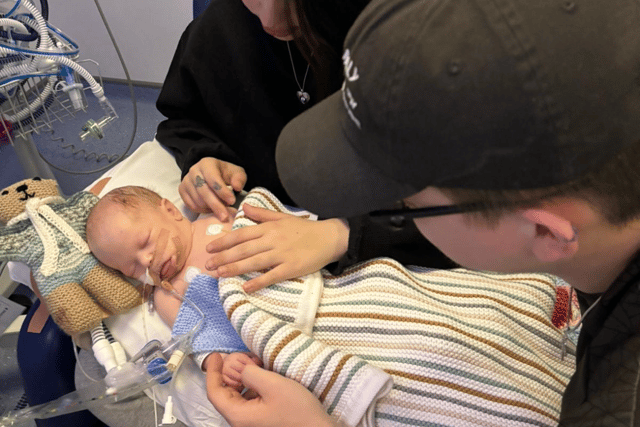
“He’d been asleep for quite a while, noticeably longer than (normal) because he fed like clockwork,” Matt said.
“But by the time we’d sat down for dinner, he was grey, he’d still not fed properly… and he was limp, so we knew something wasn’t right.”
Jasmine added: “I looked in his eyes and I knew he was going because he wasn’t there, he was just a body.”
After an assessment by out-of-hours services and an admission to hospital, they said Noah was transferred to John Radcliffe Hospital in Oxford for specialist care, where tests confirmed group B strep sepsis.
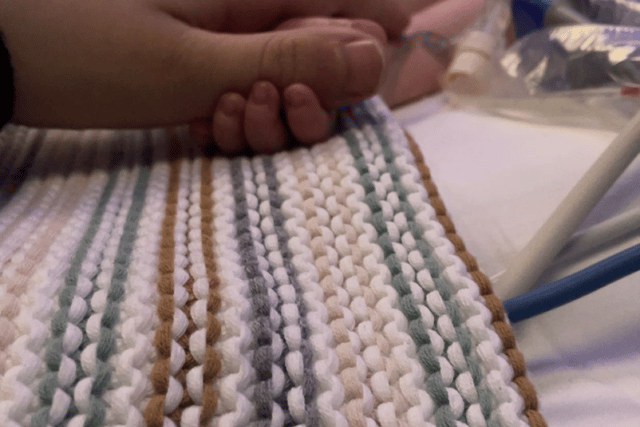
Following the development of seizures, the couple said clinicians believed meningitis was likely, too, and it was later revealed Noah had suffered severe brain damage.
Despite treatment, his condition deteriorated and he died at 21 days old on May 6 2024 due to late-onset group B strep (LOGBS) infection.
Matt said: “They confirmed that he was 90% brain dead and they gave us options.
“We knew instantly what we were going to do because we asked about what quality of life he would have – and there wasn’t one – and when they said that, Jasmine let out this blood-curdling scream.
“It was the most guttural thing I’ve ever heard.”
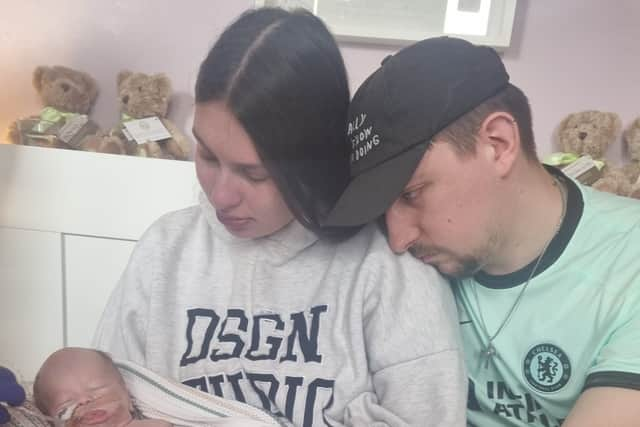
Jasmine said she could barely talk after Noah’s death and Matt went into “protector role” before having a “breakdown” several months later.
The couple claim that no recognised risk factors for group B strep infection had been identified during pregnancy, labour or birth.
The couple are sharing their experience to raise awareness of group B strep and support research, such as the BEATRIX study, into preventing group B strep disease in babies.
The BEATRIX study – supported by the National Institute for Health and Care Research (NIHR) and sponsored by Pfizer – is the first large-scale phase three vaccine trial in the world for group B streptococcus (GBS).
It is being developed by researchers from the NHS and from UK universities, alongside international partners, to prevent avoidable infant deaths and stillbirths.
Jasmine said: “We just want to raise awareness because we didn’t know about (group B strep) and it was so fast.
“Doctors said we couldn’t have acted any faster if we tried, and it was still too late, so we just want to try and get it out there as much as possible.
“Hopefully, we can try and prevent it from happening again to other people.”
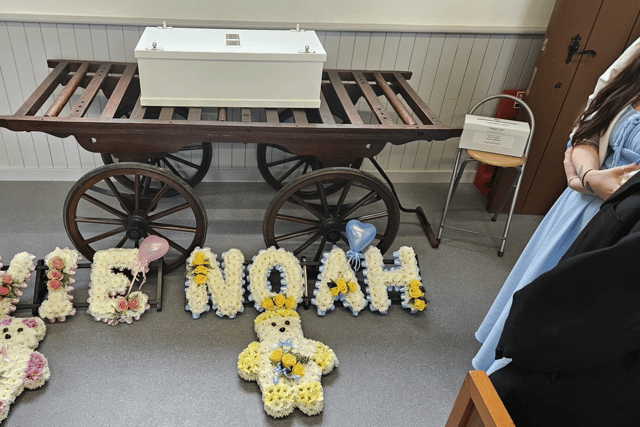
Matt said: “I think about the twins every day… and everything we do is in their memory.
“I’d say just do your research and get some knowledge behind you because that’s not what we had.
“It wouldn’t have altered the outcome no matter how much we knew… but people need to understand what’s out there and how it can affect people during and after pregnancies.”
For more information on the vaccine trial or to take part in clinical research, visit the NIHR’s Be Part of Research Service online or through the NHS app.