
‘Doctors told me to find another sport when I wanted to become a rower age six – now I’m a Paralympic gold medallist’
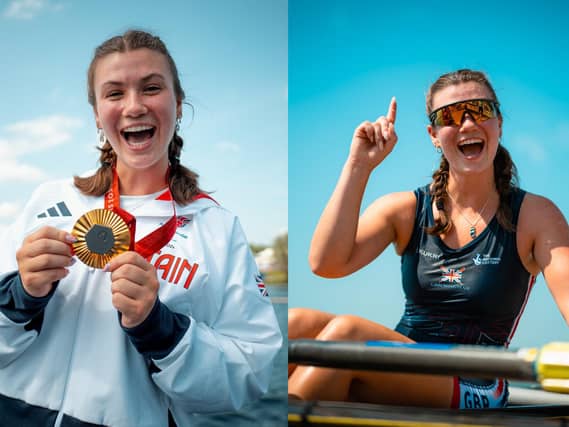

Frankie Allen has Erb’s Palsy and was told she couldn’t become a rower, but now she’s a four-time World Champion and Paralympic gold medallist.
A woman who was born with nerve damage that led to a hidden disability has defied doctors’ concerns that she could not take part in sport to become a professional rower for ParalympicsGB, taking home a gold medal at the 2024 Paris Paralympic Games and holding multiple World Championship titles.
Frankie Allen, 24, has Erb’s Palsy – a type of arm paralysis caused by damage to the nerves that carry signals to the shoulder, arm, and hand – which was caused during her birth. As a child, she had no movement in her left arm, but from the age of six she dreamed of becoming a rower.
Despite concerns from doctors and physiotherapists that she would not be able to do things like cartwheels and monkey bars, and their suggestion that she should “find another sport” when she showed interest in rowing, Frankie has defied the odds and secured a gold medal with her team at the 2024 Paris Paralympics.
A four-time World champion and three-time European champion rower and Paralympic champion, Frankie has spent her life “trying to prove people wrong” and show the world that with dedication and the right support network, people with disabilities can achieve incredible things.
For her dedication to her mission, Frankie was made an MBE for services to disability sport and to improving access to sport for young people in the 2026 King’s New Year Honours List.
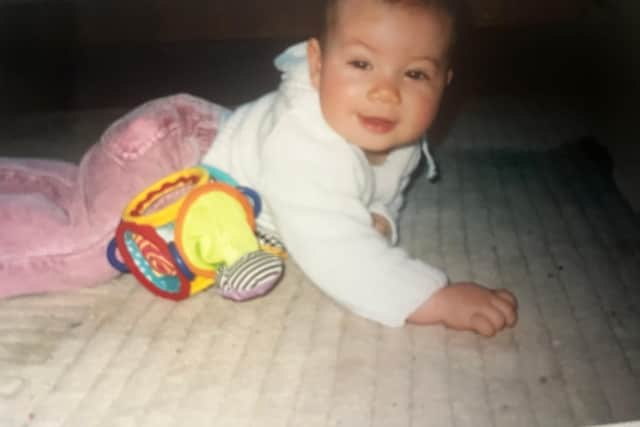
Growing up, Frankie said she never really considered herself as having a disability. Shortly after her birth, Frankie’s father noticed her left arm was “completely floppy”, and she was soon diagnosed with Erb’s Palsy, caused by complications during her traumatic birth.
“All my childhood that I can remember, I just had loads and loads of intensive physiotherapy,” Frankie told PA Real Life.
“I always knew I had a dodgy arm, my arm wasn’t working as well as the other arm, but it’s all I knew, that was my normal…” she added.
“I couldn’t put my hair up because I couldn’t lift my arm up, but my mum would do my hair before school. I couldn’t put on a jumper, so I put on a cardigan – things like that, we’d always find ways around it.
“So actually, no-one from school – my friends, teachers – no-one knew about it because we would always find ways to work around it.”
That continued to be Frankie’s approach to life, from learning to do one-handed cartwheels when her friends began doing them in the playground, to challenging herself to climb the monkey bars, despite her physiotherapists’ advice that she would not “ever” be able to do such things.
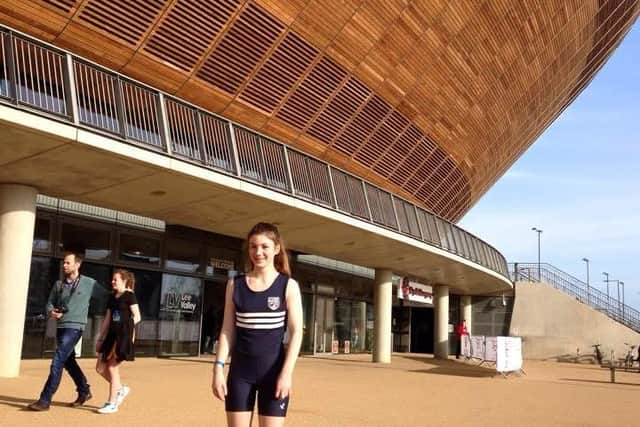
She described herself as “a stubborn child”, “trying to prove people wrong and prove that I could do it, and I think that fed into how I got into rowing”.
Growing up near Henley-on-Thames, known as the capital of rowing, Frankie saw her uncle and cousins take part in the sport and decided when she was six years old that she wanted to become a rower.
However, her physiotherapist believed that she would “have to find another sport”, that rowing would not be for her due to her disability, but Frankie said her reaction was: “Okay, challenge accepted.”
Frankie first went out rowing with her uncle when she was 13 – “as soon as I was big enough to be in a boat” – and said she “just rowed from there”.
Her early experiences of rowing were not in para-sport, and she competed alongside able-bodied rowers. She had no idea that her disability was classifiable for para-sport, until she heard through her uncle that there were rowers on the ParalympicsGB rowing team with Erb’s Palsy when she was 14.
She was too young at the time to apply to the team, and while she continued to row, she said she began enjoying the sport less, finding she was “falling so far behind” as she was “struggling with my arm” – though she “scraped in” to the U19 GB able-bodied team.
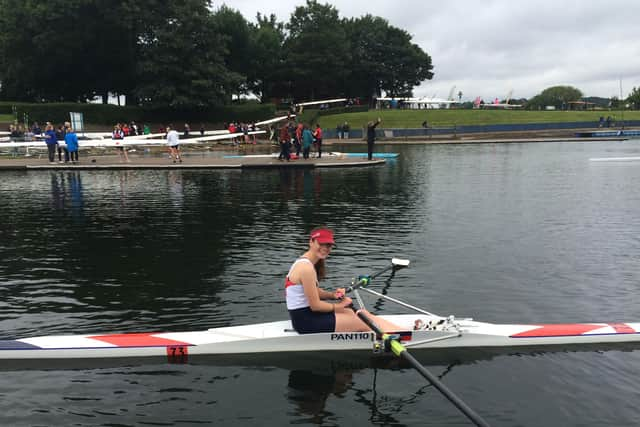
In 2021, when she was 19, Frankie decided to try out for the ParalympicsGB rowing team, and discovered more support was available to her than she had thought.
“They instantly were like: ‘You’ve got Erb’s Palsy, so you’re going to be struggling with this, you’re going to be struggling with that, this is what we can do to help you, we’ve had other people that have found that this helps them’,” she said.
“I just felt so validated, knowing that there were people that understood what I was going through.”
Until then, Frankie did not know that there were different classifications in para-sport, and that people with less-visible disabilities could still classify for a spot on teams that could help support them to become the best athletes they can be.
“I think it was massive imposter syndrome, I didn’t believe that I really should be on the Paralympic team because I’ve always found ways around it,” she said.
“Even still, to this day, when I say to people I’m on the Paralympic team, they’ll say: ‘Well, you’re not in a wheelchair, or you don’t look disabled, so you shouldn’t be on the Para team…’
“It’s just the lack of knowledge around (the fact that) there are different categories and classifications within sports.”
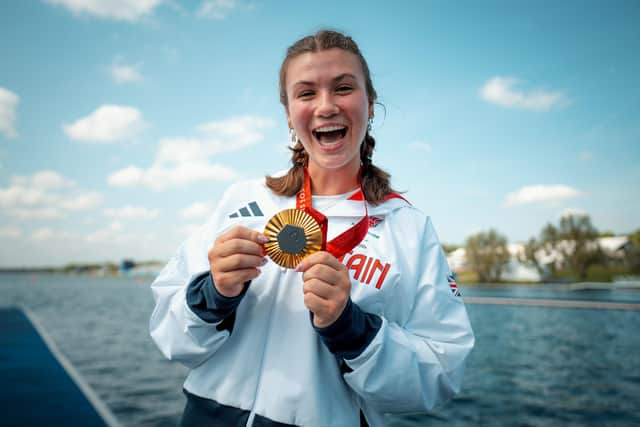
Frankie joined her para-rowing team in November 2021 and has been a full-time athlete ever since. She successfully trialled for the ParalympicsGB team in time for the 2024 Paralympic Games in Paris, competing in the PR3 mixed coxed four event, and described the experience as “just incredible” – not least because her team took home a gold medal.
Frankie said the experience also galvanised her “mission” to make sport more accessible, both for people with disabilities and for able-bodied people, particularly to encourage children to “give it a go” and to believe in themselves, even if they are told that certain goals might not be achievable.
Now, Frankie is part of the Women’s Sport Trust Unlocked programme, a flagship athlete leadership and development initiative designed for elite female athletes in the UK.
Launched in 2020, it provides mentoring, training and networking opportunities to help athletes use their platforms to advocate for greater visibility, investment and equality across the industry – and Frankie found the programme to be the “perfect opportunity” to support her “mission to try and make less visible disabilities more visible, and increase participation of kids going into sport”.
“This is so different from what I was like growing up, trying to hide my disability and not making a fuss about it. But actually, I have to start speaking about it to try and create change,” she said.
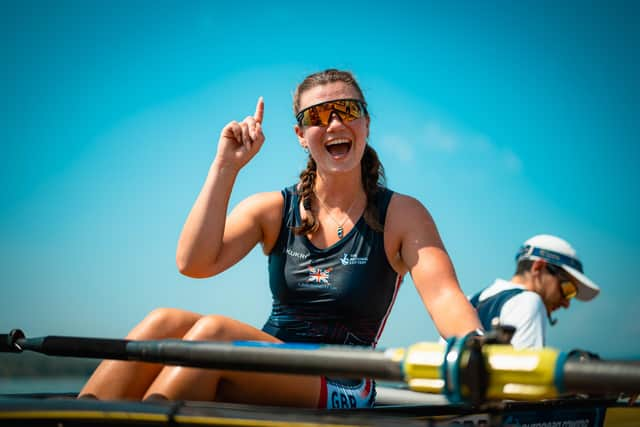
“There must be little girls and boys out there that are experiencing the exact same thing, and if they know that someone has been through it and is now speaking about it and trying to make it more open, they might feel a lot more comfortable and less alone with it.”
Alongside her advocacy work, Frankie recently qualified as a physiotherapist herself, and aims to work in paediatrics to help other children like herself achieve their dreams.
Before that, however, the 2028 Summer Paralympic Games in Los Angeles are on the horizon, so she is back competing in European and World Championships and training to qualify for her second Paralympic Games – and, hopefully, to add more gold medals to her ever-growing trophy cabinet.