
Farmer poisoned by insecticide chemical ‘close to Novichok’ in accident warns of dangers of stress in farming
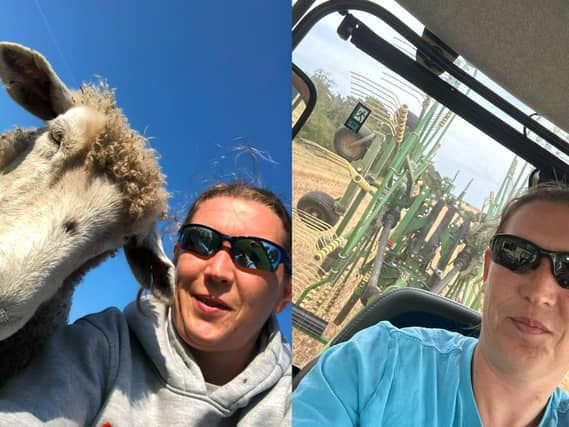

Penny Shaw has ‘been farming since I could walk’ but an accident on her farm meant she had to reimagine what farming looked like to her.
A farmer who accidentally got sprayed with an insecticide chemical “that’s close to Novichok” and suffered lasting nerve damage has warned against the dangers of stress and distraction in farming.
Penny Shaw, 38, said she has “been farming since I could walk”, growing up on her dad’s East Lincolnshire farm before taking it over after he died when she was 20.
However, she was forced to give up her family farm after an insecticide accident in 2022 left her poisoned, and a subsequent kidney cancer diagnosis led to her reimagining what her farming future looks like.
“I’d been so stressed out throughout that season: the prices had dropped through the floor, things were unknown,” Penny told PA Real Life of the time of the accident.
“I was told that we had a Red Tractor inspection, so I ran around to make sure everything was okay for the inspection.
“There were two Actellic bombs, which are canisters with insecticide powder in, on the shed floor. I’d already lit them, and it had done its job. I’d gone to pick them up, and didn’t realise that one hadn’t spent, it was still full.
“I walked out of the shed…(and) I accidentally clanged them together. The bottom one was upside down, and all the powder just dropped out the bottom, caught hold of the wind, and just went straight at me.
“Within a minute, I couldn’t breathe properly. My heart rate was going really quick. I went to lay down, and I soon realised that I needed a hospital.”
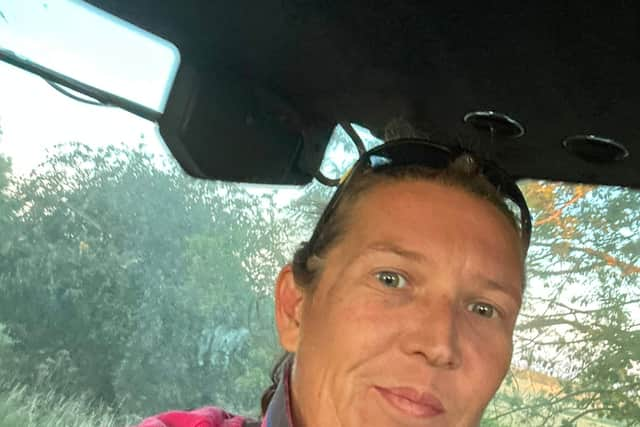
Penny was admitted into hospital, and the poison centre ascertained how the chemical was affecting her body.
“They said that it is a chemical that’s close to Novichok,” she explained – referring to the nerve agent used in the Salisbury poisoning in 2018.
“It was affecting my nerve endings, the end of my fingers, my knees, my toes, my ears – everything that’s a nerve ending was just on fire. It was like I’d been thrown in a dike full of nettles.
“That went on for eight months.”
At the time, Penny was running the farm her dad had owned before he passed away from brain cancer, which was sustaining both her and her three sisters.
Due to the accident, she was out of work for a year, and while her symptoms did “calm down eventually”, she was told that she wasn’t allowed to spray any chemicals anymore: even regular household cleaners like window cleaners make her body react.
“So then I had to think about what we’re going to do about the farm,” she said.
“For a farmer that’s farmed all her life, I did not expect to have to change things around. I thought that was just going to be it forever, running the farm, but no.
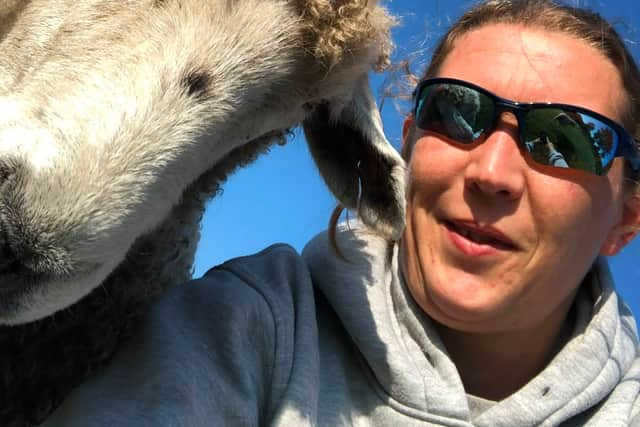
“I had to get contractors in to do the spraying, and as time went on, I just realised eventually I wasn’t well enough (to run the farm), and I had to put the farm up for rent for somebody else to take over, so that my three sisters could still get their money.
“I sat back and thought: ‘I’ll get better, I’ll be back’. And then a year later, December 2023, I was diagnosed with kidney cancer.”
Following her cancer diagnosis, Penny “had to take a step back” once again and “concentrate on myself”. She had surgery to remove her kidney in February 2024, and she realised then that she was “never going to be able to farm again in the same sense that I did”.
Penny was able to return to farming in the summer of 2024, working as a contractor baling hay, allowing her to earn an income and get back to what she loved.
Now, Penny does baling in the summers and freelances across farms during the autumn, and has said that she would “like now to have all winters off – I want to go skiing, I want to travel the world, I want to do things for myself.”
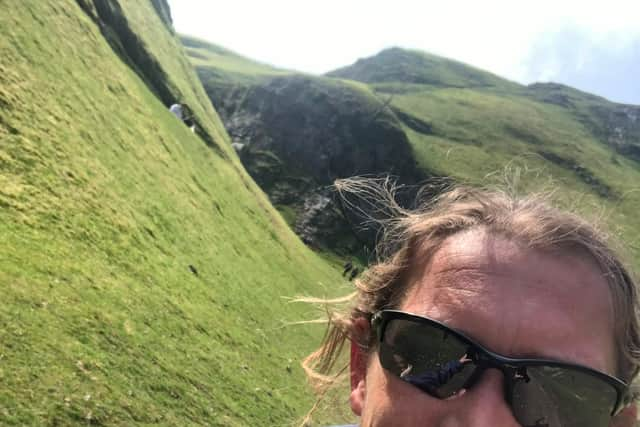
She is still impacted by the effects of the poisoning on her body, with a tingling sensation in her fingers and problems with her knees.
“I’ll have that forever, they’ve told me,” she said.
Looking back, Penny has accepted that stress and exhaustion from farming played a prominent role in her accident – she feels she was more willing to ignore risks in order to get the job done.
“Looking back now, I was living off stress,” she said, adding that “truth be told, when the pressure is mounting and the stress is there, we don’t see it, we don’t feel it until it’s too late and something drastic has happened.
“All of us farmers, we don’t want to quit. We want to carry on,” she added.
“But my life’s changed now forever, and it’s something that I’ve had to accept. I can still do farming, but in a different way.”
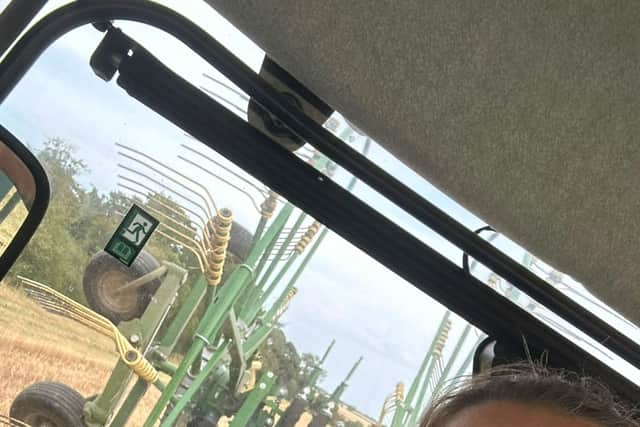
To farmers, and farming families who might pick up on the signs before the person themself does, Penny urges them to take care of themselves and take a step back if they feel the pressure mounting.
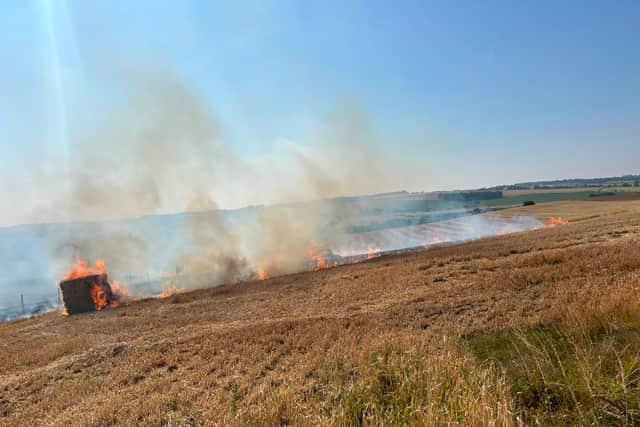
It’s particularly important in the heat of summer, she added, when exhaustion is common and the threat of fire is very real: Just last week, Penny dealt with a fast-spreading fire in the hay field she was working in, and lost a quarter of the field to the blaze.
“If farmers are stressed and they’re getting distracted, that’s when accidents happen – and I can say that from first-hand experience,” she said.
“Now I’ve seen the seriousness of it. I’ve felt the seriousness of it. My life has changed because of it.
“I would put a message out there to all farmers: Please be vigilant. Please be careful. Look out for one another.
“If anyone’s struggling, stop your tractor and go and help them. It’s not the end of the world if you stop the tractor for an hour. As much as we all think it is, it’s not.
“If somebody gets hurt, that’s where the regrets come in.”
Stephanie Berkeley, manager of the Farm Safety Foundation whose 2026 Farm Safety Week highlighted the impact of life-changing injuries on farms, said: “We must take injuries just as seriously as fatalities and recognise that preventing harm, not just death, has to be our goal.
“The reality is that there is no such thing as a papercut on a farm, and the margin between a near miss, a serious injury and a fatal incident is often frighteningly small.”
For more information on Farm Safety Week visit www.yellowwellies.org.