
How to avoid food guilt during the Christmas period
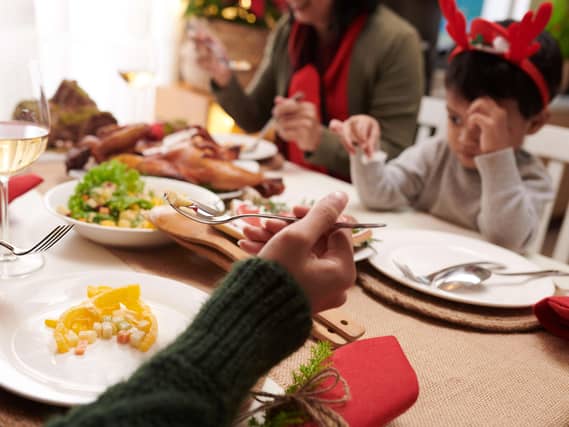

Sticking to your usual activities and routine and recognising there are no good or bad foods can help to make life easier during festive celebrations.
With the festive season upon us, bringing tempting treats alongside constant “new year, new you” messaging, feelings of guilt can easily creep in for anyone struggling with food insecurities or issues.
However, it doesn’t have to be that way – we spoke with Dr Caroline Fleming, head of psychology at Cygnet Health Care Ealing and regional lead for South London region to explain what food guilt is and ways to make life easier during Christmas celebrations.
What is food guilt?
Fleming explains that for people with eating disorders, there tends to be rules around foods that are ‘good’ and foods that are ‘bad’ – foods deemed safe and those you would avoid at all costs.
“The guilt is associated with the rules that are set by the eating disorder when it starts,” she explains.
“A lot of people’s symptoms develop in relation to that, so for somebody with anorexia, they’ll avoid those foods at all costs and it takes a lot of exposure work to gradually reintroduce those into the diet.”
She adds that during therapy sessions, together they will challenge food rules.
“In binge-eating disorders – those foods will tend to be avoided as much as possible,” she continues. “Once the food rule is broken, then it’s a free-for-all. The guilt’s been done and people may engage with compensatory behaviours or not.”
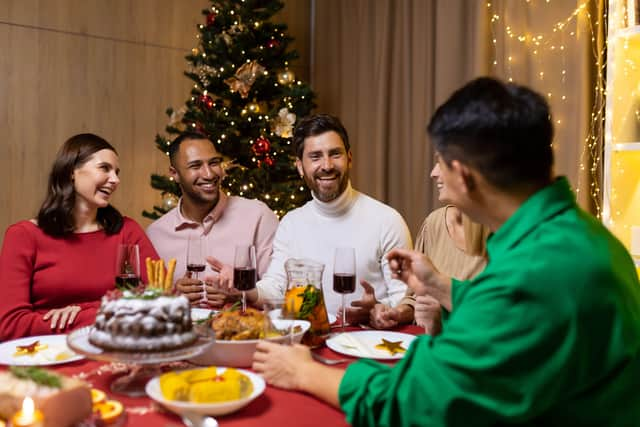
Why is it so prominent around Christmas?
“If we think about Christmas, every societal expectation is to eat, drink and be merry,” Fleming says.
“All the rules go out the window on Christmas Day – you can have as much as you like. You see all the adverts – abundant tables, the chocolates go around the room, everyone’s going to sit there and feel full and satiated and have the most wonderful time.”
Fleming goes in to explain the main ways to avoid food guilt.
No good or bad foods
“There’s no such thing as a good or bad food,” Fleming says.
“You see it on the news and social media – people say one food is bad for you or good for you. Every food is absolutely fine. It’s about having a varied diet.
“No food should make you feel guilty. If you feel guilty about something it’s not the food. Food is just food. It doesn’t speak, it doesn’t talk back, it doesn’t shout at you and tell you off.
“It’s just a substance. So if you are feeling guilty, take a step back and question what you are actually feeling guilty about.”

Stick to your norm
Fleming explains that with her patients, she draws 365 dots on a flip chart piece of paper and circles one of them.
“We can make Christmas Day as big or as ordinary as we want to. It doesn’t have to have all these expectations involved with it,” she explains.
“Ask yourself what’s your norm rather than society’s norm.”
It’s natural on Christmas Day to break all routine, Fleming says. “However, you can still do the activities that you’d usually be doing. Take time out for yourself. If you need a walk after a meal, allow yourself to do that.
“It’s not all about following everybody else’s rules – plan it in advance and plan what activities you are going to do so you can feel in charge and in control.”
Keep it simple
“If you’re following a particular meal plan, you can follow that meal plan,” she adds.
“If you usually have a sandwich at 12 o’clock, have your sandwich at 12 o’clock. It’s about keeping it simple.”

Prepare
“For those who have decided they do want to sit down and have that family meal for Christmas, don’t wait until the actual day,” Fleming says. “The anxiety associated with that will start to make the whole day about food. We don’t want that.
“It’s about actually practising in advance. Have the meal you’re going to have on Christmas Day in advance – a couple of times preferably, just so you’ve got that preparation time to be able to know it’s manageable.”
Don’t put all food on the table
Fleming concludes by explaining that sometimes she says to families to not have all the food on the table.
“You can actually serve it up in the kitchen. That way portions are already coming out and it doesn’t feel like it’s all about the food. It’s just dinner,” she says.
BEAT Helpline is there for anyone affected by an eating disorder. You can contact it by webchat, phone, email, online support groups, through its social media accounts or by letter. Calls to the helpline are free from landlines and mobile phones within the UK and do not appear on itemised bills.