
‘I used to hide my limb difference – now I support other disabled athletes with my training invention’
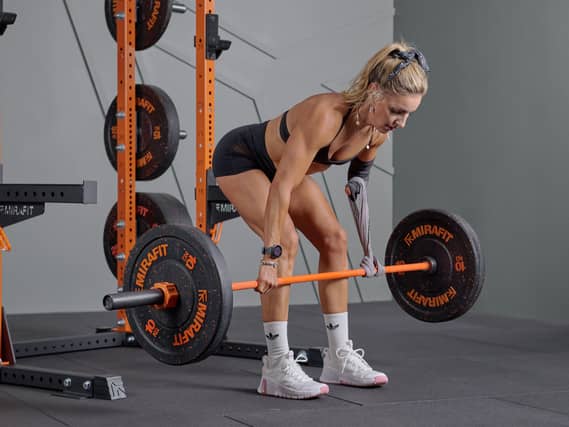

Louise Hawkins was born without the lower part of her left arm and underdeveloped chest muscle.
A mother who spent decades hiding her limb difference and initially felt she did not “belong” in a gym has developed a specialist training strap for adaptive athletes around the world.
Louise Hawkins, 44, a personal trainer and careers adviser from Barnsley, South Yorkshire, was born without the lower part of her left arm.
She also has Poland’s syndrome, a very rare condition characterised by webbing of the fingers and underdevelopment of chest muscle, usually affecting one side of the body, according to Great Ormond Street Hospital.
After having four missed miscarriages in three years she turned to sport, but struggled to adapt to the exercises with her limb difference.
She tried using a prosthetic arm but did not feel like herself, so she designed a strap which imitates a forearm and an arm, which allows two-point contact with equipment, and has gone on to become an adaptive athlete.
Louise, who is mother to Maya, 16, and Lilia, 14, told PA Real Life: “I never actually saw myself as I actually look – I know it’s really strange and it’s really hard to describe, but I didn’t see myself as somebody with a disability until I started competing.”
Growing up, Louise, who is an ambassador for Mirafit, said she would cover up her arm when leaving the house, to avoid looking “any different to anybody else”.
If she saw a photograph of herself with her arm on show she would “rip it up”.
During a consultation, she was diagnosed with Poland’s syndrome – a condition that causes a lack of muscle development on one side of the body, according to Healthline – and has a collapsed chest wall as well as imbalances throughout her body.
Day-to-day, she experiences chronic shoulder pain and has to wear a lightweight coat to avoid putting additional pressure on it.
In 2016, she decided to start exercising regularly, hoping it would help her mentally, after experiencing three miscarriages before the birth of her youngest daughter in 2012.
She explained: “I had really bad health anxiety… I think something had to give, and that’s where I leant into sport.”
Louise started attending a local kettlebell class but, before her first session, she approached the instructor because she was worried she would not physically be able to take part.
Louise quickly wanted to progress and, in 2017, she started CrossFit – a fitness programme consisting of varied, high-intensity functional movements.
“I remember my first time really quite clearly thinking, ‘What on earth am I doing here? I don’t belong here’,” she said.
“But, for whatever reason, I stayed and persevered.
“I think I spent most of my time crying, actually, initially, because I couldn’t do anything.”
She found it very tough in the beginning, especially considering there was no one “similar” to her in the classes.
Years of protecting and concealing her left arm meant that she had very little muscle tone on that side of her body.
“I couldn’t actually stand up for longer than about five minutes at that time because of the chronic pain in my shoulder,” she added.
She said training helped but during the first few months, she sustained injuries to both rotator cuffs as well as her wrist, back and forearm.
“All that I wanted to do was be like everyone else,” she said.
“That was to my detriment. I was so injured.”
She has since learned there needs to be “a certain level of acceptance” and there are exercises she chooses not to attempt because the potential injury is not worth the risk.
Louise then looked into using a prosthetic sports arm, but found it “clunky” and did not feel like herself while wearing it.
She said her youngest daughter also struggled to recognise her with it on.
“She freaked out and she was like, ‘Get it off, get it off, I want my mummy back’,” Louise said.
Wanting to find an alternative, she decided to take matters into her own hands.
She initially used an old seatbelt, strapped around her arm and attached to a bar, but it could not withstand the pressure involved in weightlifting and left her arm bruised.
She then tried a heavy-duty strap her then-husband used at work to pull cars, but it was too harsh on her skin.
She contacted US-based adaptive fitness equipment company Equip Products and worked with them to develop a padded specialist version.
Louise has used the strap ever since and it is now sold to other adaptive athletes around the world.
“The strap has opened a different world for us to build muscles that we wouldn’t necessarily be able to activate before,” she said.
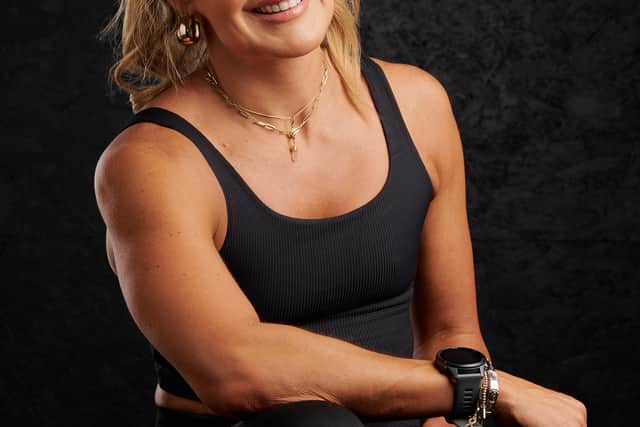
“Without the strap, I wouldn’t really have much of a chance.”
Louise said seeing other people use the equipment to perform exercises including pull-ups and barbell lifts brings her the “most joy”.
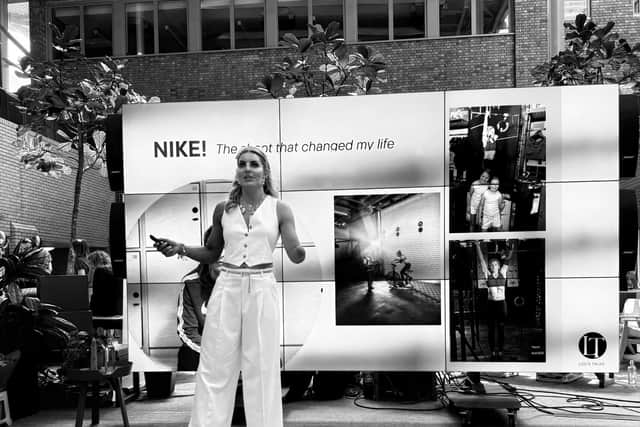
Her fitness journey eventually led to an opportunity to take part in a Nike photoshoot in London in 2020.
She initially doubted whether she belonged there but said the experience changed the way she viewed her own abilities.
“But I just thought, if Nike believe in me, then I’ve got to start believing in myself.”
Already a qualified teacher, Louise returned home and enrolled on a personal training course. She now works as a personal trainer and coach alongside her main job as a careers adviser for vulnerable young people, and is also an adaptive athlete and motivational speaker.
Rather than working on a traditional gym floor, Louise has created a gym in her garage where she can offer clients private one-to-one training and has built her own fitness community. She believes her experiences, including changes to her own body and mental health struggles, have given her greater empathy when coaching others.
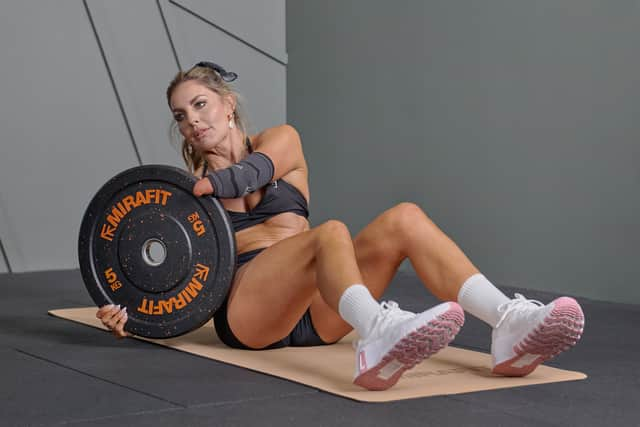
“I’ve been all different shapes and sizes,” she said.
“I’ve been a lot heavier than I am now. I’ve been a lot smaller than I am now.
“I feel like I’ve done most diets under the sun.
“I’ve got a lot of empathy. I understand how hard things are.”
Louise believes a lack of suitable adaptations can remain a barrier for people with limb differences who want to exercise.
She would like to see adaptive equipment become a fixture in gyms, rather than something disabled gym-goers always have to provide themselves.
“I would love to think that I wouldn’t have to take my strap to every gym,” she said.
“It would be lovely to think gyms had my strap there, just as they would a barbell or a dumbbell.”