
‘I’ve been called a Scrooge for only spending £400 on Christmas, including buying my son second-hand presents’


Amy Ward buys all her son’s presents from charity shops and saves money on festive food with a Christmas Eve supermarket bargain hunt.
A thrifty mum who is spending just £400 on Christmas this year has revealed how buying second-hand presents and hunting for supermarket reductions helps her celebrate without breaking the bank.
Amy Ward, 29, from Macclesfield, Cheshire, is expecting her second child in March and lives with her partner Gregory, 31, and their two-year-old son.
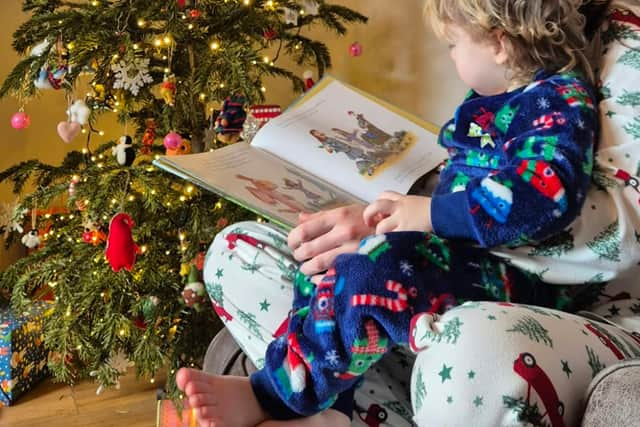
The budgeting enthusiast, who shares money-saving advice with more than 54,000 Instagram followers, has bought almost all her son’s Christmas presents from charity shops, including books, toy cars and trains.
She has also created a book advent calendar using second-hand finds costing as little as 10p, while an annual Christmas Eve trip to Marks & Spencer has previously seen her snap up a £25 chocolate yule log for just £3.

With £400 set aside for the family’s Christmas food and presents, Amy believes there is no reason to spend a fortune to make the occasion special for her son.
Amy told PA Real Life: “I still feel like he’s spoiled because he gets so much and we do new things all the time, but we just do it in a more money-conscious way.”
Growing up, Amy enjoyed traditional Christmases with her parents and brother, and remembers circling the toys she wanted in the Argos catalogue.
Although her family was small, she said there were always plenty of presents under the tree, most of which were brand new.

Her attitude towards shopping changed after she graduated from university in 2018 and found herself struggling with an overdraft.
Having been a self-confessed fast-fashion enthusiast during her student years, she began looking for ways to make her money go further.
Amy said: “I was a reckless, stereotypical student, just spending and not really thinking about it.
“I ended uni in my overdraft and realised it wasn’t quite as fun as it had been when I was a student.”

Determined to become more financially responsible, she began cutting back on clothes shopping before discovering the benefits of charity shops and second-hand marketplaces.
Her partner Gregory, whose family already embraced thrifty shopping, shared her enthusiasm.
Their habits have transformed how they celebrate Christmas, with Gregory’s family holding a charity shop Secret Santa, where everyone draws a name from a hat and has just £10 to find a thoughtful gift.
With their son turning three in February, Amy said this is the first Christmas he has properly begun to understand the excitement of Father Christmas.

However, rather than splashing out on expensive new toys, she has searched charity shops for books, cars and trains, knowing he is still more interested in types of toys than particular brands.
She said: “I think this Christmas all but one present is second-hand for him.”
As her son does not like chocolate, Amy has made him a book advent calendar, sourcing books from charity shops.
Some of the second-hand books cost just 10p or 20p, while she has also bought 10 books for £10.

The books can be kept and enjoyed again by the couple’s second child, due in March.
Amy said: “It’s nice to keep the books each year for the new baby in the future as well.”
Amy insists that being thrifty does not mean refusing to spend money on things that bring her family joy.
The family have a tradition of buying a new board game each Christmas and Amy plans to hunt for this year’s game in charity shops.
Despite the growing popularity of second-hand shopping, Amy has faced criticism from people who believe children should receive new presents.
After sharing a post about festive traditions her family skips, including Christmas crackers, she was branded miserable and a Scrooge.
Others have questioned her decision to buy used toys.
Amy said: “People have said, ‘I feel sorry for your kids, getting just second-hand stuff.’

“I think a lot of it is just people’s misconceptions of what second-hand is.”
She said many charity shop finds are in excellent condition, with some still in their original packaging or with tags.
Rather than taking the criticism personally, Amy focuses on the benefits of saving money, supporting charities and reducing waste.
She said: “I’m so happy with my choice that I don’t have to question what we’re doing.”
The family’s thrifty approach extends to Christmas dinner, with Amy combining advance planning with a last-minute dash for reduced festive food.
As a vegetarian household of three, she said there is little point buying enormous quantities of food they cannot finish.
Instead, she writes a shopping list, chooses sensible portion sizes and picks up cupboard essentials such as crisps and crackers during the months leading up to Christmas.
She and Gregory also have a tradition of visiting Marks & Spencer on Christmas Eve to look for reductions.

Last year, they bought most of their Christmas dinner during a visit at around 4pm, when festive products had been heavily discounted.
Amy said: “We got most of our Christmas dinner last year from M&S reductions.
“It was wild in there, but it was absolutely worth it for the money we saved.”
One particularly memorable bargain was a large chocolate yule log, originally priced at £25, which the couple bought for £3 and took to their in-laws.

Amy said: “I’m never going to spend £25 on a dessert.”
Amy insists that being careful with money does not mean missing out on festive experiences.
She looks for inexpensive local events, including Christmas light displays and markets, and takes her son to a toddler cinema screening of The Snowman And The Snowdog, costing £3.99 for an adult and child.
She said: “We try to do so many low-cost things, and there’s so much out there for kids that’s affordable and fun.”
With another baby on the way, this will be the family’s last Christmas as a family of three, but Amy is determined not to establish an expectation that the festive season must become more extravagant every year.
She said: “I don’t want to start really extravagant now and set a precedent.”
For Amy, the most important thing is making memories together, rather than measuring the success of Christmas by the amount spent.
She said: “Christmas is fun and exciting, but there’s nothing fun about getting into debt or struggling financially afterwards just for one day.”