
Monks, luxury and perhaps the world’s oldest pub in the island of Ireland’s heartlands

Pol Allingham explores the island of Ireland.
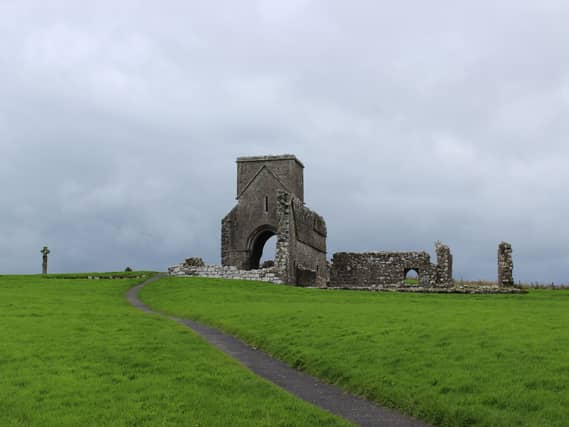
Wind whistles across the lake surrounding Devenish Island and its monastery ruins.
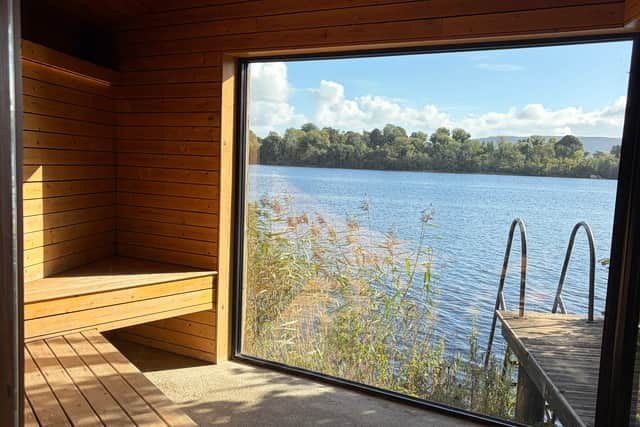
Hours earlier I was tentatively lowering myself into the same bracing waters, having baked in a sauna at a high-end woodland hideaway.
I’m in Lough Erne, County Fermanagh, Northern Ireland, where ancient forests pepper the banks. I boat to Devenish along the former highways of the country’s heartland.
The exposed island has very green grass. There are only three buildings: a crumbling 12th-century chapel, an immaculate 12th-century round tower and a 15th-century Augustinian priory.
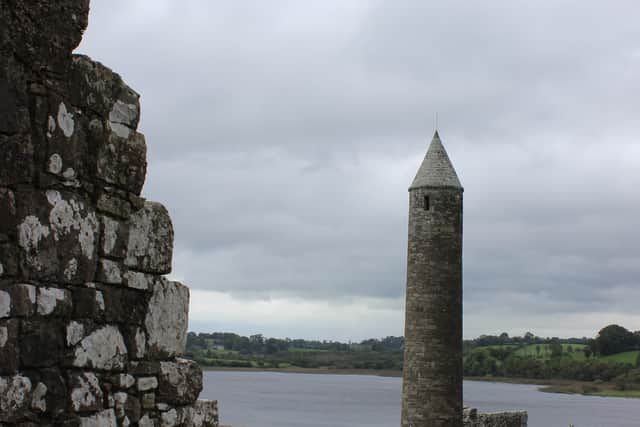
Devenish’s monastery was founded by Saint Molaise in the sixth century and once bustled with a thousand monks. Erne was a thoroughfare of log boats.
For more than 1,500 years, pilgrims have paused there en route to honour Ireland’s patron saint at St Patrick’s Purgatory island on nearby Lough Derg, County Donegal in the Republic, says our skipper Barry Flanagan.
It was a once-in-a-lifetime trip for many. Significant, also, because people believed the island of Ireland’s nearby west coast to be the end of the world and “after that you just fell off”, Flanagan, who runs Erne Water Taxi, says.
Today the 2km-by-1km sanctuary, accessible only by boat, is quiet (private boat tours of Devenish Island start from £170 per person). My travel group and a handful of other people roam its relics.
Tourism numbers have fallen in the area in recent years, but businesses are trying to draw crowds back.
Head of commercial at the Finn Lough retreat, Leo Nacer, tells me about community plans for an electric hydrofoil that would connect Lough Erne “like Lake Garda” – the Italian hotspot where residents and holidaymakers ferry between towns.
The council and other bodies, aided by historians, are reviving the pilgrimage with their Lough Erne Pilgrim Way, a 14-site boating itinerary that includes Devenish, near Enniskillen.
Cost of living is a challenge for accommodation businesses in small Irish towns, Leo says, comparing it to massive tourist destinations in Spain: “They’ve got big numbers, we’ve got smaller numbers, but bills are still there.” VAT poses the greatest problem for northern businesses, he adds.
Finn Lough – a luxury nature resort and eco-retreat where I’m staying – pays 20% while their competitors two miles down the road pay 9% for food and catering and 13.5% on accommodation.
The five-star getaway has created winding paths through its segment of ancient forest. Wrapped in robes, we wander between spa treatments nestled among trees: a salt flotation bath; saunas and lake swims; a hot tub; a tree house-like relaxation room with teas, snacks, books and a wood-burning stove (the two-hour Finn Lough Elements Spa Trail costs £70 per person for residents, and £85pp for day visitors).
No one else is around. Guests are subtly nudged to the next therapy by a sauna timer or switching light, staggering them to ensure privacy.
Fermanagh is one of the last places you can find native Irish oaks, Barry had told me. The forest once covered 80% of the island of Ireland, but that fell to 1% by 1925, studies have found. It is now at about 11%.
The ancient woodland and its fauna is central to Finn Lough. My Cove Suite feels like a bird hide looking out to the lake. I lie on the bed gazing outside for more than an hour after the spa trail, watching two robins play among the reeds.
On arrival, we were told getting lost is encouraged. I didn’t really understand what that meant until I did, actually, become lost. Signs are scant and the site is large. As I was searching for the morning sauna and swim spot, a giant transparent bubble appeared. It bulged above the lake and mats were set out inside. I was told a yoga class was due to start but my destination was through a doorway. Moving between the sauna and lake was invigorating and peaceful. Losing my way had lulled me to disconnect from the noise of modern life. That night I did it again after dinner.
At the nearby Boatyard Distillery, we watch bubbles moving around a Wonka-esque gin-making machine (with prices starting at £55 per person).
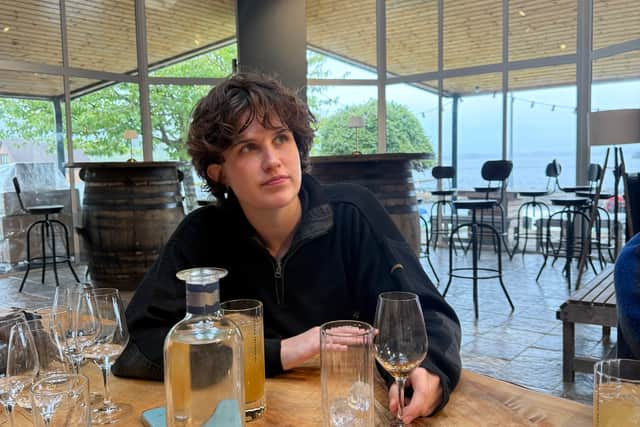
Experience coordinator Stanley Vaughan tees us up with an array of gins at the B-Corp’s lakeside site, which we sip, while chief distiller Jimmy Trotter heaps juniper from still to bucket. Tastings will soon be moved to their new, larger building next door.
The Boatyard Distillery’s founder Joe McGirr grew up on a dairy farm. His team creates tailored gins for Claridge’s hotel in London and Mariposa Negra cocktail bar in Barcelona, but the distillery sticks close to its roots.
McGirr’s parents handed him old stainless-steel milk tanks and he’s never since bought an ordinary gin one. Four glass milk jars hang above the bar in memory of his late father. As Vaughan speaks, customers bring in their old 70cl bottles to be refilled with a discounted Boatyard spirit.
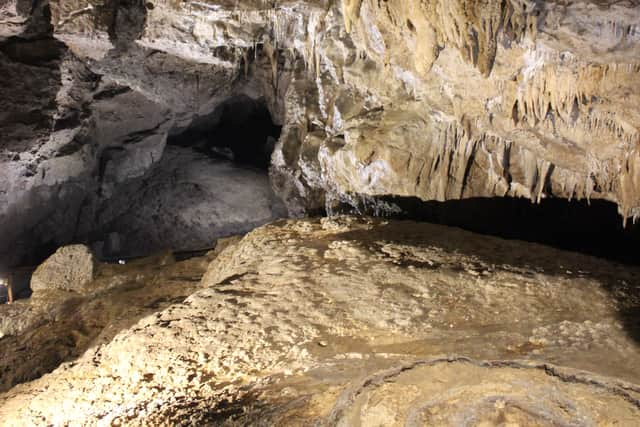
Time stretches back far further underground in Fermanagh, with a subterranean cave system in land that formed more than 340 million years ago (with prices for a tour starting from £16.50pp). Stalactites grow a centimetre every hundred years, our guide Stephen Hewitt explains, as he flashes his torch around dizzying formations of the Marble Arch Caves. Some crawl across the walls like tentacles, others reflect off shallow water to create wobbling space-age landscapes.
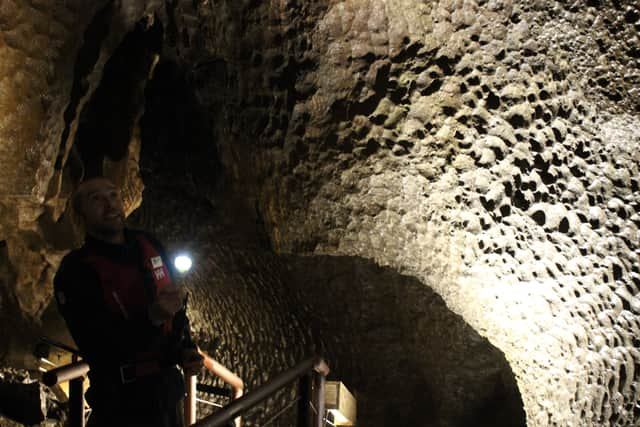
We cannot touch rocks that are still growing, which seems to be most of them. A boat through part of the caves is usually available, but heavy rains meant the waters were too high for us. The upstairs visitors centre offers a comprehensive history and a lovely cafe.
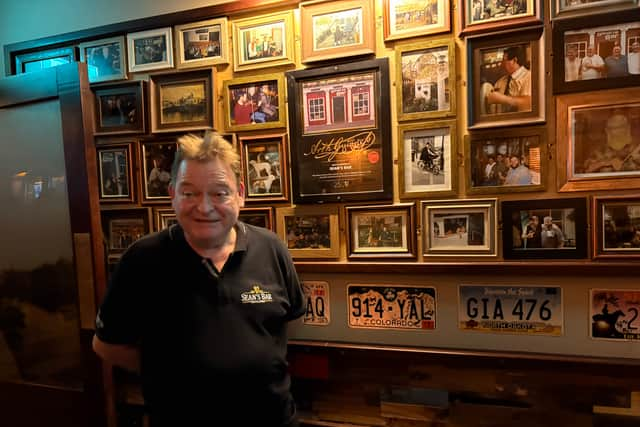
Further south is Athlone, home to the oldest pub in the Republic of Ireland, maybe the world: Sean’s Bar. Drinkers have gathered between the wattle and daub walls since the Dark Ages.
Usually towns start with the castle but here “they had their priorities right to build the pub first”, publican Timmy Donovan says. The establishment was built near a River Shannon crossing point in about 900AD and the first wooden castle was not erected until 1129.
Daytimes draw Irish coffee stopovers and whiskey tours (by the “busload”, according to Donovan). Though tourists do flock to Sean’s Bar, former postmaster, lifelong Athlone resident, and our tour guide, Vincent Harney, tells us it is his favourite pub. “I was here last night, I was here two nights ago,” he says, with Donovan jibing: “And for many, many years as well.”
The place is packed with locals, of all generations, late into the night. Music plays every day of the year except Christmas Day.
The other alcohol legacy of the area, in the Republic of Ireland, is whiskey. Monks at Inchcleraun monastery, on Lough Ree, and Clonmacnoise, by the Shannon, were the first to distill it into a beverage, Donovan has found in his near two decades spent tracing the drink’s history.
The publican has been writing a book on his findings. A documentary and documentary series are in the pipelines with a television network and a major streaming platform.
There has been a hiccup, however: “The two fecking dogs ate the rest of my notes,” says Donovan.
The book was due months ago and he has missed deadlines with his publisher and both platforms, he said, declaring himself a “bloody dinosaur” for keeping 19 years of handwritten notes in one folder.
On request, he shows us photographic evidence of his cocker and springer spaniels sitting proudly among the ruined sheets of paper. “Right now I’m in the world of trouble”, he adds.
We visit Sean’s Bar from nearby four-star Wineport Lodge in the south of the island, where each bedroom looks out onto Lough Ree’s still waters.
The spa offers a hot tub by the lake’s edge, seaweed bathtubs and an infinity pool.
Up to six guests can sleep in their Dutch Steel Cruiser, moored by the jetty and available to take out among the Lough Ree’s reeds.
Visitors to Athlone can also try Bastion Kitchen cafe and health food shop for fresh, locally sourced lunch.
How to book:
Pol Allingham was hosted by Tourism Ireland, Tourism Northern Ireland and Failte Ireland. Cove suites at Finn Lough start at £650 per night, and Lakeview suites at Wineport Lodge start at £218pp per night. Visit ireland.com to book or find out more.